Drees & Sommer supports construction of Europe's first industrial microbial protein plant

Drees & Sommer has been appointed to support the planning and delivery of what is expected to become Europe's first industrial-scale microbial protein production plant, helping Hamburg-based biotech company MicroHarvest bring its biomass fermentation technology to commercial scale.
• Drees & Sommer joined the MicroHarvest project.
• Leuna plant targets 15,000 metric tons annually.
• Commercial production is planned for 2028.
Located at Leuna Chemical Park in Germany's Saxony-Anhalt region, the planned facility will produce around 15,000 metric tons of microbial protein each year from regional agricultural side streams using biomass fermentation. The project represents a mid-double-digit million-euro investment and is expected to create around 25 jobs, with production scheduled to begin in the first half of 2028.
Drees & Sommer, which specializes in construction, real estate and infrastructure consulting, is supporting the project through project management and general planning during the early development stages.
The company has already completed a feasibility study assessing the technical and economic viability of the facility, including regulatory requirements, project risks, costs and planning scenarios. Its team is now leading the preliminary design and design planning phases while coordinating multiple engineering disciplines, suppliers and approval processes.
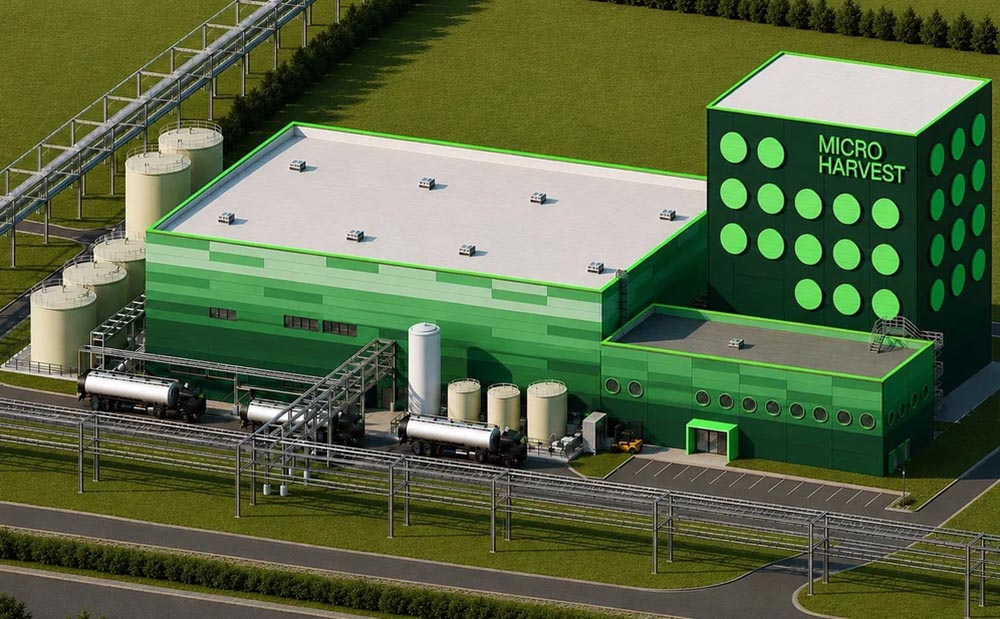
"Our plans include areas for raw material reception, storage and preparation, alongside a plant for drying, filling and packing the protein, and for systems supporting the fermentation process. Offices, laboratories, technical building equipment and outdoor facilities round out the design," said Manuel Paulick, who heads the project at Drees & Sommer.
The facility will initially be designed to meet GMP+ feed certification standards before later being expanded to comply with food safety requirements for human consumption.
Steffen Butz, Lead Process Engineer at Drees & Sommer, said coordinating the project's technical complexity would be central to keeping it on schedule and within budget.
"We are coordinating numerous specialist disciplines, suppliers, client decisions and approvals precisely from the outset, while keeping an eye on cost."
MicroHarvest said the Leuna plant is intended to strengthen Europe's protein supply by producing high-quality microbial protein from locally sourced agricultural side streams, including molasses generated by the surrounding agricultural region.
The company's fermentation process uses naturally occurring microorganisms in stainless steel bioreactors to convert those feedstocks into protein-rich biomass within 24 hours.
"When you depend on Argentina, Brazil or the United States for the supply of protein, you have little room for maneuver when ports are blockaded, harvests fail, or export duties are imposed. Our project in Leuna offers us the chance to become independent and resilient. We have to grasp this opportunity now," said Jonathan Roberz, Co-Founder and Chief Operating Officer of MicroHarvest.
He added: "Our process is similar to that of a brewery, but it is significantly faster and instead of alcohol it produces high-grade protein in powder form."
According to the company, the dried biomass contains more than 60% crude protein, along with amino acids, vitamins and minerals, and is produced without genetic engineering or dependence on seasonal growing conditions.
The Leuna project builds on MicroHarvest's pilot plant in Lisbon, which opened in 2023 and initially produced 25kg of single-cell protein per day. Data from the pilot facility has been used to support the design of the commercial-scale plant.
MicroHarvest plans to initially commercialize the ingredient for animal nutrition, focusing on pet food and aquaculture markets. The company has already worked with Vegdog and UK-based pet food producer The Pack to launch dog treats containing its fermented protein.
Following approval through the European Food Safety Authority's novel food process, the company also intends to supply the ingredient for human food applications, including products such as protein bars and meat alternatives.
(Main photo shows artist's impression of the planned microbial protein production facility at Leuna Chemical Park, featuring industrial fermentation tanks and processing infrastructure)

Join Us At One Of Our Upcoming Events

If you have any questions or would like to get in touch with us, please email info@futureofproteinproduction.com

More News