

BRIGHT and LanzaTech launch European C1 Biofoundry partnership to turn industrial emissions into valuable products

BRIGHT, the Novo Nordisk Foundation Biotechnology Research Institute for the Green Transition at the Technical University of Denmark (DTU), has partnered with gas fermentation company LanzaTech to establish a next-generation C1 biofoundry in Denmark aimed at accelerating carbon-to-value biotechnology development across Europe.
The multi-year collaboration, announced on May 5, will run until April 2028 and centers on the design and installation of a specialized biofoundry at DTU capable of supporting the development of microbes that convert carbon emissions into fuels, chemicals and materials.
• BRIGHT and LanzaTech launched a multi-year partnership to establish a next-generation C1 biofoundry at DTU in Denmark.
• The facility will focus on gas fermentation technologies that convert CO₂, CO and methane into fuels, chemicals and materials.
• The collaboration will run until April 2028 and includes biofoundry design, workflow development and IP licensing support.
The partnership marked a significant investment in European industrial biotechnology infrastructure at a time when gas fermentation and carbon-utilization technologies are attracting increasing attention as potential tools for reducing emissions and building circular bioeconomy systems.
Under the agreement, LanzaTech will contribute synthetic biology expertise, customized workflows and non-exclusive intellectual property licenses related to its biofoundry systems, while BRIGHT will provide infrastructure, research capabilities and regional collaboration opportunities.
The planned facility will focus on so-called C1 gases, including carbon dioxide, carbon monoxide and methane, which can be used as feedstocks for microbial fermentation systems.
Gas fermentation has emerged as a growing area of interest across industrial biotechnology because it enables microbes to convert industrial emissions and waste gases into commercially valuable outputs. While much of the sector’s early commercial focus has centered on fuels and chemicals, the technology is also increasingly being explored for future food and feed applications, including microbial proteins and alternative ingredients.
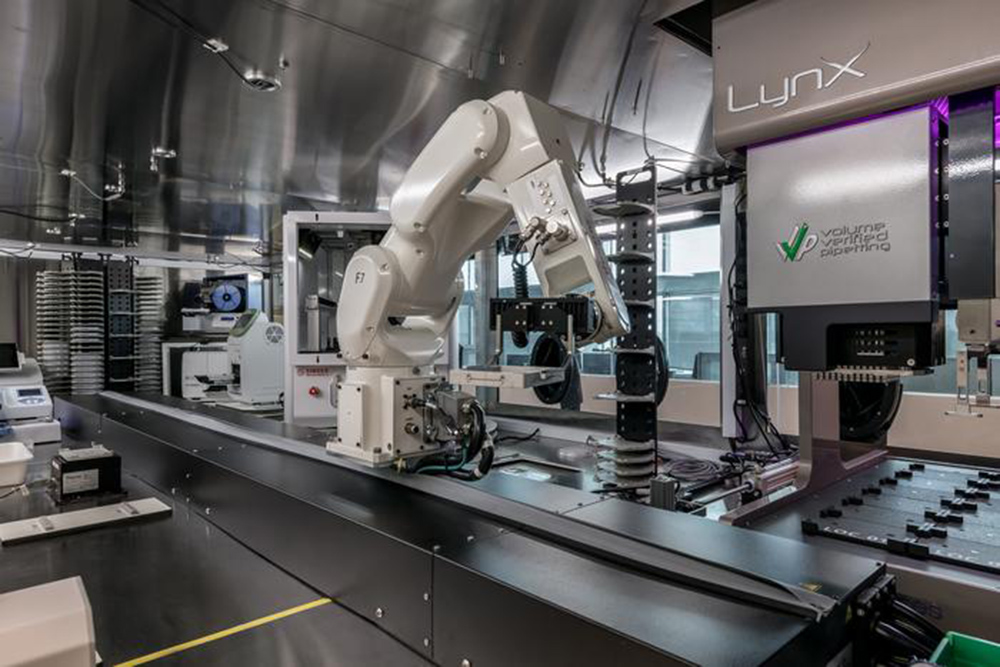
However, engineering microorganisms capable of utilizing these gases efficiently remains technically challenging. The organisms involved are often anaerobic and require specialized gas-handling systems, advanced automation, robotics and high-throughput screening tools.
BRIGHT said the new biofoundry would help address a broader shortage of specialized infrastructure available to researchers and industrial developers working in the field.
“DTU has a history of driving innovation from the lab to commercial deployment,” said Christine Nellemann, Provost at DTU. “Our new partnership with LanzaTech emphasizes our commitment to accelerate bio-solutions innovation for the benefit of Denmark, Europe and beyond.”
LanzaTech has spent more than 15 years developing synthetic biology tools and gas fermentation systems focused on carbon-fixing microbes. The company said the partnership would allow it to expand the reach of its biotechnology capabilities while supporting broader commercialization efforts.
“This marks a significant milestone in our transformation,” said LanzaTech CEO Jennifer Holmgren. “By creating a dedicated team that consolidates our biotechnology know-how, we can focus the broader team on our commitment to delivering commercial sustainable aviation fuel and biorefining projects.”
The biofoundry itself will be designed specifically for non-model organisms used in gas fermentation, incorporating anaerobic and gas-handling capabilities alongside automation and AI-supported workflows.
According to the partners, one of the key goals of the facility will be to accelerate the so-called Design-Build-Test-Learn cycle used in synthetic biology and strain development.
The organizations said the platform would enable researchers to generate and test thousands of microbial designs simultaneously, helping shorten strain development timelines and reduce technical risk.
“Recent advances in C1 biofoundry design at LanzaTech have created new opportunities to develop production strains more efficiently, enabling conversion of CO, CO₂ and methane off-gases into valuable fuels, chemicals and materials,” the organizations stated.
Access to these capabilities has remained limited globally, they added, slowing research and industrial development efforts.
Luuk van der Wielen, Director of BRIGHT, said the collaboration would strengthen Denmark’s position within carbon-to-value biotechnology and circular bioeconomy development.
“This partnership brings unique capabilities to Denmark and accelerates our ambition to turn carbon emissions into valuable products,” he said. “Working with LanzaTech strengthens our ability to drive sustainable innovation with real impact.”
The announcement also reflected a broader trend toward the development of shared biotechnology infrastructure platforms across Europe, particularly in areas such as precision fermentation, synthetic biology and industrial biomanufacturing.
Biofoundries - automated facilities designed to accelerate biological engineering and strain optimization - have increasingly become viewed as strategic infrastructure assets for scaling biotechnology innovation.
Within gas fermentation specifically, researchers and companies have faced additional barriers because many relevant organisms are difficult to manipulate using conventional synthetic biology approaches.
The partners said the new facility would provide researchers with safer and more precise capabilities for working with anaerobic microbes and potentially hazardous gases, including methane and carbon monoxide.
BRIGHT, which operates within DTU, focuses on research and innovation linked to circular bioeconomy systems and biological manufacturing technologies spanning food, materials and chemicals.
LanzaTech, meanwhile, has built its commercial reputation around gas fermentation technologies that convert waste carbon streams into usable products. The company has developed systems capable of utilizing industrial emissions from sectors including steel manufacturing and refining.
The partnership is expected to position DTU and Denmark more prominently within Europe’s growing carbon-to-value biotechnology landscape while supporting research, commercialization and industrial collaboration activities through 2028.

Join Us At One Of Our Upcoming Events

If you have any questions or would like to get in touch with us, please email info@futureofproteinproduction.com


