

BeneMeat publishes peer-reviewed LCA showing cultivated meat can match or outperform chicken on environmental impact at scale

BeneMeat has published a peer-reviewed life cycle assessment (LCA) examining the environmental performance of its cultivated meat production at industrial scale, offering one of the most detailed datasets to date based on primary operational inputs.
• BeneMeat’s LCA used primary data from a 400-600 kg per day industrial-scale facility, moving beyond lab-based assumptions common in previous cultivated meat studies.
• The study found cultivated meat emissions ranged from 3.3 to 6.6 kg CO2 equivalent per kg, depending on inputs and energy scenarios.
• Results showed cultivated meat could achieve comparable or lower environmental impacts than chicken, with significantly lower impacts than pork and beef in several categories.
Published in The International Journal of Life Cycle Assessment, the study evaluated a cradle-to-gate system using the Product Environmental Footprint methodology, with 1kg of cultivated meat as the functional unit. The analysis was based on engineering plans and pilot plant data for a facility designed to produce between 400 and 600kg per day, representing a step forward from earlier assessments that relied largely on theoretical models.
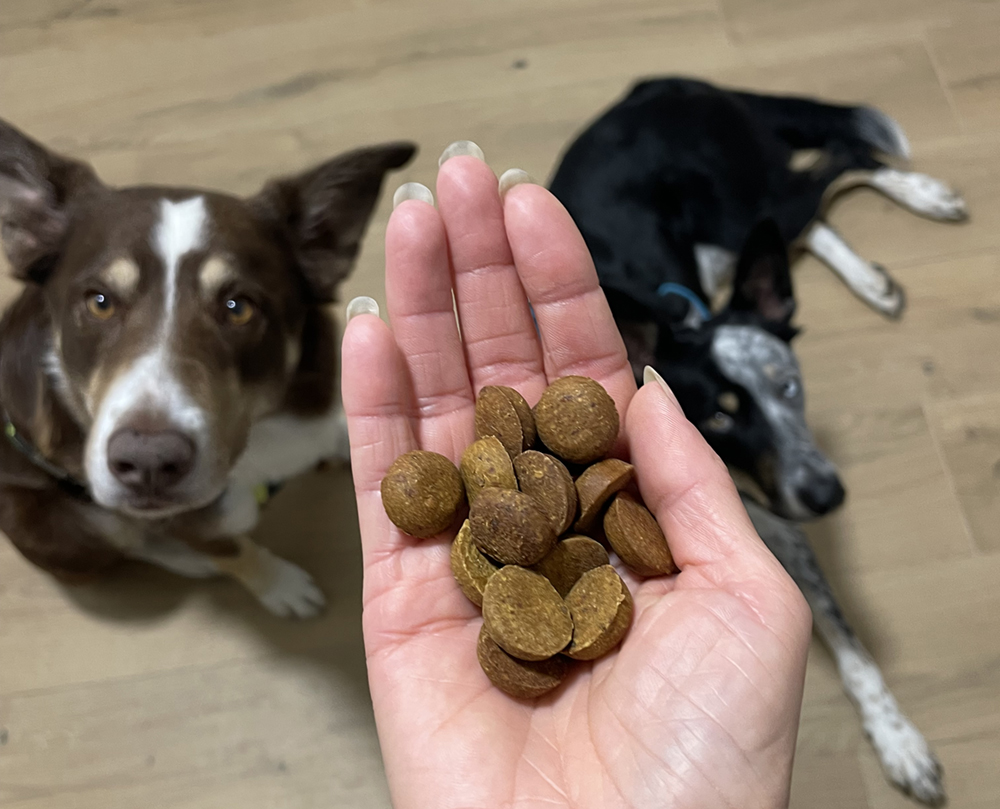
The study used a case based on pet food production as an initial market entry point, while noting that the underlying system had been developed to meet human food manufacturing standards. This approach allowed the researchers to evaluate a real-world production pathway while benchmarking environmental performance against conventional livestock meat.

Across six modeled scenarios, the study identified input materials as the dominant driver of environmental impact. Soy protein isolate (SPI), used as a key component of the growth medium, accounted for between 35% and 45% of the total environmental footprint, followed by glucose. Electricity, heat, and water treatment together contributed a further 21% to 26%.
The origin of these inputs was shown to have a significant effect on overall results. Switching from Chinese to US-produced soy reduced the total environmental impact by around 20%, largely due to differences in land-use change associated with soy supply chains. Brazilian soy, commonly used in global markets, was identified as a major contributor to higher impacts due to deforestation and agricultural expansion.
In terms of greenhouse gas emissions, the study reported values ranging from 3.3 to 6.6 kg CO2 equivalent per kg of cultivated meat, depending on the scenario. Lower values were achieved in scenarios combining optimized inputs with improved electricity mixes, including projections for 2030.
When compared with conventional meat, these results placed cultivated meat within a similar range to chicken production in optimized scenarios, while remaining substantially lower than pork and beef. Data presented in the study showed that cultivated meat could outperform conventional meat in several environmental categories, particularly when key variables such as energy sourcing and ingredient supply were optimized.
Land use emerged as one of the clearest advantages. Because cultivated meat production is highly concentrated, it required significantly less land than livestock systems, even when accounting for agricultural inputs such as soy. The study reported that land use impacts were consistently lower than those of beef, pork, and chicken across all scenarios.
However, the analysis also highlighted areas where cultivated meat remains more resource-intensive. Water use was found to be comparable to more water-intensive livestock systems, particularly in the US, and higher than some European systems. This was partly due to the current process design, which does not include water recycling and instead treats residual medium as a by-product.

Energy demand was another key factor. The study confirmed that cultivated meat production is more energy-intensive than conventional meat, reflecting the technological requirements of controlled bioreactor systems. Despite this, the reported cumulative energy demand was significantly lower than in previous cultivated meat LCAs, which the authors attributed to process optimization and system design.
The production process itself differs from many earlier models by using continuous cultivation rather than batch processing. This approach reduces downtime for cleaning and sterilization, improves equipment utilization, and lowers overall energy consumption. Additional efficiencies were achieved through measures such as heat recovery systems and insulated piping.
The study also noted that antibiotics were not used in the process, despite their potential to reduce defect rates. This decision was based on both environmental considerations and concerns about antimicrobial resistance, with previous research indicating that antibiotic use could significantly increase environmental impacts.
Beyond individual metrics, the study emphasized that environmental performance is highly sensitive to system design choices. The selection of inputs, energy sources, and process configurations all play a critical role in determining outcomes, meaning that results can vary widely across different production models.
Compared with earlier cultivated meat LCAs, the authors reported lower impacts across most categories. Many previous studies relied on assumptions such as fully renewable energy systems or lab-scale production data, whereas this analysis incorporated detailed mass and energy balances derived from pilot-scale operations.
The findings suggest that cultivated meat can achieve environmental performance comparable to or better than conventional chicken when produced at scale under optimized conditions. At the same time, the study acknowledged that further improvements will depend on reducing the impact of key inputs such as soy and glucose, as well as transitioning to lower-carbon energy systems.
The authors also highlighted the need for continued refinement as full-scale production data becomes available. While the current analysis represents a more realistic assessment than previous studies, it still includes some proxy data and modeled assumptions that will need to be validated with operational results.
Overall, the study provides a detailed benchmark for industrial-scale cultivated meat production, showing that environmental outcomes depend less on the core technology itself and more on the surrounding system of inputs, energy, and process efficiency.

Join Us At One Of Our Upcoming Events

If you have any questions or would like to get in touch with us, please email info@futureofproteinproduction.com


