
Believer Meats collapses despite major regulatory wins and US$390 million in funding

Believer Meats, once viewed as the cultivated meat company most likely to reach commercial scale, shut down operations last week after running out of cash, ending a multi-year effort that combined extensive venture investment, rapid technological advances and a bold attempt at large-scale manufacturing.
The collapse became public on 10 December when Anne Shubert, Global Vice President of Talent & Human Resources, wrote on social media: “After two years of building something truly bold and special, Believer Meats made the difficult decision last week to cease operations.” She said she was “incredibly proud” of what the company achieved and noted that staff had approached complex challenges with “creativity, grit, and heart”. Shubert added that all employees, including herself, were now seeking new roles and encouraged companies to consider Believer’s departing talent.
The shutdown surprised many observers. As recently as late November, Believer was still advertising job openings on LinkedIn. Within days, employees were informed that operations would cease and that the company would seek a buyer. The closure followed earlier layoffs at its North Carolina plant and within its executive team, signs that financial pressures had been mounting for months.
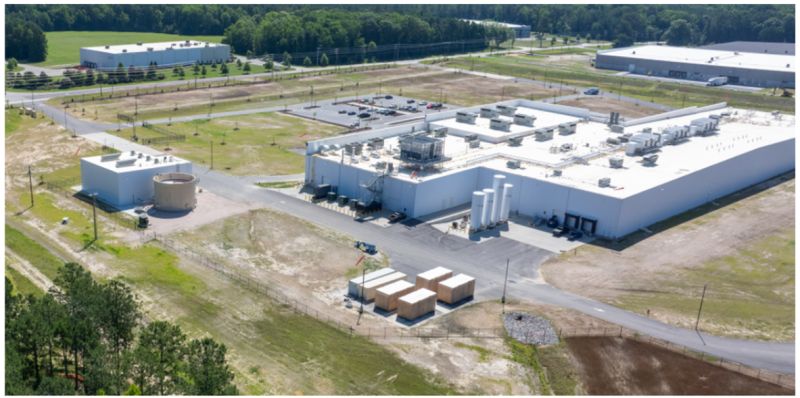
The shutdown came only weeks after Believer secured two significant regulatory milestones. In July 2025, the FDA issued a No Questions letter accepting the company’s safety assessment for cultivated chicken. On 31 October, the US Department of Agriculture granted approval for the company’s product label and for its newly completed 200,000ft2 production facility in Wilson County, North Carolina. The approvals made Believer the first and only large-scale cultivated meat producer cleared for commercial sale in the United States.
Announcing the USDA approval, CEO Gustavo Burger said: “This major milestone authorizes us to begin commercial production and sales of our cultivated chicken products in the USA and export to international markets.” He described the achievement as “a testament to the dedication, innovation, and integrity of our entire team.”
Despite the approvals, the North Carolina plant never entered commercial production. The facility is now at the center of a legal dispute with Gray Construction, which built the site under a design-build agreement signed in 2023. According to Gray’s lawsuit, the company completed work in August 2025 but Believer failed to pay US$34 million in outstanding invoices. A forbearance and release agreement reached in October required Believer to pay US$22 million by 5 December, with the remaining US$12 million due in two installments in 2026. Gray alleges that Believer missed the December deadline, resulting in what it called a material breach, and is seeking to foreclose on the facility or pursue a court-supervised sale.
Believer disputes the claims and has alleged that Gray failed to perform under the design-build agreement. The company’s financial situation appears dire. Gray’s complaint states that Believer is insolvent under its loan agreements and did not sign documents needed to expedite foreclosure and sale of the facility.
Believer’s collapse is particularly notable given the scale of funding it attracted. Founded in Israel in 2018 by Professor Yaakov Nahmias of the Hebrew University, the company raised a US$347 million Series B round in 2021, bringing total investment above US$390 million. Its backers included ADM Ventures, Menora Mivtachim Insurance, S2G Investments, Tyson Ventures, Rich Products Ventures, Manta Ray Ventures, Emerald Technology Ventures, Cibus Capital and Bits x Bites. A memorandum of understanding signed with ADM in 2023 to explore joint commercial opportunities did not produce a partnership of substance.
Believer also pursued major engineering collaborations. In September 2024, it announced a strategic partnership with GEA to co-develop bioreactors, perfusion systems and media rejuvenation technologies intended to improve the performance and sustainability of cultivated meat production. As part of the collaboration, GEA designed custom bioreactors aimed at achieving high cell density and improved yield. Burger said at the time that GEA’s involvement would help the company pursue “cutting-edge technologies and process engineering capabilities that are essential for producing cultivated meat at a commercially viable cost.”
Yet even as Believer made technical advances, conditions in the wider market deteriorated sharply. According to AgFunder, investment in cultivated meat peaked at US$989 million in 2021 before dropping to US$807 million in 2022 and US$177 million in 2023. It fell to just US$55 million in 2024, excluding an undisclosed Hoxton Farms round. Broader food and agtech investment fell 57% between 2021 and 2023, with investment in alternative foods, including cultivated meat, down 67 percent over the same period.
Developments such as this will only intesnify whether cell cultivation can achieve the efficiency and cost structure needed for commercial viability. Production costs remain high, with cell culture media accounting for a significant portion of expenses. Most cultivated meat products are still formulated with limited percentages of cultured cells and rely heavily on plant-based components for structure and texture.
Some industry leaders have raised questions about the pace of technological progress. Eshchar Ben-Shitrit, Founder of Redefine Meat, wrote on LinkedIn: “Future Meat started out very promisingly and at every moment was among the most advanced in the field, perhaps even the most advanced. The regulatory approval, the large plant and the money raised gave them good conditions to reach the market first. In my opinion, the main obstacle is simply the fact that after 10 years, the companies in the field produce cells, but producing cells is not producing meat. The cells do not contribute at all, at least not significantly, to taste or texture. The companies that have received regulatory approval have not yet entered the market, and the technological breakthrough has not brought any real change.”
For Believer, the combination of high capital expenditure, slowing investment, unresolved engineering challenges and a deepening legal dispute appears to have been insurmountable. Its collapse brings one of the cultivated meat sector’s most ambitious efforts to an abrupt close, only weeks after the company achieved the regulatory approvals it had pursued for years.

Join Us At One Of Our Upcoming Events

If you have any questions or would like to get in touch with us, please email info@futureofproteinproduction.com


