Believer Meats collapse deepens as court appoints trustee and freezes claims

Believer Meats, the cell-cultivated meat company formerly known as Future Meat which ceased operations in December, formally entered bankruptcy proceedings after an Israeli court approved the appointment of a temporary trustee to oversee its assets and assess next steps for the business.
The Lod District Court granted the company’s request earlier this week, naming attorney Yoel Freilich as temporary trustee and issuing a 40-day stay on all legal proceedings against the company. The freeze was intended to provide time for an initial review of Believer Meats’ financial position and operational assets.
Under the court’s decision, Freilich was authorized to take control of the company’s assets, ensure their preservation, and manage any future disposition subject to court approval. His mandate included evaluating the feasibility of Believer Meats’ ongoing operations in Israel and the United States.
Court filings showed that Believer Meats’ Israeli entity carried debts of approximately NIS 34.7 million, equivalent to around US$11 million. Its US subsidiary, however, owed significantly more, with liabilities to the parent company totaling NIS 672.4 million, or roughly US$213 million. Combined, the company’s debts exceeded US$220 million.
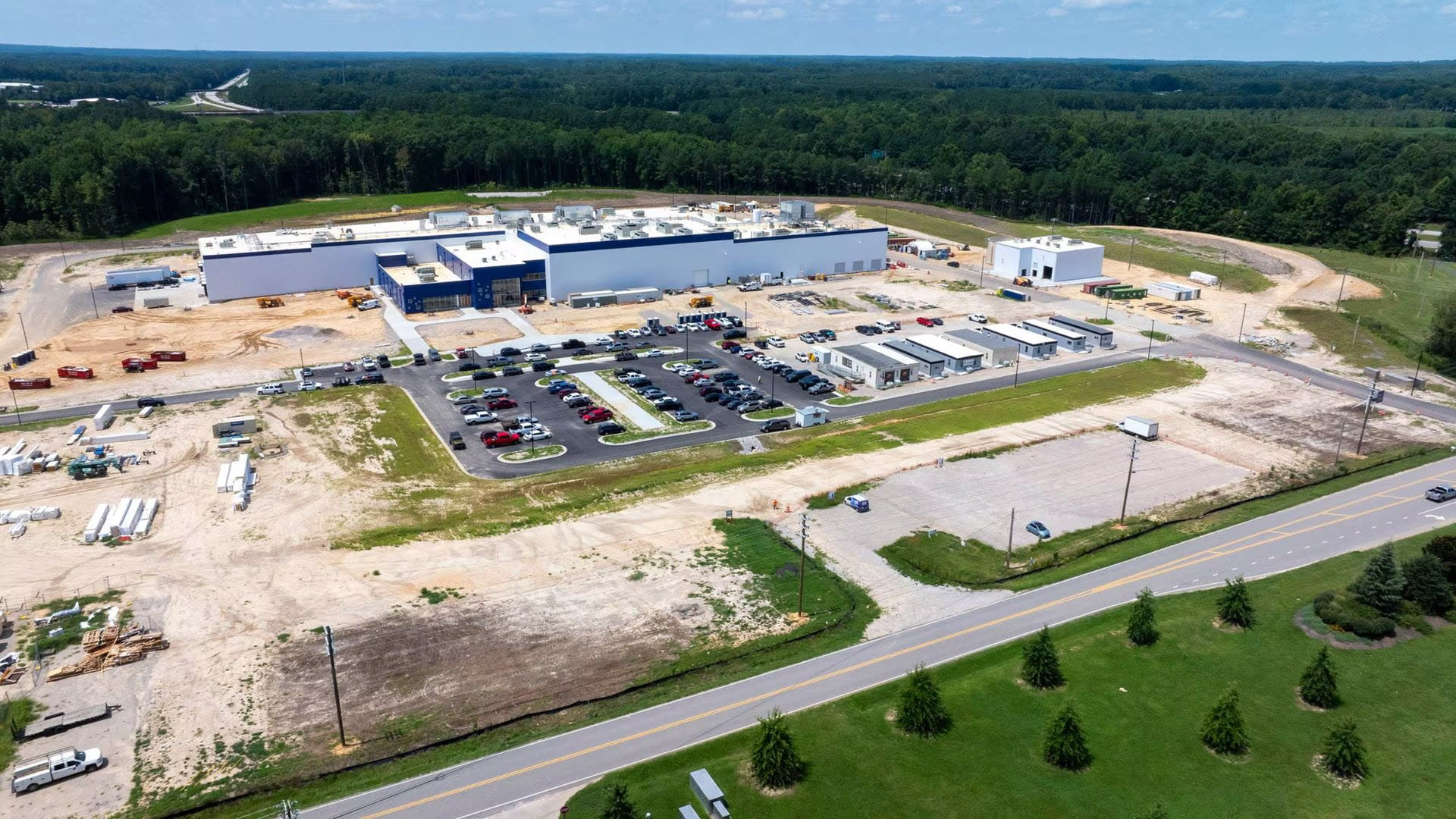
According to the bankruptcy petition, Believer Meats was unable to secure the additional capital required to continue operating and complete its large-scale production facility in North Carolina. The plant had been positioned as a cornerstone of the company’s commercial strategy and one of the largest cell-cultivated meat facilities globally.
In its filing, the company described a prolonged financial crisis from which it had not been able to recover, despite multiple attempts to restructure and raise new funding. The petition cited several contributing factors, including delays and escalating costs linked to the construction of the US facility, as well as slower-than-anticipated regulatory progress.
The company also pointed to broader external pressures that weighed on its operations. These included the impact of the Swords of Iron war, during which a number of employees were called up for reserve duty, and disruptions to shipping and logistics associated with the Red Sea naval blockade. Together, these factors added operational strain at a time when the company was already under financial pressure.
Believer Meats said it also faced growing challenges in attracting new investment, as interest in food tech and alternative protein companies cooled globally. The petition noted that geopolitical considerations tied to the company’s Israeli base further complicated fundraising efforts, particularly among international investors.
The bankruptcy filing followed recent legal action in the United States involving the company’s American subsidiary. A receivership request had been submitted seeking a lien of approximately US$35.2 million and the appointment of a receiver to take control of the subsidiary’s assets. That proceeding accelerated the decision to seek court protection in Israel.
Founded in 2018 by Professor Yaakov Nahmias, head of the bioengineering center at the Hebrew University of Jerusalem, Believer Meats developed a platform for producing cell-cultivated meat without genetic engineering. The company attracted significant attention during the early years of investment enthusiasm for cultivated meat technologies.
Over time, Believer Meats raised approximately US$390 million from investors, including strategic backing from Tyson Foods. At its peak, the company was widely viewed as one of the sector’s most promising players, particularly following announcements around its planned US manufacturing capacity.
As part of his appointment, Freilich was tasked with reviewing options for maximizing value from the company’s remaining assets. These included Believer Meats’ research and development laboratory in Rehovot, Israel, as well as the partially completed manufacturing facility in North Carolina, which had been described by the company as unmatched in scale within the cell-cultivated meat sector.
In a statement submitted to the court, Freilich said he was examining all available paths forward and would conduct a rapid assessment of the company’s operations. He said the objective was to determine the best course of action for stakeholders, with all options remaining under consideration.
The bankruptcy marked a sharp reversal for a company that had once been positioned at the forefront of efforts to bring cell-cultivated meat to market at industrial scale. It also underscored the growing financial and execution challenges facing the cultivated meat sector as companies moved from pilot operations toward capital-intensive commercial facilities.
With the temporary freeze now in place, the immediate future of Believer Meats depended on the trustee’s assessment of whether parts of the business could be sold, restructured, or wound down. For the wider alternative protein ecosystem, the case served as a reminder of the gap between technological promise and the financial realities of scaling novel food production systems.

Join Us At One Of Our Upcoming Events

If you have any questions or would like to get in touch with us, please email info@futureofproteinproduction.com

More News