

Belgium’s 100-strong coalition pressed parliament for a national protein plan

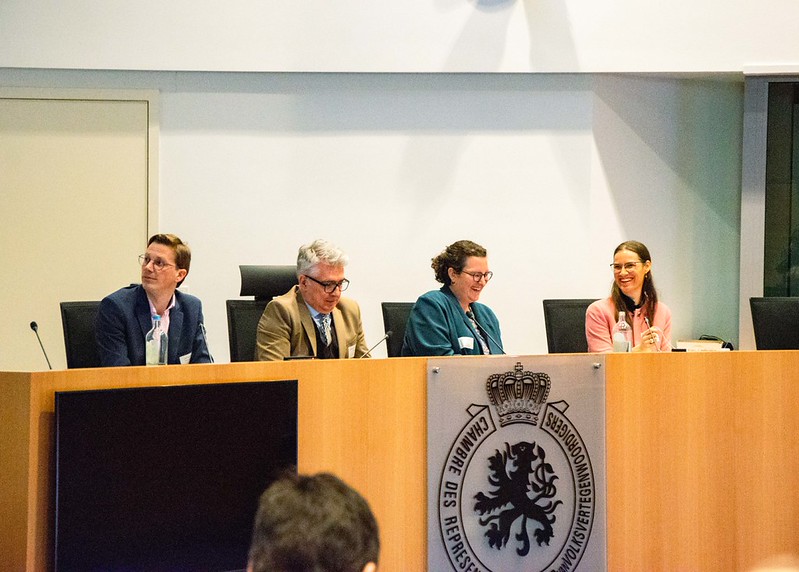
Belgium’s debate over the future of food and farming moved up the political agenda last week, as a coalition of more than 100 stakeholders took its case for a national protein plan to the Federal Parliament, arguing that the country needed a more coordinated strategy to secure its protein supply and support a wider shift toward diversification.
• More than 100 Belgian stakeholders presented a position paper to the Federal Parliament calling for a national protein action plan.
• The coalition said protein diversification was needed to improve food system resilience, strengthen farmers’ position, and support innovation across the supply chain.
• Supporters pointed to Denmark’s plant-based action plan and said Belgium should align regional initiatives under a unified national framework.
The group, which brought together universities, civil society organizations, retailers, and agricultural bodies from across Belgium, presented a position paper titled Towards a Secure and Sustainable Belgian Protein System. Its central message was that proteins remained essential to human health, but the systems that produced and delivered them were coming under growing strain from a range of economic, environmental, and geopolitical pressures.
At the event, the coalition argued that Belgium’s protein system could no longer be viewed in narrow agricultural terms alone. Instead, it linked protein production and consumption to a wider set of pressures that included geopolitical and economic uncertainty, climate change, biodiversity loss, rising living costs, and the weakening economic position of farmers, many of whom had been leaving the sector.
The coalition said those pressures made diversification more urgent. Rather than relying too heavily on a limited set of protein sources, it called for production and consumption to be spread across a broader mix, with the goal of building a more resilient and secure food system.
According to experts present at the Federal Parliament, those goals could be supported through a federal action plan focused on protein diversification. Such a plan, they argued, would not only help strengthen farmers’ position in local protein cultivation, but also support innovation throughout the value chain.
Meyrem Almaci, the Groen MP who attended the launch, tied that case directly to agriculture and food security. “For the sake of our agriculture and food security, investing in innovation is urgent,” she said. “In Europe, subsidies for animal production are still four times higher than for plant-based production, based on outdated models.”
The position paper was introduced by the lead organizers, Bond Beter Leefmilieu and ProVeg Belgium, before representatives from across the food supply chain added their perspectives. The event also drew political participation from both of Belgium’s main regional parliamentary spheres, with Christine Mauel from MR and Mien Van Olmen from CD&V in attendance.
That regional dimension sat at the heart of the coalition’s argument. Belgium was not starting from scratch. A protein strategy already existed in Flanders, and Wallonia had been advancing initiatives such as Protewin. But ProVeg Belgium argued that fragmented progress would not be enough if the country wanted to unlock the full benefits of protein diversification.
Nicolas Vamvas Ferrandez, Policy Officer at ProVeg Belgium, said a national framework was needed to connect the dots. “To turn this potential into practice, a coherent policy is indispensable,” he said. “While a Flemish protein strategy exists and initiatives like Protewin are moving forward in Wallonia, this coalition is calling for better alignment and a unified Belgian plan that pools insights and sets clear national objectives”.
That call for alignment reflected a broader concern that without national coordination, Belgium risked developing patchwork approaches that varied by region, policy area, or political priority. Advocates said a federal plan should cover both supply and demand, rather than focusing only on production. In practice, that meant combining support for farmers and local protein cultivation with policies that could help shape markets, investment, and consumption patterns.
The coalition said such a plan should include coordinated support across multiple ministerial portfolios, ranging from financial incentives to legislation. That indicated a push for protein diversification to be treated not as a single-sector issue, but as one that touched agriculture, health, environment, trade, and innovation policy all at once.
Belgian advocates also placed their campaign in a wider European context. They pointed to Denmark’s Action Plan for Plant-Based Foods as a working example of how national governments could take a more structured approach to protein diversification and plant-based food chains. In doing so, they suggested Belgium was part of a broader European shift, rather than an outlier.
Christine Leidner, Policy Manager at the European Vegetarian Union, said the Belgian push reflected momentum elsewhere in the bloc. “This recent Belgian development, built on consensus and broad support across different stakeholders, mirrors similar initiatives in other EU countries,” she said. “These promising national developments should encourage the European Union to develop an ambitious protein strategy and, in addition, a specific Action Plan dedicated to the development of plant-based food chains across Europe.”
That wider framing mattered. While the Belgian coalition’s immediate demand was national, its backers clearly wanted the initiative to feed into the EU policy debate as well. By bringing together such a broad range of domestic stakeholders, the coalition appeared to be making the case that protein diversification had moved beyond a niche advocacy issue and into the territory of mainstream food policy.
For now, the immediate question was whether Belgium’s federal policymakers would respond with the kind of joined-up plan the coalition had demanded. What the launch at Parliament made clear was that supporters no longer saw regional efforts alone as enough. They wanted a national roadmap, shared objectives, and a clearer political commitment to reshaping how Belgium produced, supported, and thought about protein.

Join Us At One Of Our Upcoming Events

If you have any questions or would like to get in touch with us, please email info@futureofproteinproduction.com


