

Altruistic Innovations launches dual data push to decode cultivated meat patents and map India’s fermentation ecosystem

A new initiative led by Altruistic Innovations is aiming to tackle one of the alternative protein sector’s most persistent challenges: fragmented, hard-to-interpret data.
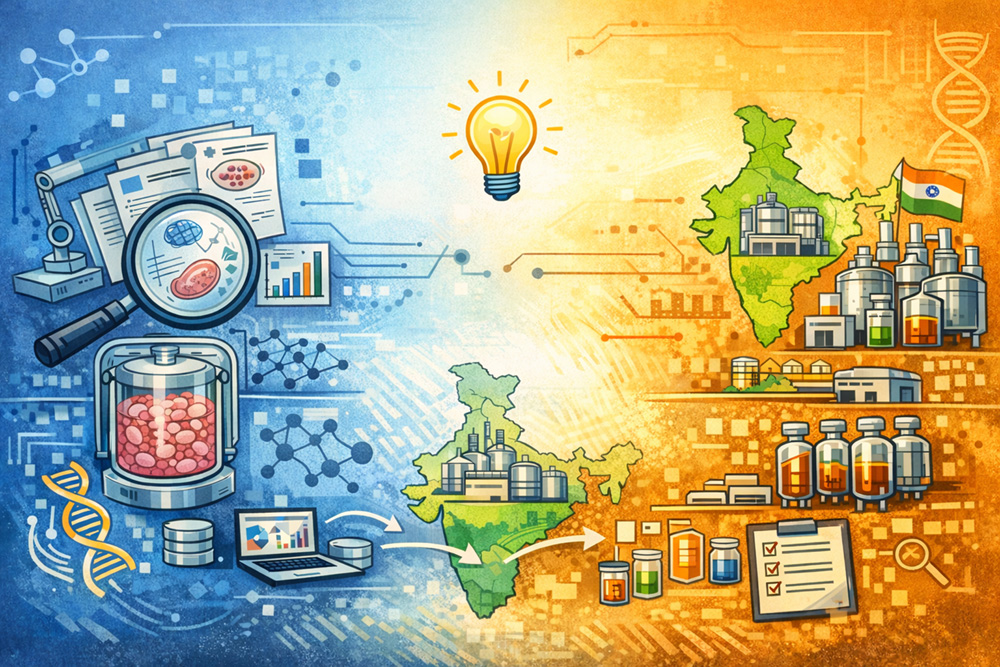
The organization has launched two parallel projects focused on decoding cultivated meat patents and mapping India’s fermentation and bioprocess infrastructure, in an effort to bring greater clarity to technology trends, scale-up readiness, and regulatory pathways.
• Altruistic Innovations has launched two initiatives focused on cultivated meat patent analysis and India’s fermentation infrastructure mapping to address fragmented data across the alternative protein ecosystem.
• The cultivated meat project has aimed to decode patents, identify innovation trends, and highlight scale-up bottlenecks across areas such as cell biology, media development, and bioprocess engineering.
• The India-focused initiative has targeted infrastructure mapping, pilot-to-commercial readiness assessment, and development of regulatory pathway guidance for fermentation-based food innovation.
The projects were initiated by Sruthi Sadanand, Founder of Altruistic Innovations, who described the effort as a response to a gap she had observed across both cultivated meat and fermentation.
“This has been on my mind for the past few months – and we’re finally kicking it off with focus,” she said, explaining that both initiatives stemmed from the same underlying issue. “There is a lot happening in this space – but much of the data is fragmented, difficult to interpret, and not easily actionable.”
In cultivated meat, Sadanand pointed to the complexity of intellectual property as a particular barrier. “Innovation is often buried within complex patents,” she said, describing a landscape where technical progress is not always easily accessible or comparable.
The Cultivated Meat Patent Decoding Project aims to systematically analyze patents across key technology domains to uncover innovation signals and scaling challenges shaping the sector.
This includes areas such as cell line development, media optimization, bioprocess engineering, and product structuring. By mapping these domains, the initiative is designed to identify emerging trends while also highlighting bottlenecks that could slow commercial progress.
The project also aims to build a structured database tracking the technological evolution of cultivated meat, providing a more accessible view of how innovation is developing across the sector.
Alongside patent analysis, the second initiative focuses on a different but equally complex challenge: understanding the readiness of fermentation infrastructure in India.
Sadanand described the fermentation landscape as one where momentum is building, but visibility remains limited. “In fermentation, especially in India, there is growing momentum – but limited visibility on infrastructure readiness, pilot-to-scale capabilities, and regulatory pathways,” she said.
The India Fermentation and Bioprocess Infrastructure Mapping Project has been designed to address those gaps by cataloging facilities, assessing capabilities, and developing clearer guidance on regulatory processes.
The initiative will map fermentation and bioprocess facilities across the country, identify infrastructure clusters, and evaluate the transition from pilot to commercial-scale capacity.
In parallel, it will examine regulatory frameworks, including approval pathways and compliance requirements for fermentation-derived foods, with the aim of producing a step-by-step regulatory handbook for companies entering the space.
The expected outputs include a national database of fermentation infrastructure, capability mapping across facilities, and practical guidance to help companies navigate approvals and scale-up decisions.
Taken together, the two initiatives reflect a broader effort to connect scientific innovation with practical, real-world application. Sadanand described the work as “a focused, learning-led effort to bring structure to what already exists,” rather than a fixed, outcome-driven project.
A key part of that approach is the involvement of early-career researchers. The projects are being carried out by a team of interns working across patent analysis, technology mapping, infrastructure assessment, and regulatory navigation.
The initiative also serves as a research and learning platform, enabling participants to develop skills in patent analysis, innovation pattern recognition, and ecosystem mapping.
The team includes contributors from institutions such as Johns Hopkins University, the University of Hohenheim, MIT ADT University in Pune, and DY Patil International University, reflecting a mix of expertise in biomedical engineering, food systems, and bioengineering.
Their work spans both technical and commercial dimensions of the alternative protein sector. For example, contributors are analyzing patents related to cell biology and media development, while also examining downstream processing, fermentation capabilities, and regulatory frameworks.
The broader goal, according to Sadanand, is to create a dataset that is not only comprehensive but also usable by stakeholders across the ecosystem. “By combining a strong intent to decode innovation, connect the ecosystem, and collaborate openly, we aim to build a dataset that can add real value to the alternative protein landscape,” she said.
The initiative also reflects a wider shift within the sector toward more structured, data-driven decision-making. As alternative proteins move beyond early-stage innovation, companies are increasingly looking for clearer insights into technology readiness, infrastructure availability, and regulatory requirements.
This need for visibility is particularly pronounced in emerging markets such as India, where fermentation is gaining attention as a platform for producing alternative proteins and ingredients, but where ecosystem mapping has lagged behind technological development.
Clearer visibility on infrastructure, technology trends, and regulatory pathways is expected to play a role in supporting collaboration and accelerating progress across the sector.
Sadanand described the initiative as sitting at the intersection of multiple priorities within the space. “For me, this sits at the intersection of everything I care about: connecting science, systems, and real-world applications,” she said.
While still in its early stages, the project has been framed as an open, collaborative effort, with Sadanand inviting input from others working across cultivated meat, fermentation, bioprocessing, and regulation.
She also raised a broader question for the sector: where the biggest gaps lie. “What do you think is the biggest gap today – technology understanding, infrastructure, or regulation?” she asked.
By focusing on both intellectual property and infrastructure, Altruistic Innovations is attempting to address two sides of the same challenge: understanding where innovation is happening, and whether the systems exist to scale it.
As the alternative protein sector continues to evolve, efforts to make data more visible, connected, and actionable are becoming an increasingly important part of how companies and researchers navigate the path from concept to commercialization.

Join Us At One Of Our Upcoming Events

If you have any questions or would like to get in touch with us, please email info@futureofproteinproduction.com


