

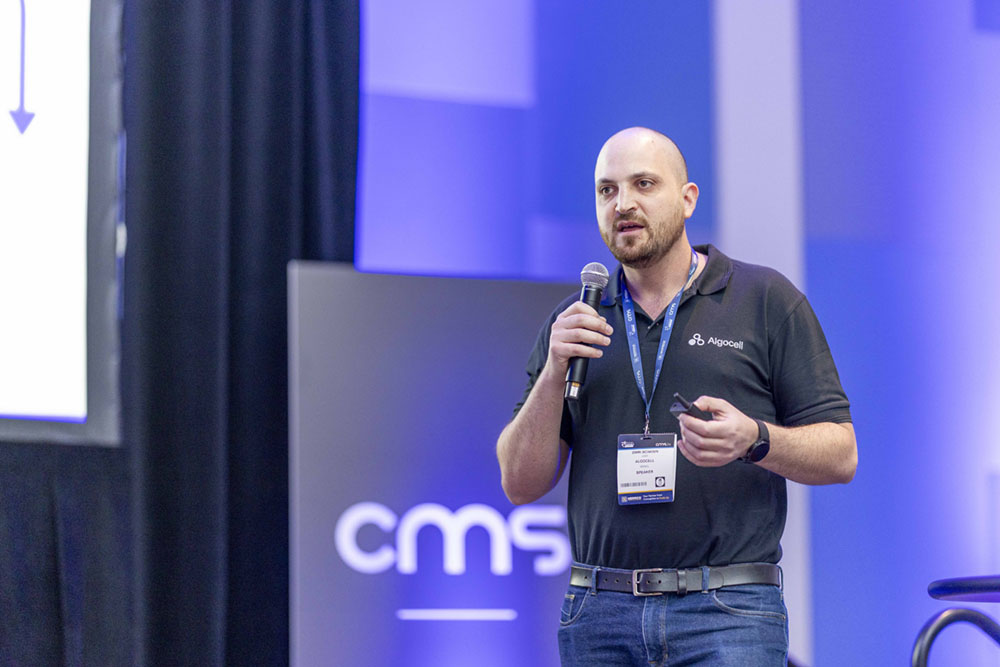
Algocell survey finds AI adoption accelerated, but operationalizing it remains bioprocessing’s biggest challenge

Artificial intelligence entered bioprocess development carrying expectations normally reserved for breakthrough therapies. It promised shorter development cycles, fewer experiments, sharper process optimization and a less punishing route from laboratory concept to commercial production. Across industrial biotechnology, the premise seemed irresistible: better algorithms would produce better bioprocesses. Reality had proved considerably more stubborn.
A new survey conducted by UC San Diego and Israeli bioprocess AI company Algocell suggested the industry’s challenge had shifted. Convincing scientists that AI had value was no longer the problem. The harder question was how to make it work reliably inside one of the most unpredictable environments in modern manufacturing – biology.
• A UC San Diego and Algocell survey found 76% of bioprocess professionals reported increasing use of AI, yet 70% believed expectations continued to outpace real-world performance.
• Data readiness and internal expertise emerged as the biggest barriers to successful AI integration, ahead of software availability or budget.
• Algocell CEO Omri Schanin said the companies gaining the greatest advantage were redesigning their development process around predictive modeling rather than simply adding AI tools.
The findings, based on responses by 124 bioprocess engineers, researchers and scientists across the Americas, Europe and Asia, painted a picture of an industry entering a more demanding phase of AI adoption. Three-quarters of respondents said their use of AI had grown over the past year, but fewer than half believed the technology had become fully embedded in their day-to-day development activities. More tellingly, 70% said there remained a clear gap between what AI was expected to achieve and what it was delivering in practice.
From AI hype to operational reality
For Omri Schanin, CEO & Co-founder of Algocell, the disconnect reflected an industry beginning to ask more realistic questions.
“Expectations are higher than today’s reality because industries such as software development and customer support have seen LLMs deliver remarkable value, creating the expectation that the same technology can transform biomanufacturing,” he said.
Those comparisons, he argued, overlooked a fundamental distinction between digital systems and living ones.
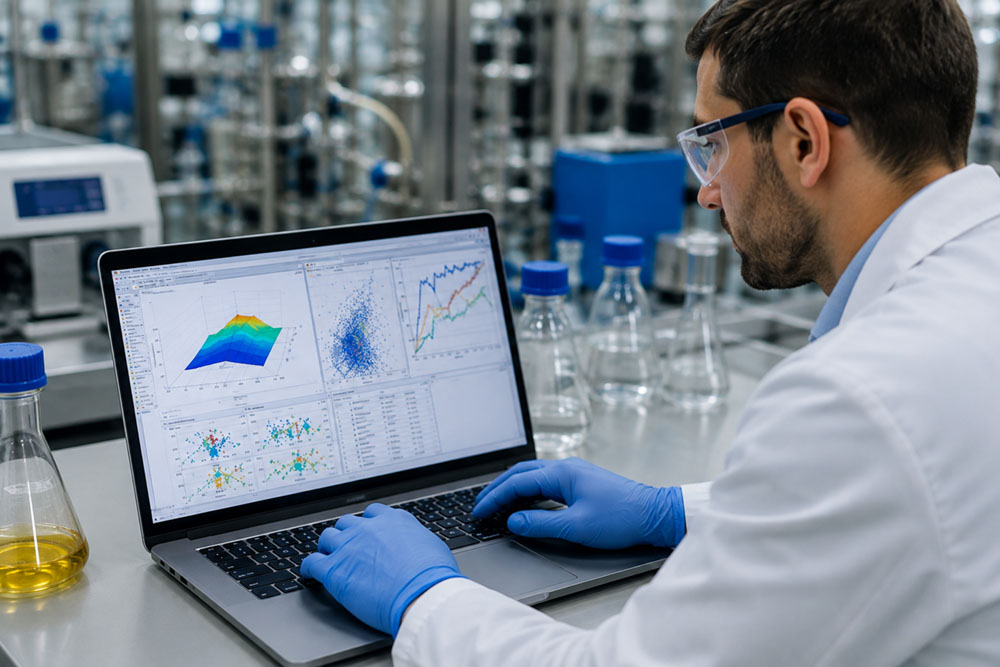
Bioprocess development is fundamentally different. It is a time-series prediction problem driven by complex, non-stationary biological dynamics that vary from process to process
“Bioprocess development is fundamentally different. It is a time-series prediction problem driven by complex, non-stationary biological dynamics that vary from process to process, even when using the same cell line or microorganism. General-purpose LLMs alone cannot capture this complexity. The industry is only beginning to understand that AI for biomanufacturing requires a fundamentally different approach that combines LLMs with other technological domains.”
Why biology refuses to behave like software
It is a reality that rarely features in conversations about AI. Even seemingly identical fermentations can diverge as subtle shifts in biology alter the outcome, making prediction far more difficult than in digital systems.
That complexity also explains why AI has yet to deliver the transformation many expected. The challenge is not generating predictions. It is generating predictions that bioprocess engineers are prepared to trust when every failed run represents weeks of work, valuable materials and significant cost.
Perhaps the survey’s most revealing insight was one Schanin himself had not anticipated.
“What surprised me was how positive the survey responses were overall,” he said. “When you look at the report, it implies a solid baseline of adoption across offline modeling. But when I talk to people in the field, implementation is rarely that sophisticated.”
The results prompted him to question whether the industry’s perception of AI maturity had drifted ahead of reality.
“Companies are really struggling with this transition, even if they give optimistic answers on paper. The survey forced a real insight: the market isn’t as far along as the survey data implies, and closing that gap between survey confidence and actual bench practice is where the real work lies.”
That observation may ultimately prove more significant than any individual statistic. For a while now, the conversation around AI in biotechnology has focused on adoption: which companies were using it, which software they had deployed and how quickly implementation was accelerating. The survey suggested the industry had moved into a different phase. Adoption had become relatively easy. Operationalizing AI inside established research environments remained difficult.
The real barrier wasn't the AI
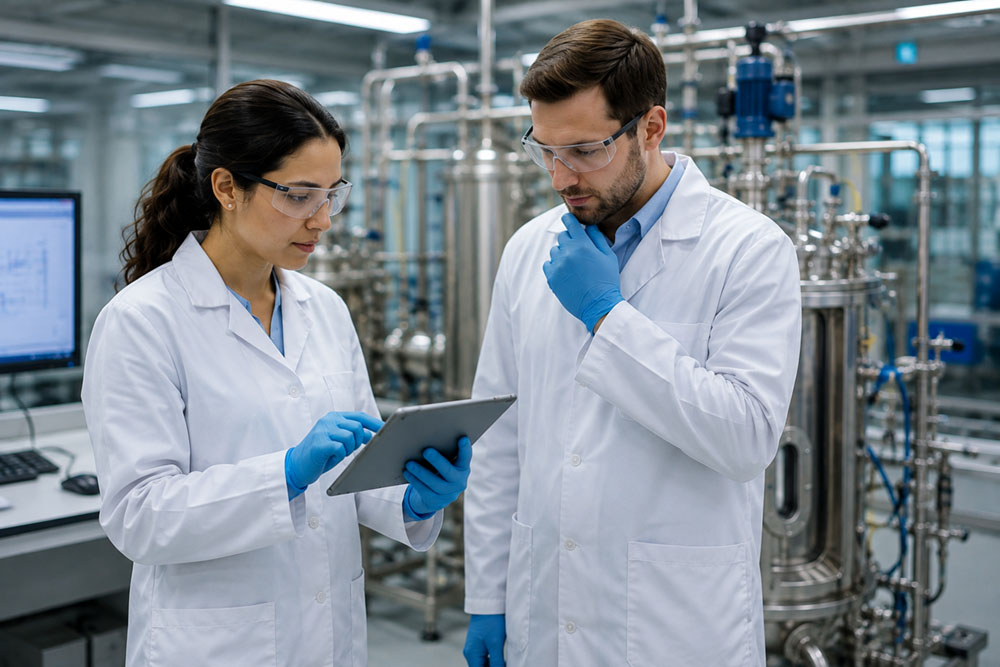
If the expectation gap exposed the industry’s biggest hurdle, the survey also pointed to why it persisted. The obstacle was not a shortage of AI platforms. Nor was it a lack of investment. Instead, respondents consistently pointed to something far less glamorous: the foundations needed to make AI useful in the first place.
Poor data availability and limited internal expertise emerged as the two biggest barriers to implementation, ahead of budget constraints or software access. The conversation was moving away from which AI tools companies should buy and toward whether their organizations were ready to use them effectively.
Better data, not more data
Schanin believed the industry had been asking the wrong question.
“We have all known the phrase ‘garbage in, garbage out’ for years, and it certainly applies here,” he said.
“But I think it’s also part of an outdated assumption that AI requires massive amounts of data to be effective.”
The belief was understandable. The more experimental data available, the more accurate the predictions should become. Schanin argued that advances in hybrid modeling had fundamentally changed that equation.
“Data quality remains essential, but data volume is no longer the limiting factor. With hybrid models, you don’t need to train a model from scratch. You need a relatively small amount of high-quality experimental data to calibrate an existing mechanistic model. That’s a fundamental distinction, and I believe educating the market about that difference is just as important as advancing the technology itself.”
Biological data is expensive to generate. Every fermentation run consumes media, equipment time, engineering resources and weeks of scientific effort. If AI can produce reliable predictions without requiring enormous quantities of new data, the economics of process development begin to look very different.
The survey suggested companies were beginning to recognize that reality. When asked how AI adoption could be accelerated, respondents overwhelmingly favored strengthening the capabilities already inside their organizations. Nearly three-quarters supported upskilling existing employees, while only around a third believed hiring dedicated AI specialists should be a priority. Improving data management attracted even stronger support.
The findings also suggested AI was becoming part of the day-to-day skillset expected of bioprocess scientists, alongside fermentation, analytics and process engineering.
Designing experiments before entering the lab
Yet Schanin believed the most significant transformation was happening elsewhere. Not in the software. Not even in the people. But in the sequence of scientific discovery itself.
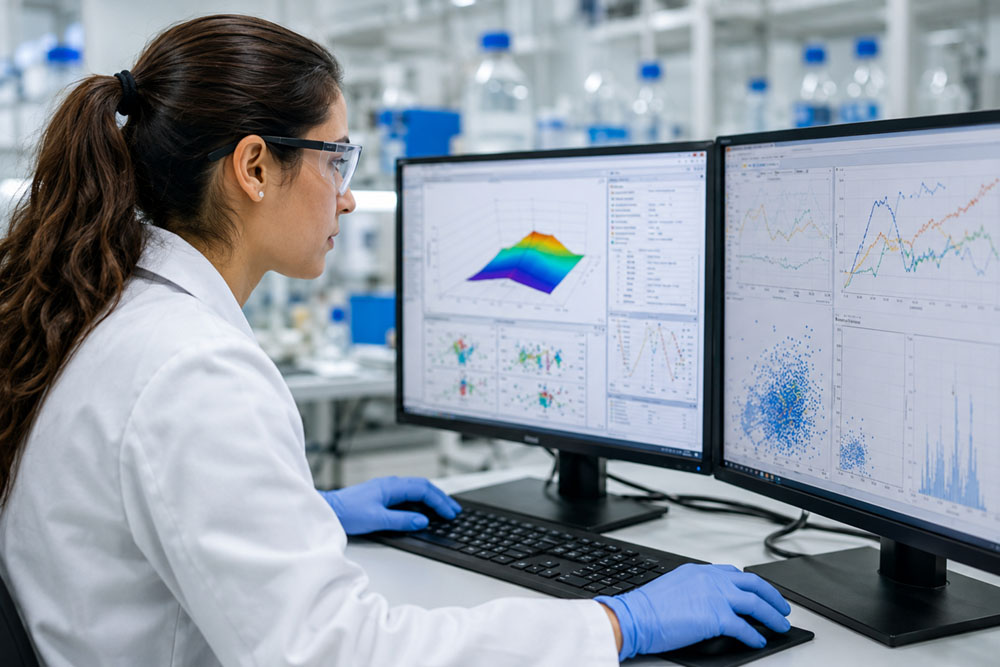
In an operationalized lab, scientists run predictive models offline to design the experiment before buying a single drop of media. You build the digital model before you touch the bench
“In an exploratory lab, AI analyzes data after a run,” he said. “In an operationalized lab, scientists run predictive models offline to design the experiment before buying a single drop of media. You build the digital model before you touch the bench.”
Experimental science has long followed a familiar rhythm: develop a hypothesis, perform an experiment, analyze the results, then begin again. AI is beginning to move that first experiment into the digital world, allowing researchers to decide which ideas deserve to reach the bench in the first place. For developers of precision-fermented proteins, cultivated meat, enzymes and other biologically derived ingredients, that meant fewer experiments, lower development costs and a faster path toward commercial manufacturing.
Respondents reported the greatest benefits from AI in offline activities such as experimental design, process optimization and predicting process performance. By contrast, confidence was noticeably lower when it came to real-time manufacturing applications such as process control and online optimization, where biological variability leaves much less room for error.
Competitive advantage comes from changing the workflow
Rather than viewing that as a limitation, Schanin saw it as evidence that the technology was maturing in a logical sequence.
“The biggest returns are coming from companies that have redesigned their development workflow, not just added AI as another tool,” he said.
“Instead of following the traditional cycle of hypothesis, experiment, analysis, and the next hypothesis, they have introduced modeling, simulation, and Model-Based Design of Experiments before entering the lab.”
Schanin argued the impact went far beyond incremental efficiency.
“That shift enables teams to eliminate up to 80% of physical experiments while identifying optimization opportunities that would have been difficult or impossible to discover experimentally alone."
If that figure proves achievable at scale, it would represent far more than a productivity improvement. For an industry where scale-up remains one of the greatest barriers to commercialization, reducing physical experimentation could fundamentally alter the economics of bioprocess development.
From AI adoption to AI infrastructure
For all the discussion around artificial intelligence, one of the survey's quieter findings may prove to be one of its most significant. There was no dominant AI platform emerging across bioprocess development.
Just 21% of respondents said commercial vendors were their primary source of AI tools. Others relied on open-source libraries, academic collaborations, internally developed software or partnerships, suggesting no single platform had emerged as the industry's standard. For Schanin, that was precisely the point.
“If I’m being candid, I’ve seen far more friction than success when companies try to operationalize AI,” he said.
The competitive advantage won’t come from simply using AI, but from embedding AI and process modeling into every stage of bioprocess development and manufacturing
“The biggest mistake is scaling physical experimentation before solving the process digitally.”
Rather than treating AI as another analytical tool layered onto existing laboratory practices, the most successful teams were rethinking the order in which development happened.
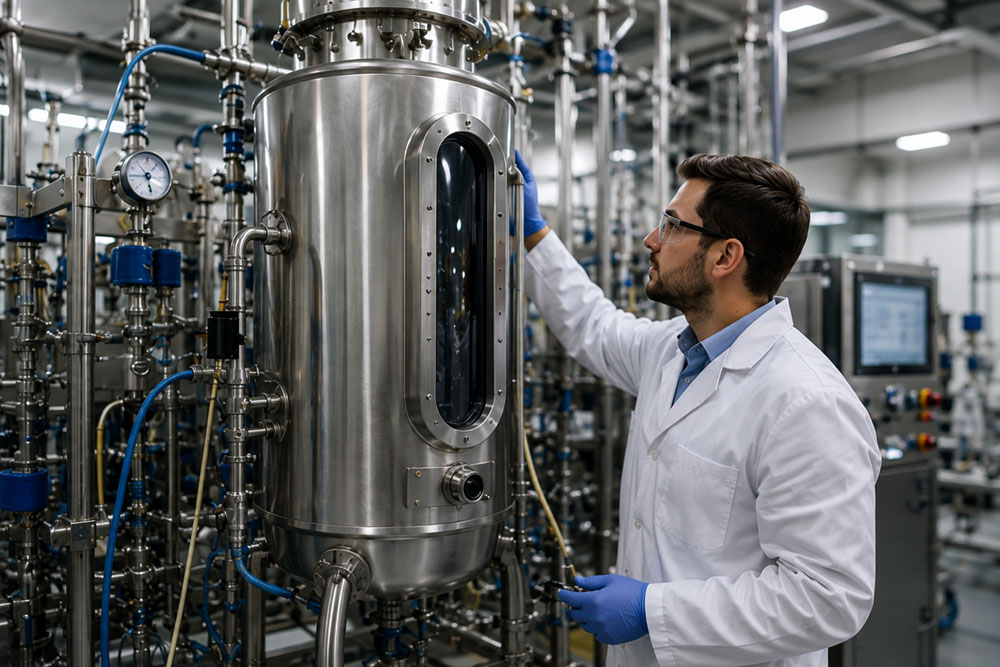
“The teams getting this right work backwards,” he said. “They build and calibrate the digital representation of their process upfront. By using offline models to identify critical process parameters beforehand, they minimize physical bench trials and de-risk their scale-up before spending heavy capital.”
Scale-up starts on the screen
For companies working to commercialize alternative proteins, the implications were obvious.
Scale-up remains one of biotechnology’s greatest financial hurdles. Every additional pilot run demands raw materials, engineering time and manufacturing capacity, often before there is any certainty that the process will translate successfully to larger reactors. The ability to eliminate unsuccessful experiments before they begin is not simply an exercise in efficiency. It has the potential to preserve capital, shorten development timelines and reduce one of the biggest sources of technical risk facing early-stage companies.
The survey suggested the industry was already moving in that direction. Respondents consistently reported greater confidence in AI applications that supported planning and experimental design than in systems making decisions during live manufacturing. In other words, AI was proving its value first where scientists could validate its recommendations before committing valuable biological material to the process.
Trust will define the next phase
Schanin expected that pattern to continue. “In two or three years, predictive models will become background infrastructure, while Generative AI will take center stage,” he said.
“We’ll see AI supporting process design, simulation, and Model-Based Design of Experiments, while enabling real-time process insights, model-based control, and intelligent sensor integration.”
Schanin believed the conversation would soon move beyond adoption altogether.
“The competitive advantage won’t come from simply using AI, but from embedding AI and process modeling into every stage of bioprocess development and manufacturing.”
It may also prove to be the survey’s most important finding. Success has largely been measured by whether companies had adopted artificial intelligence at all. The next phase is likely to be far less visible. Competitive advantage will be determined not by who has access to AI, but by who quietly reorganizes their scientific process around it.
For organizations still at the beginning of that journey, Schanin offered one final piece of advice. “Avoid blind reliance on ‘black box’ models. Biology is inherently unpredictable, and if an algorithm recommends a process adjustment without showing its reasoning, your scientists won’t know if it caught a genuine biological insight or just reacted to noisy data. Always demand explainable AI and test the logic offline first.”
As AI becomes another routine tool inside the bioprocess laboratory, those words may prove less a warning than a blueprint. The race was no longer to adopt artificial intelligence first. It was to build the confidence to trust it where it mattered most.
If you liked this, check these out...
• BioHarvest secures US$1.4 million Israel Innovation Authority grant to advance AI-powered plant cell synthesis
• StrainX Bioworks raises US$13 million to scale precision fermentation platform
• Imperial opens Bezos Centre labs to advance sustainable protein research in London

Join Us At One Of Our Upcoming Events

If you have any questions or would like to get in touch with us, please email info@futureofproteinproduction.com


