


Alex Shirazi brings cell-cultivated meat out of the lab and into the home kitchen

Food technologist and writer Alex Shirazi has launched a Kickstarter campaign for A Scientist’s Cookbook: Everyday Recipes with Cultivated Meat, a project that sets out to explore how cell-cultivated meat could realistically be prepared and used in home kitchens as products begin edging toward market availability.
• Alex Shirazi launched a Kickstarter campaign to fund the first print run of A Scientist’s Cookbook, focused on everyday cooking with cell-cultivated meat.
• The cookbook centered on products already approved in some markets, those expected to reach shelves in the near term, and plant-based alternatives where availability remained limited.
• The project combined recipes, technical context, and photography to translate cell-cultivated meat from scientific discussion into practical cooking use.
As cell-cultivated meat moves slowly from research laboratories toward early commercial use, much of the public conversation has remained anchored in regulation, sustainability, and long-term impact. Shirazi’s cookbook takes a more immediate and practical angle, focusing on what these products might look like once they reached consumers and how they could fit into familiar cooking routines.
Rather than presenting speculative or futuristic dishes, A Scientist’s Cookbook was built around meals people already recognized. Recipes were developed using cell-cultivated meat products available today, those expected to reach the market in the near future, and carefully selected plant-based alternatives used as interim stand-ins. The approach reflects the uneven pace of global approvals while emphasizing that the book was designed to evolve alongside product availability.
Cell-cultivated meat, sometimes referred to as cultured or lab-grown meat, is produced by growing animal cells directly rather than raising and slaughtering animals. The process begins with a small sample of animal cells, which are cultivated in a controlled environment using nutrients that allow them to multiply and form muscle tissue. While availability remained limited, products had already been approved in select regions, with additional markets expected to follow in the coming years.
Shirazi says the cookbook is a way to treat cell-cultivated meat as a food ingredient rather than a technological novelty. By focusing on cooking techniques, handling, and integration into existing dishes, the book aims to move the conversation away from abstraction and toward everyday use.
“There is a lot of discussion about cultivated meat in terms of regulation and sustainability,” Shirazi said. “But very little about how it actually shows up in everyday life. These products are now starting to become available and this cookbook focuses on that missing step.”
The project arrives at a moment when the cell-cultivated meat sector faces heightened scrutiny alongside significant technical progress. Investment slowdowns, public skepticism, and questions around scale have coincided with advances in production methods and early regulatory approvals. Against that backdrop, Shirazi frames the cookbook as a grounded, transitional tool rather than a statement about long-term futures.
Shirazi brings several years of experience covering cellular agriculture to the project, having interviewed founders, scientists, and engineers working across the space. He previously published a children’s book introducing the concept of cultivated meat to younger audiences and hosted the Cultured Meat and Future Food podcast, where he focuses on making complex food technologies accessible. He also draws on earlier experience with the commercial applications of novel protein products through a previous startup.
A Scientist’s Cookbook is designed to combine culinary guidance with technical context. Alongside recipes, the book explains how cell-cultivated meat behaves differently from conventional meat and existing alternatives, and how cooking approaches might change as new formats and cuts became available. Shirazi emphasizes safe handling, realistic expectations, and adaptability as products continued to develop.
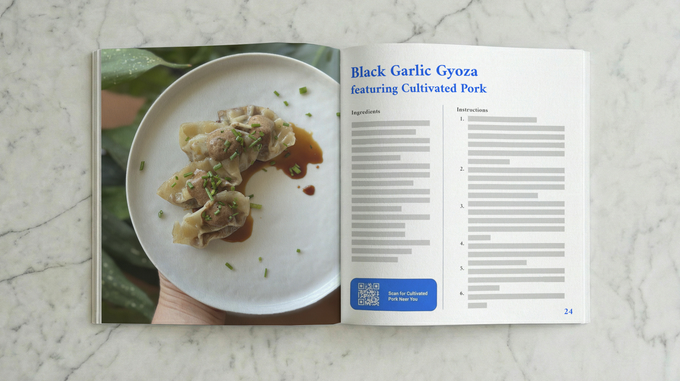
The cookbook is planned to feature more than 60 recipes with full-color photography, drawing on meat-centric dishes from a range of culinary traditions. Recipes are reworked to use cell-cultivated meat as a core ingredient where possible, reflecting an effort to situate the technology within established food cultures rather than treating it as a niche category.
To account for uneven global access, the book also includes plant-based alternatives for each recipe where cell-cultivated meat was not yet available. A QR code directs readers to an online dashboard tracking approved and emerging products across different regions, allowing the content to remain current as markets evolved.
The Kickstarter campaign was intended to fund the first print run and distribution of the cookbook. Backer rewards included signed first-edition copies and early access to digital materials. Shirazi said he was working with partners across recipe testing, art direction, editing, printing, and distribution to deliver the project.

Join Us At One Of Our Upcoming Events

If you have any questions or would like to get in touch with us, please email info@futureofproteinproduction.com


