

Adelaide University study finds risk and value concerns outweigh advertising for plant-based meat

Meat eaters viewed plant-based meat as riskier and offering less value than conventional meat regardless of how products were advertised, according to new research from Adelaide University that suggested marketing alone was unlikely to overcome established consumer concerns.
• The study surveyed almost 1,000 Australian adults and examined how perceived risk, quality and value influenced attitudes toward plant-based meat.
• Switching between emotional and rational advertising had little effect on most meat eaters, whose existing perceptions remained the strongest influence on purchase decisions.
• Rational messaging improved perceptions of quality among vegetarians, while emotional advertising reduced acceptance among younger consumers by lowering perceived product quality.
Published in the Journal of Marketing Management, the study examined whether different advertising approaches could change consumer acceptance of plant-based meat, while exploring the role played by perceptions of financial, psychological and time-related risk.
Researchers surveyed almost 1,000 Australian adults in an online experiment designed to reflect the country's population by age, gender and state.
“We had expected the advertising appeal to have a stronger overall effect, but for most meat eaters it made little difference,” lead researcher Dr Cassidy Shaw from Adelaide University's School of Marketing said.
“Their existing perceptions of plant-based meat as riskier and offering less value remained the strongest influence on their decisions. This is consistent with what we know about established attitudes: once formed, they tend to be durable and difficult to change over time.”
The research suggested that changing the type of message presented to consumers did relatively little to alter those underlying views. Emotional advertising centered on enjoyment was compared with rational messaging focused on health, but neither approach substantially shifted perceptions among most meat eaters.
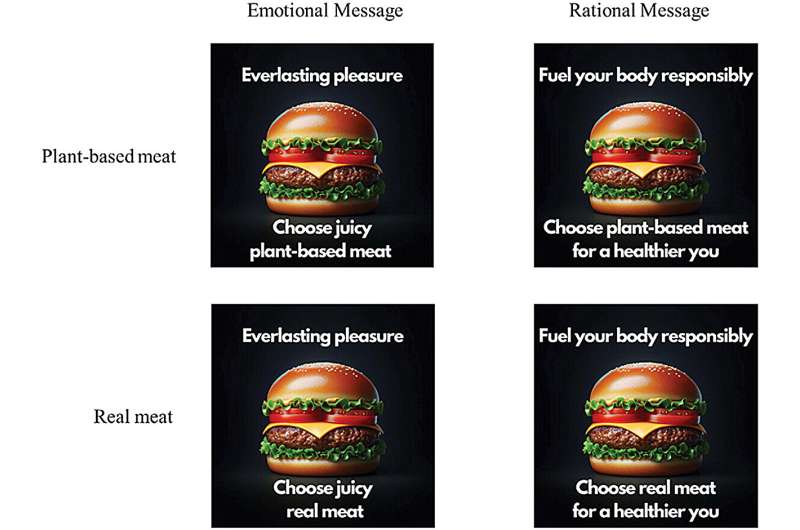
“Advertising alone is unlikely to overcome concerns for most meat eaters because perceptions of risk and value are more influential than the style of the message itself,” Shaw said.
The results were not uniform across different consumer groups. Among younger consumers, emotional advertising reduced acceptance of plant-based meat because it lowered perceptions of product quality.
Vegetarians responded differently. Rational advertising strengthened their perceptions of quality and increased both their willingness to purchase plant-based meat and their likelihood of recommending it to others.
“Among younger consumers, emotional advertising actually backfired, reducing acceptance of plant-based meat because it lowered perceptions of quality,” Shaw said.
“Among vegetarian consumers, rational messages strengthened perceptions of quality and increased their willingness to purchase and recommend the product.”
Shaw conducted the research alongside Professor Armando Corsi, Dr David Jaud, Associate Professor Rebecca Dolan and Associate Professor Steve Goodman.
The findings offered another indication of the difficulty facing plant-based meat manufacturers seeking to convert consumers who regularly eat conventional meat. Rather than advertising style itself, the research identified perceptions of risk, product quality and value for money as important influences on willingness to buy.
Australia provided a particularly relevant market for the research because of its high levels of meat consumption and strong social and cultural associations with conventional meat. At the same time, consumers have become increasingly aware of alternatives linked to environmental, animal welfare and health considerations.
The researchers investigated why that awareness had not necessarily translated into greater willingness to choose plant-based products.
Their findings supported previous research showing greater consumer hesitation toward plant-based meat than conventional meat, while providing further detail on the concerns associated with that reluctance.
For manufacturers and marketers, the results suggested different consumer groups required different approaches rather than a single advertising strategy.
For younger consumers and vegetarians, the researchers identified factual, rational messaging that clearly communicated product quality as the more effective approach.
Reaching meat eaters appeared to require attention further upstream. The researchers recommended communications designed to reduce perceptions of financial, psychological and time-related risk, including reassurance around taste and value for money.
Product development remained equally important. The research team said manufacturers should continue improving taste, texture and overall quality if plant-based meat was to achieve wider consumer acceptance.
The findings suggested that advertising could influence some audiences, but changing the minds of committed meat eaters would depend more heavily on addressing the qualities consumers encountered in the product itself and the value they believed they received from buying it.
If you liked this, check these out...
• Plant-based diet matched omnivore diet for recreational athletes in Rutgers performance study
• Planteneers targets clean label demand with new plant-based formulation systems
• Schouten Europe acquires Bobeldijk Food Group to expand plant-based production capacity

Join Us At One Of Our Upcoming Events

If you have any questions or would like to get in touch with us, please email info@futureofproteinproduction.com

More News