

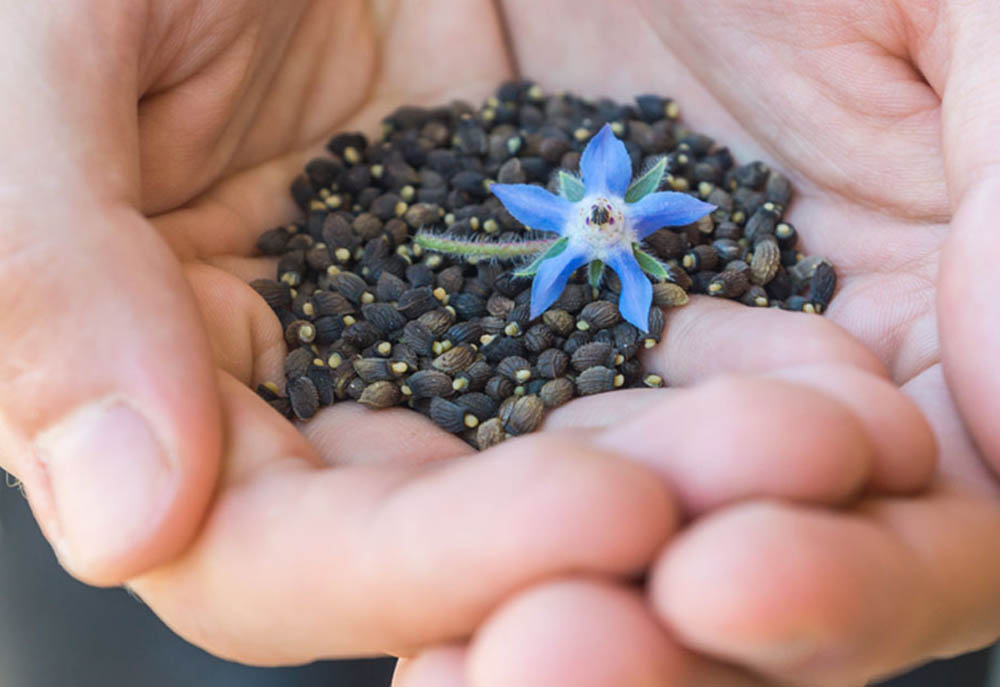
POS Biosciences study finds protein potential in borage oil byproduct

POS Biosciences has published peer-reviewed research showing that borage pressed cake, a byproduct of borage oil extraction, could have potential as a complementary plant protein source for food, feed and aquaculture applications.
• POS Biosciences published peer-reviewed research on the protein composition and functionality of borage pressed cake.
• The study found that borage pressed cake contained about 32% protein on a dry-weight basis.
• The work formed part of the company’s Borage360 initiative, focused on whole-crop utilization.
The study, published in Sustainable Food Proteins, was titled Profiling and Characterization of Seed Storage Proteins From Borage (Borago officinalis L.) Pressed Cake as a Novel Plant-Based Protein Source. It was conducted as part of POS Biosciences’ Borage360 initiative, which examines ways to increase the value of borage beyond its established use as an oilseed crop.
“This publication helps build foundational scientific understanding around the protein properties of borage pressed cake,” said Dr. Thushan Withana-Gamage, Principal Research Scientist at POS Biosciences and co-author of the study. “By characterizing these proteins, the research establishes an important foundation for future investigation into sustainable opportunities for borage pressed cake proteins across food, feed, and aquaculture sectors.”
Borage is cultivated primarily for its seed oil, which is among the richest known plant sources of gamma-linolenic acid, or GLA, a polyunsaturated omega-6 fatty acid. GLA has been studied for its role in supporting a healthy inflammatory response, skin health and metabolic function, making borage a valuable ingredient in nutritional, dietary and functional food formulations.
According to internal data from Bioriginal Food & Science Corp., a Canadian borage oil manufacturer based in Saskatchewan and a member of the Bioriginal Group of Companies, about 559 metric tons of borage seeds were processed between 2020 and early 2025. That processing yielded roughly 388 metric tons of pressed cake.
POS Biosciences reported that the material has remained relatively underutilized, despite its protein content and potential for further development into value-added ingredients. The company noted that interest in sustainable ingredient development and whole-crop utilization has increased the relevance of such co-products.
“Our multi-decade investment into borage breeding and development has built a strong foundation of growth, backed by deep technical and innovation capabilities from POS,” said Randy Fournier, President and CEO of the Bioriginal Group of Companies. “The recognized health and wellness benefits of GLA continue to drive global interest in borage oil, while also expanding awareness of the broader value potential of borage-derived ingredients. As we look ahead, we see significant opportunity not only in continuing to expand the GLA oil market but also in further exploring sustainable and value-added applications for borage co-products, including its promising protein fraction.”
The study characterized protein composition and properties using both laboratory-prepared and commercially processed borage pressed cake samples. Researchers found that the pressed cake contained about 32% protein on a dry-weight basis, comparable to oilseed meals such as canola and flax.
Protein profiling showed a diverse composition, with glutelin-like proteins identified as the predominant class. The material also contained 2S albumins, 7S globulins and 11S globulins.
Functional testing assessed properties including protein solubility, water-holding capacity and oil-holding capacity. POS Biosciences reported that the work established a baseline for understanding how borage pressed cake proteins may behave as ingredients.
The proteins also demonstrated high thermal stability, supporting further study into their behavior during food processing. Essential amino acids accounted for more than 40% of total protein, surpassing recommended adult requirements for most amino acids.
The study reported moderate digestibility, with IVPDCAAS values of about 56% to 59%, indicating potential as a complementary plant protein source relative to established proteins such as soy and pea. Researchers also observed relatively high tryptophan content, at 72 to 73 milligrams per gram of protein, compared with several commonly used plant protein sources.
Differences between laboratory-prepared and commercially processed samples also indicated that processing conditions may affect protein structure and functionality.
POS Biosciences reported that the findings support continued work on more efficient uses for borage pressed cake, including future investigation into protein-rich concentrates, isolates and hydrolysates. Additional research under the Borage360 initiative is ongoing to expand molecular-level understanding of borage seed proteins and support the development of safe, higher-value applications.
“Research into underutilized agricultural resources is increasingly important as the food industry looks to improve sustainability and maximize the value of existing crop systems,” said Withana-Gamage. “This study helps advance scientific understanding around borage pressed cake while supporting broader exploration of whole-crop utilization opportunities and sustainable ingredient innovation.”
The Borage360 initiative is funded and led by the Innovation and Technology Division of POS Biosciences Corp. It takes a systems-focused approach to maximizing the value of the borage crop by advancing research into both oil-producing and protein-related opportunities from borage seeds.

Join Us At One Of Our Upcoming Events

If you have any questions or would like to get in touch with us, please email info@futureofproteinproduction.com


