

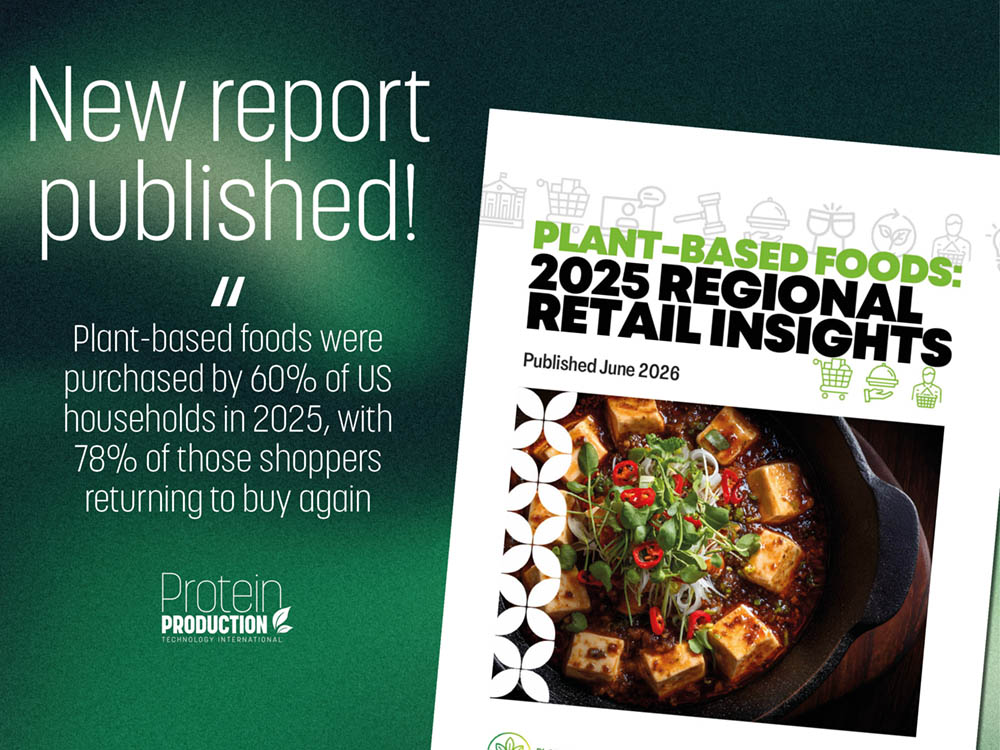
PBFA report: Plant-based foods held US$7.9 billion market as Midwest emerged as fastest-growing US region

Plant-based foods generated US$7.9 billion in US retail sales in 2025, holding largely steady despite broader challenges in the category, while new regional data suggested growth opportunities may increasingly lie outside the industry's traditional strongholds.
• US plant-based food sales reached US$7.9 billion in 2025, compared with US$8.0 billion in 2024 and US$3.3 billion in 2018.
• The Midwest was the only US region to record sales growth in 2025, rising 2.4% year-over-year.
• More than 95% of plant-based meat shoppers also purchased conventional meat, representing approximately 14 million households.
The findings came from the 2025 Regional Retail Insights report, published by the Plant Based Foods Association (PBFA) and the Plant Based Foods Institute (PBFI), which examined retail sales, household penetration and purchasing behavior across the four US census regions.
According to the report, plant-based food sales reached US$7.9 billion in 2025, compared with US$8.0 billion in 2024. While sales were broadly flat year-over-year, the category has more than doubled since 2018, when plant-based foods generated US$3.3 billion in retail sales.
The report also showed that growth is increasingly being driven by categories beyond the plant-based meat products that once dominated industry attention. Plant-based ready-to-drink beverages grew 12.1% in 2025, while plant-based baked goods increased 8.6% and plant-based creamers rose 2.0%.
PBFA reported that 60% of US households purchased plant-based foods during 2025. Among those households, 78% returned to purchase plant-based products again, indicating continued consumer engagement with the category.
“Plant-based foods have become a routine part of grocery shopping for millions of Americans, and this report shows that demand is both widespread and durable,” said Marjorie Mulhall, Executive Director of the Plant Based Foods Association. “The regional data highlights where consumers are embracing plant-based foods most strongly today, while also pointing to significant opportunities for continued growth across the country.
“For manufacturers, retailers, and industry partners, these insights provide a roadmap for meeting consumers where they are and expanding access to the products they increasingly want.”
While the West continued to record the highest household penetration and repeat purchase rates, the Midwest emerged as one of the report's most notable findings.
The Midwest was the only region to record sales growth in 2025, with plant-based meat, egg and dairy sales increasing 2.4% year-over-year. Household penetration in the region also rose 2.7%, which the report described as the clearest signal of expanding demand.
Midwestern households showed gains across every tracked category. Nebraska recorded the strongest plant-based dairy household penetration growth in the country, increasing 11.7%, while North Dakota followed at 10.2%.
The report suggested that the Midwest may represent a growing opportunity for brands seeking expansion beyond coastal markets, particularly as household adoption continues to increase.
The South remained the largest regional market by sales volume, accounting for 36% of all US plant-based food spending in 2025. Southern households represented 37.1% of all plant-based milk spending nationally and more than one-third of plant-based meat spending.
Meanwhile, the West maintained its status as the category's benchmark market. More than two-thirds of Western households purchased plant-based foods during 2025, giving the region the highest household penetration rate in the country at 67.3%. Repeat purchases reached 81.4%, also the highest among the four regions.
Western consumers were particularly important for traditional plant protein categories, accounting for 31% of all US spending on tofu, tempeh and seitan.
The Northeast showed signs of strengthening loyalty in several categories. Plant-based cheese repeat rates increased 7.6%, while plant-based seafood recorded 31.1% dollar growth, making it one of the fastest-growing categories in the region.
The report highlighted seafood as a potential bright spot elsewhere as well. In the West, repeat rates for plant-based seafood increased 5.5%, suggesting growing consumer acceptance among shoppers already purchasing the products.
Plant-based eggs also appeared among the fastest-growing categories across all four regions. Dollar sales growth for plant-based eggs reached 8.1% in the Northeast, 10.8% in the Midwest, 8.4% in the South and 8.9% in the West.
One of the report's strongest findings concerned consumer behavior.
Across every region, at least 95% of plant-based meat shoppers also purchased animal-based meat. PBFA and PBFI estimated that this flexitarian consumer base represented roughly 14 million households.
Rather than indicating a market driven primarily by vegans or vegetarians, the data suggested that plant-based foods are increasingly purchased by consumers who continue to buy conventional animal products alongside them.
The report described this flexitarian segment as the core audience for future category growth.
The regional data also underscored the continued importance of dairy alternatives within the broader plant-based market.
In every region, the number of plant-based dairy purchasers significantly exceeded the number of plant-based meat and seafood purchasers. The South alone contained an estimated 23.8 million plant-based dairy customers, compared with 5.2 million plant-based meat and seafood customers.
Beyond consumer demand, the report identified opportunities within agricultural supply chains. PBFI noted that key crops used in plant-based foods, including soybeans, peas, chickpeas, lentils, oats and wheat, are already widely grown across parts of the Midwest and Pacific Northwest.
However, the organization reported that a substantial share of ingredients used by US plant-based food manufacturers continues to be sourced internationally. PBFI argued that stronger links between domestic agriculture and plant-based food production could help support future growth while strengthening supply chain resilience.
As regional purchasing patterns continue to diverge, the report suggested that the next phase of plant-based food growth may depend less on national trends and more on understanding how different consumers engage with the category across individual markets.

Join Us At One Of Our Upcoming Events

If you have any questions or would like to get in touch with us, please email info@futureofproteinproduction.com


