Nuclera pushes Series C to US$87 million as it deepens move into antibody engineering

Nuclera has extended its Series C financing to US$87 million, securing an additional US$12 million to accelerate the development of antibody-specific capabilities within its eProtein Discovery benchtop system. The extension was led by Elevage Medical Technologies and Jonathan Milner, with participation from existing investors British Business Bank and GK Goh.
• Nuclera has secured an additional US$12 million, bringing its total Series C funding to US$87 million, led by Elevage Medical Technologies and Jonathan Milner alongside existing investors.
• The funding has supported the expansion of the eProtein Discovery system to include full-format antibody expression, purification, and binding validation on a single integrated platform.
• The company has continued to broaden its global footprint and commercial adoption, including a CRO deployment and a collaboration with Cytiva.
The new capital was directed toward integrating full-format antibody expression, purification, and binding validation into Nuclera’s existing platform, enabling researchers to run end-to-end antibody workflows in-house. The company described the expansion as a key step in supporting AI-enabled protein engineering, where access to scalable and standardized datasets has become a limiting factor in biologics discovery.
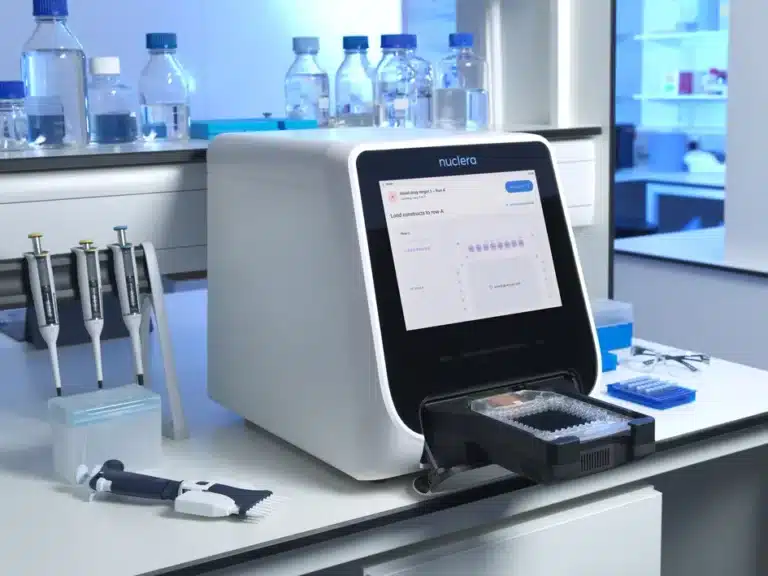
Nuclera’s eProtein Discovery system was designed to provide rapid access to functional proteins using a benchtop format that supports multiplex screening, characterization, and expression. By extending the platform to antibodies, the company has aimed to address what it described as a slow and fragmented development process that often relies on outsourced services and sequential workflows.
According to Nuclera, the expanded system will allow researchers to perform expression, purification, and binding validation of full-format antibodies on a single high-throughput platform. The company has positioned this capability as particularly relevant for AI-driven discovery programs, which depend on large volumes of consistent, high-quality experimental data to train and validate models.
Dr Michael Chen, CEO & Co-founder of Nuclera, said the financing reflected growing momentum behind the platform and its expansion into biologics research. “This financing underscores our growing momentum and demonstrates that we are expanding eProtein Discovery into one of the fastest-growing segments of biologics R&D,” he said. “Scientists increasingly require scalable, high-quality datasets to power AI models in biologics discovery. We are positioning Nuclera to become a foundational platform for the future of protein and antibody engineering, ultimately accelerating therapeutic discovery timelines.”
Since closing its previous Series C round in 2024, Nuclera has continued to broaden the scope of its technology and its commercial reach. The company has added a membrane protein workflow to the eProtein Discovery system, addressing one of the most technically challenging protein classes in drug discovery. It has also expanded customer access across the Asia-Pacific region and the Middle East.
During the same period, Nuclera initiated a collaboration with Cytiva, focused on accelerating the path from DNA to fully purified and characterized proteins. The collaboration was intended to support a better understanding of drug-target interactions by streamlining upstream protein production and analysis.
The eProtein Discovery system has also been deployed at Domainex, marking the first contract research organization implementation of the platform. Nuclera has pointed to the CRO installation as both a validation of the system’s performance and an early indicator of commercial demand from service providers seeking to streamline protein production workflows for clients.
Dr Michael Wasserman, Chief Operating Officer at Elevage Medical Technologies, said Nuclera had made substantial progress since Elevage’s initial investment. “Since our initial investment, Nuclera has made meaningful progress in expanding the capabilities, adoption, and global reach of the eProtein Discovery platform,” he said. “The extension of the system into full-format antibody expression, purification, and binding validation represents a significant step forward, particularly as biologics discovery becomes increasingly driven by AI-enabled workflows that require scalable, high-quality datasets.”
He added that Elevage viewed the platform’s evolution as central to reducing friction in drug development. “Elevage is proud to continue supporting Nuclera as it evolves into a foundational platform for protein and antibody engineering, helping researchers accelerate discovery timelines and reduce friction across the drug development process,” Wasserman said.
Jonathan Milner, chairman of Nuclera’s board of directors and founder and former CEO of Abcam, described antibody production as a persistent bottleneck in biologics discovery. “Nuclera is solving one of the most pressing bottlenecks in biologics discovery, the slow, fragmented, and resource-intensive process of synthesising full-format antibodies,” he said. “The team’s success in membrane proteins, one of the most challenging protein classes, combined with their microfluidic expertise, places them in a unique position to transform antibody development workflows.”
Nuclera’s approach combines cell-free expression systems, digital microfluidics, and screening data to guide early decisions on protein viability. The company has argued that identifying the most promising proteins earlier in the process can reduce the time, cost, and uncertainty traditionally associated with protein expression and purification.
Taylor Wessing LLP acted as legal advisor to Nuclera on the financing.

Join Us At One Of Our Upcoming Events

If you have any questions or would like to get in touch with us, please email info@futureofproteinproduction.com

More News