Melt&Marble clears US path with GRAS status for fermented fat ingredient

Melt&Marble has secured self-affirmed GRAS status for its precision-fermented fat MeltyMarble, enabling US commercialization as the Swedish biotech scales its designer lipid platform.
Swedish biotechnology company Melt&Marble has secured self-affirmed GRAS (Generally Recognised as Safe) status for its precision fermentation-derived fat ingredient, MeltyMarble, opening the door for commercial sales in the USA.
Melt&Marble achieved self-affirmed GRAS status for its fermentation-derived fat ingredient MeltyMarble, enabling the company to begin commercial sales in the United States.
• The ingredient is produced using engineered yeast and designed to replicate the melting behavior and mouthfeel of animal fats across multiple food applications.
• The milestone followed a €7.3 million (US$7.7 million) Series A funding round to scale production and prepare the company’s designer fats for commercial launch.
• The regulatory milestone marked a significant step for the Gothenburg-based company as it moved from platform development toward commercial deployment of its fermentation-designed fats.
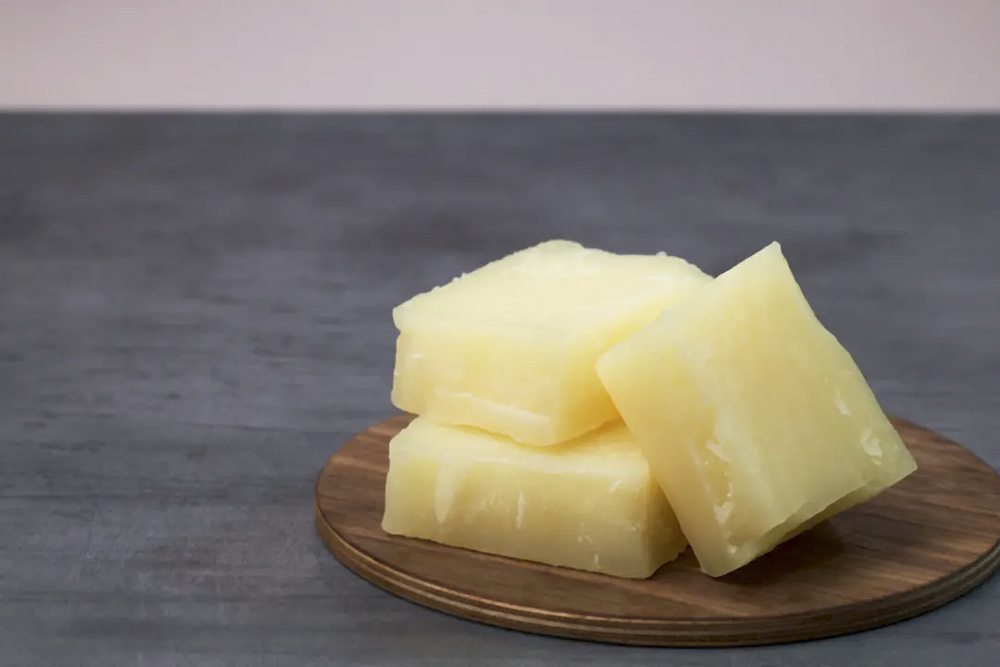
MeltyMarble is produced through precision microbial fermentation using engineered yeast strains that convert sugars into tailored lipids with specific functional properties. Rather than reproducing a single conventional fat, the company engineers lipid structures intended to deliver targeted performance in finished products.
The ingredient has been designed to mimic key characteristics associated with animal fats, including melting behavior, mouthfeel and flavor delivery. These properties make it suitable for a wide range of food categories including alternative meat and dairy products, confectionery, bakery and snacks.
Anastasia Krivoruchko, Co-founder & CEO of Melt&Marble, said the GRAS determination marked an important regulatory and commercial milestone for the company.
“This milestone represents a significant step forward for Melt&Marble and underscores our progress across product development, regulatory readiness and scale-up. With self-GRAS achieved, we're well positioned to advance our food focussed pipeline and pursue a 'no questions' letter from the FDA for MeltyMarble, bringing us closer to delivering better and more sustainable fats to the market,” Krivoruchko said.
The company previously referred to the ingredient as MeatyMarble but later renamed it MeltyMarble to reflect the wider range of food applications it could address.
Krivoruchko said the original concept had focused heavily on improving the eating quality of plant-based meat products.
“The change was more than a branding decision: we originally created MeatyMarble with alt-meat firmly in mind,” she said. “The thinking originally was that we would use that particular fat within plant-based and other alt-meat products to impart the flavour and mouthfeel whose absence is a major blocker for many people who would otherwise incorporate them more frequently into their diet.”
However, the company later realized the lipid’s functionality could extend well beyond meat alternatives.
“We’ve come to realise that its potential applications go beyond just alt-meat and we wanted a name that reflected that,” Krivoruchko said.
The ingredient has been developed as a potential alternative to fats derived from petrochemicals, animals or certain plant oils that face sustainability or supply chain challenges.
At a technical level, Melt&Marble describes the ingredient as a 'designer fat', reflecting its approach to engineering lipid structures around specific functional outcomes rather than copying a single natural fat source.
“We refer to it as a ‘designer fat’ because it’s been designed to achieve specific functionalities,” Krivoruchko said. “It’s been inspired by animal fats and has similar functionalities in terms of melting, mouthfeel, creaminess and similar properties.”
One of the central challenges the company addressed during development was how fat behaves during cooking and consumption.
“The most important functional challenge we focused on was the creation of a more gradual melting profile, as this has a big impact on improving juiciness and flavor release as well as on mouthfeel,” Krivoruchko said.
Fat has historically received less attention than protein in the alternative protein sector, but its role in determining taste, aroma release and eating quality has become increasingly recognized.
Krivoruchko said fermentation-designed fats could offer capabilities that conventional fats cannot easily replicate.
“We do believe that precision fermentation has the potential to unlock doors that animal and plant fats cannot; for example new flavours or enhanced levels of creaminess,” she said. “Imitation is important in alt-meat products, but we certainly are excited about the possibility for enhancing other products like chocolate or confectionery by imparting better creaminess, whippability or flavour release.”
.jpg)
The GRAS milestone followed a Series A funding round announced in December 2025, when Melt&Marble secured €7.3 million (US$7.7 million) to scale production of its precision-fermented fats and prepare its first ingredients for market launch. The financing formed part of €10 million (US$10.6 million) raised over the past year, including grants from the European Innovation Council.
The round was led by Swedish deeptech investor Industrifonden, with participation from the European Innovation Council Fund, Beiersdorf and Valio, alongside Chalmers Ventures and Catalyze Capital.
At the time, Krivoruchko said the investment marked a turning point as the company prepared to transition from research and development into commercial operations.
“This investment marks a major milestone for Melt&Marble as we transition from R&D to commercialization,” she said. “With key scalability milestones already achieved and strategic partners onboard, we’re entering the market with the capabilities and confidence to deliver real impact.”
Melt&Marble’s technology platform is built on more than a decade of research into microbial lipid production and fermentation engineering. The company has developed an intellectual property portfolio covering fermentation processes and lipid design.
Its platform targets a global oils, fats and lipids market valued at more than US$100 billion, spanning sectors including food, cosmetics and personal care.
While the company is preparing for food-market entry in the United States, it is also exploring applications for its fats in beauty and personal care formulations.
Commercial adoption, however, depends not only on functionality but also on achieving competitive production costs.
“To be truly commercially competitive for mass applications, precision fermented fats must require economies of scale similar to those needed for precision fermented proteins,” Krivoruchko said. “We’ve already demonstrated that our process can be scaled to tens of kilolitres and we’re putting a lot of focus into making production at that scale the norm.”
The company said the next regulatory objective would be to obtain a “no questions” letter from the US Food and Drug Administration, which can provide additional confidence for food manufacturers considering the ingredient.
“It’s important to understand that self-GRAS claims are backed up by strong scientific data demonstrating safety; however, the FDA no-questions letter acts as a green light for major manufacturers and tells them that they are incorporating an ingredient externally verified as safe for human consumption,” Krivoruchko said. “It’s not a legal requirement but it gives manufacturers – and consumers – that extra peace of mind, with many larger manufacturers requiring it.”
Krivoruchko said the company was already seeing strong interest from specific application areas.
“Right now we see the most interest in dairy and chocolate,” she said. “Chocolate is particularly vulnerable at the moment due to cocoa butter volatility and threats to the production of cocoa as a crop. Alt-dairy, meanwhile, is an industry where fat is extremely important, but the absence of adequate non-milk fats is a major pain point.”
Looking ahead, Melt&Marble sees its long-term role evolving from designing functional lipids for specific applications toward eventually replacing problematic fats at scale.
“We are starting from the latter, centred around functionality, and will ride the cost curve to the former,” Krivoruchko said.
With GRAS status now secured, Melt&Marble is moving closer to bringing its designer fat ingredients to commercial food manufacturers as it continues scaling production and pursuing additional regulatory approvals.

Join Us At One Of Our Upcoming Events

If you have any questions or would like to get in touch with us, please email info@futureofproteinproduction.com

More News