

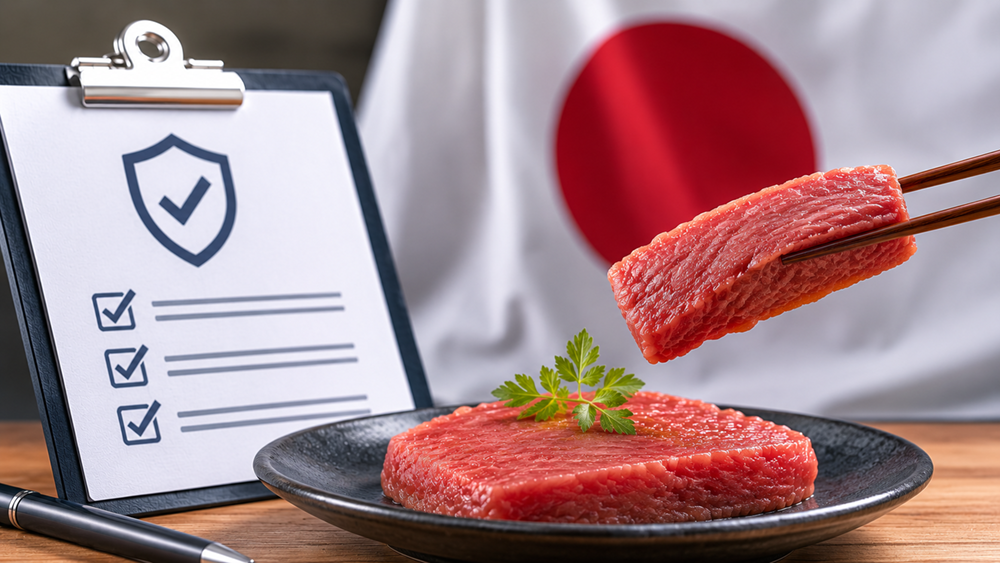
Japan publishes first draft safety guidelines for cultivated meat as regulatory debate advances

Japan has released draft text for most chapters of its first safety guidelines covering foods produced using cell-culture technology, providing the clearest indication yet of how the country may regulate cultivated meat and other cell-cultured foods.
• Japan presented draft safety guideline text for cell-cultured foods at a government subcommittee meeting on May 28, marking the first compilation of its regulatory discussions into a formal document.
• The draft covered source cells, manufacturing controls, quality management, allergens, nutrition, and final product specifications, while also raising questions around GMP-style oversight.
• Consumer groups called for government-led safety reviews, mandatory labeling, traceability measures, and greater transparency from businesses developing cell-cultured foods.
The draft was presented during a meeting of the Subcommittee on Newly Developed Foods under Japan’s Food Sanitation Standards Council.
While Japanese authorities have been discussing cultivated meat safety for several years, the May 28 meeting marked the first time those deliberations had been consolidated into a concrete draft guideline.
The document followed a series of discussions led by Japan’s Ministry of Health, Labour and Welfare and the Consumer Affairs Agency. According to the meeting materials, the topic has been examined 13 times in total, including five discussions under the health ministry and eight under the Consumer Affairs Agency’s subcommittee.
Previous meetings focused on identifying potential safety hazards across three key stages of production: cell sourcing, manufacturing processes, and food processing. Those discussions identified 31 points of concern alongside corresponding assessment items.
The latest draft reorganized those issues into a framework of matters that businesses should verify when demonstrating the safety of cell-cultured foods.
Areas covered in the draft included source cells and tissues, cell characterization, manufacturing and quality control systems, substances used during cultivation and production, final product specifications, and information relating to allergens and nutritional content.
One of the most significant discussions centered on manufacturing and quality control requirements.
The draft stated that because cell cultivation involves the management of living cells, food safety cannot rely solely on conventional contamination controls and HACCP-based approaches. Instead, it highlighted the importance of broader process controls, including monitoring cell growth, staff education and training, and the development of standard operating procedures.
That discussion reflected an ongoing debate within Japan’s emerging cultivated meat sector.
At a previous meeting in March, some industry representatives had argued that safety management should be based primarily on HACCP principles, warning that pharmaceutical-style Good Manufacturing Practice (GMP) requirements could create significant barriers for new entrants.
However, during the May 28 meeting, several committee members expressed concern that HACCP alone should not be described as covering the entirety of the production process.
Some participants suggested that the concept of “food GMP” could be more appropriate. Committee members also noted that the draft effectively pointed toward a GMP-like model by separating manufacturing management from quality control functions, creating a system of internal checks and verification.
Another topic attracting attention was the definition of the term 'final product'.
The current draft defined the final product as the stage before cultured material is blended with other ingredients or nutritionally supplemented. Committee members argued that the wording could create confusion because consumers typically understand 'final product' to mean the item ultimately sold at retail.
Participants requested further clarification regarding whether the term referred to harvested cell biomass immediately after cultivation or to a later stage after cellular differentiation had been completed.
Nutritional considerations also featured in the draft.
The document acknowledged that cell-cultured foods may not be identical to conventional products in terms of nutritional composition. As a result, it stated that comparisons with conventional foods should be considered, alongside assessments of whether any substances are present that could interfere with nutritional value or nutrient absorption.
Beyond technical safety issues, the meeting also incorporated input from consumer organizations.
Representatives from four consumer groups presented their views, emphasizing the need for government oversight, traceability systems, clear labeling requirements, information disclosure by producers, and stronger communication with consumers.
Several organizations argued that Japan should initially adopt a review-based regulatory approach in which government authorities evaluate products individually before they reach the market.
One group warned that a simple notification system could reduce barriers to entry while making it more difficult to exclude companies that fail to comply fully with safety expectations.
Consumer groups also urged policymakers to establish labeling requirements that clearly identify foods produced using cell-culture technology. They argued that transparent labeling would allow consumers to distinguish cell-cultured products from conventional meat and make informed purchasing decisions.
Terminology emerged as another unresolved challenge.
Different terms are currently being used across Japanese policy discussions, including 'cultivated meat', 'cell-cultured foods', and 'cell-based foods'.
Committee members cautioned that inconsistent terminology across regulations, safety guidelines, and labeling requirements could create confusion for consumers and industry alike. The issue could become more pressing if imported products enter the Japanese market before authorities agree on a standardized term.
As a result, the May 28 meeting extended beyond the technical details of safety assessment and manufacturing controls. Discussions also addressed broader regulatory questions surrounding product reviews, labeling frameworks, terminology, transparency, and public confidence.
The subcommittee is expected to continue refining the draft guidelines as discussions progress, bringing Japan closer to establishing its first formal safety framework for cultivated meat and other foods produced through cell-culture technology.

Join Us At One Of Our Upcoming Events

If you have any questions or would like to get in touch with us, please email info@futureofproteinproduction.com


