Friends & Family Pet Food launches cultivated meat pet food in Singapore retail, as nutrition demand reshapes the category

Pet food is no longer a passive purchase. Owners are reading labels, questioning ingredient panels, and trying to understand what is actually in the bowl. Sustainability and animal welfare still matter, but for many, the first question is more immediate: is this genuinely good for my pet?
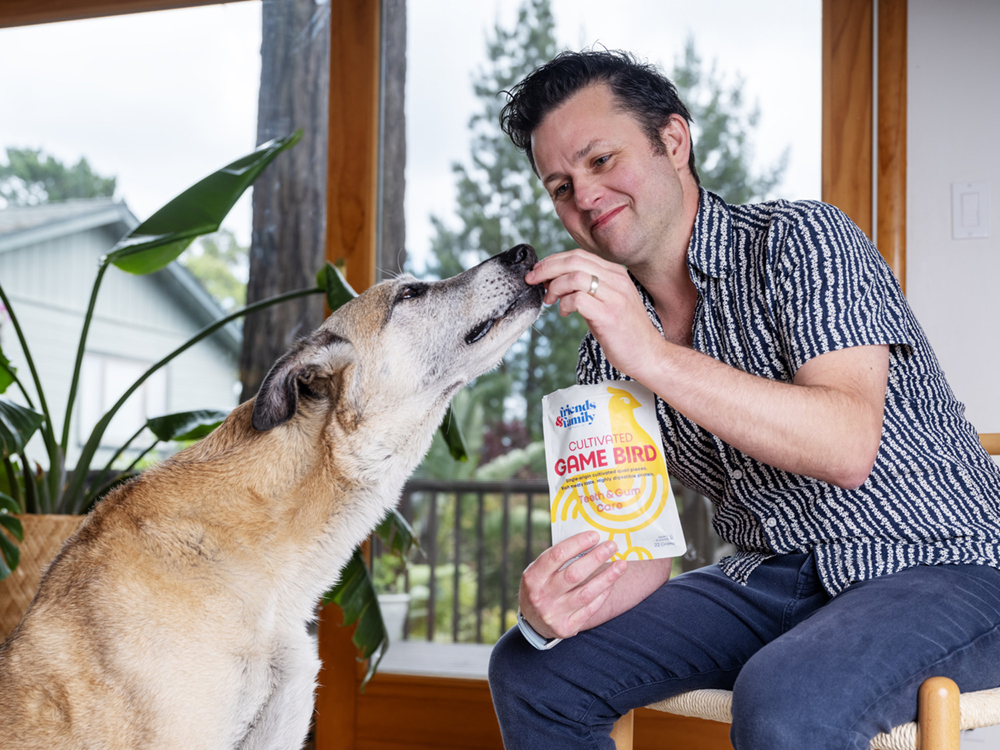
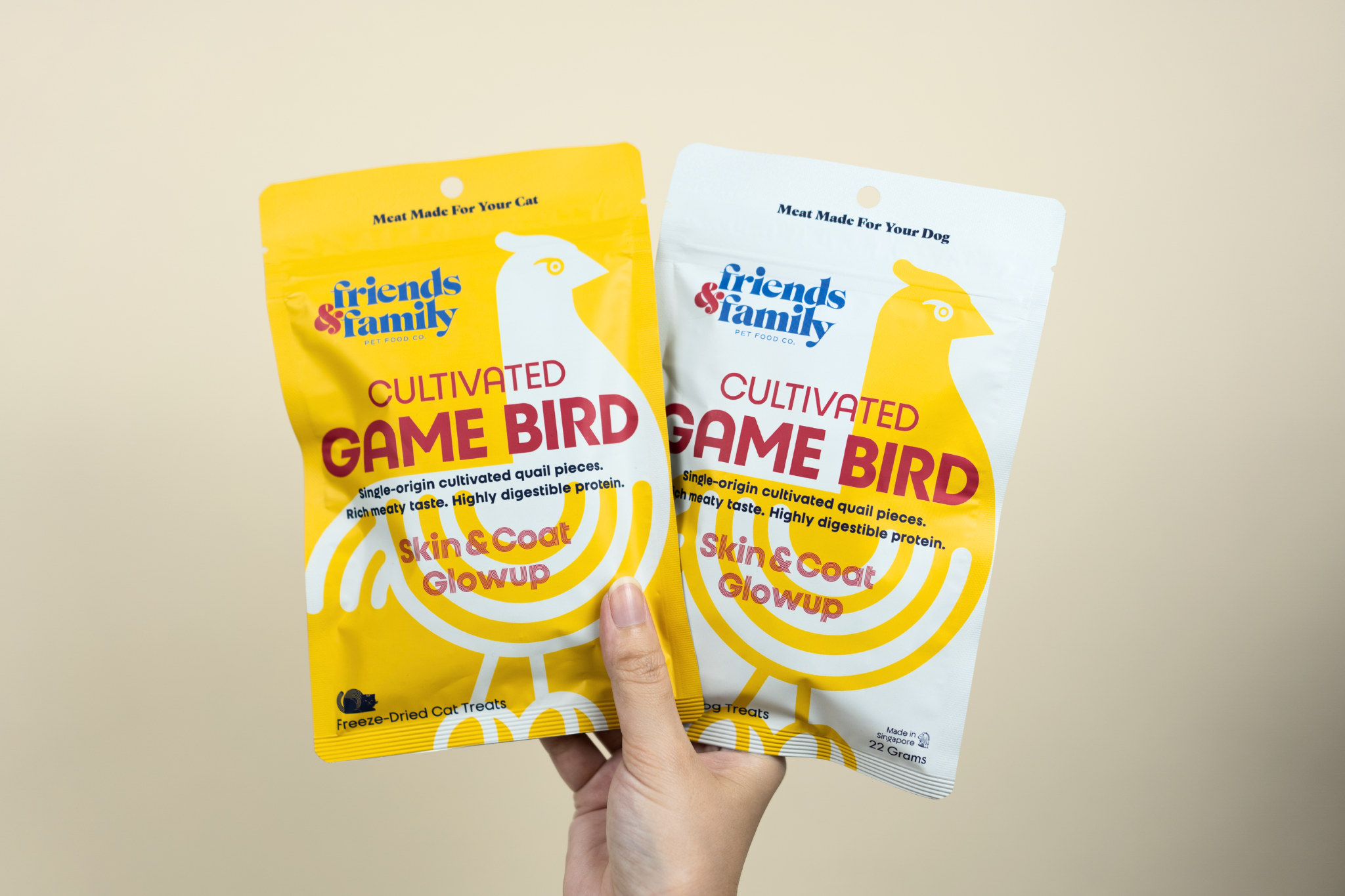
That is the context in which Friends & Family Pet Food has launched its cultivated meat treats and toppers into retail in Singapore. The company’s debut – following a sold-out appearance at the Singapore Pet Expo earlier this month – reflects a shift in how cultivated meat is being introduced. This is not about novelty. It is about nutrition.
“Our meat is protein-forward, naturally gamey, and highly digestible – the kind of meat that works with cat and dog biology,” said Joshua Errett, founder of Friends & Family Pet Food. “It’s made in small batches and we use it fresh in our products, without processing, so everyone can feel really good about feeding it to their animal every day.”
• Friends & Family Pet Food launched cultivated meat pet treats and toppers in Singapore retail after a sold-out debut at the Singapore Pet Expo.
• The company’s products contained up to nearly 70% cultivated meat across 12 SKUs, priced between S$14 and S$32.
• Singapore’s Animal & Veterinary Service approved the company’s cultivated meat for pet food use in 2025, enabling ongoing commercial sales.
Few founders have spent as long focused on cultivated pet food as Errett.
“I’ve been working on it for 10 years now, and in that time I’ve picked up a lot of information and met a lot of people, so I really understand the ins and outs,” he said. “And that background is my advantage – creating a viable pet food is difficult, and doing it with cultivated meat is one hundred times more difficult, so you really need to know the category well.”
That depth of experience shapes how he thinks about the ingredient itself.
“From a cultivated perspective, I see it as an infinite ingredient,” he said. “When I talk about things like sweet potato, chicken, or other conventional ingredients, I call them finite ingredients, because they have a start and end point in terms of what they can do within an animal’s biology. With cultivated, we are nowhere near the endpoint of what it can do.”
Moving beyond the kibble model
The timing of the launch reflects a broader shift already underway in pet food.
“When you look at where pet food is today, historically, I think we’re at an inflection point,” Errett said. “You’re seeing more and more people move away from the standard model that’s existed for around 70 years – what I call the kibble model.”
That model, built around commodity inputs and post-processing nutritional adjustments, has delivered scale and consistency. But it is losing ground.
“It’s built for volume, shelf stability, and profit margin,” he said. “You can see that model starting to lose favor. Kibble loses one or two points of market share each year. It’s not a collapse, but the signs are there.”
Recent market data supports that direction of travel. In the US, dry dog food sales declined 2.9% to US$14.2 billion in the 52 weeks ending August 2025, while refrigerated and frozen dog food grew 17.8% to US$1.6 billion, according to Circana. In Asia-Pacific, dry dog food growth has slowed to around 1% annually, down from 3% in 2021, even as freeze-dried treats continue to post double-digit growth, based on Euromonitor International data.
At the same time, expectations around what pets should be fed are changing.
“People don’t want to give a family member the same extruded kibble every night,” he said. “Pets are no longer just an accessory or an add-on – they’re part of the family, and that shift carries real meaning.”

A real-world test
Those changing expectations were tested directly at the Singapore Pet Expo.
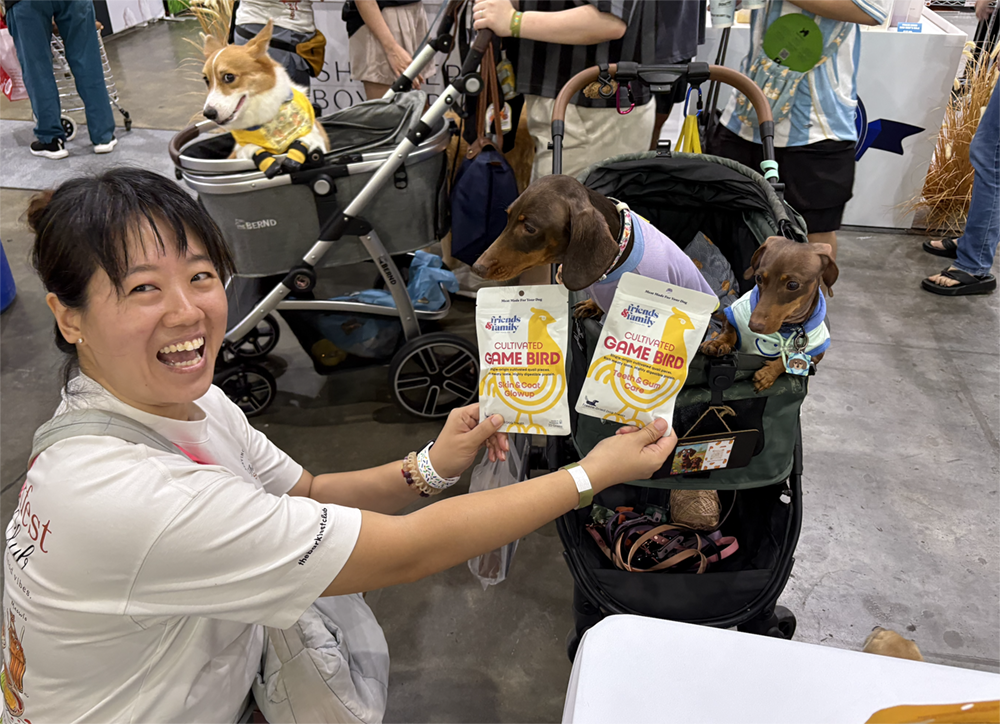
“We didn’t post on Instagram, I didn’t tell friends to come and buy the food or treats – we just showed up,” Errett said. “It was me, a yellow brand wall, a few logos, and a fact sheet. And people came. They bought, they asked questions, they were excited.”
The response was immediate.
“The first sale was a real moment,” he said. “There was a brief second of self-doubt – like, are you sure you’re buying this? Then a quick moment of reflection on everything it took to get there. But that passed almost immediately, because the next person came to the booth within moments.”
The products sold out during the event, providing an early indication that interest could translate into action.
What protein actually delivers
Rather than focusing on headline numbers, the company has centered its approach on how nutrients function in the animal.
“You see very high protein numbers in pet food, but a lot of that can be misleading,” Errett said. “With traditional pet food, you often have ingredients like meat meals that can include up to 30% bone. There are nutrients there, but much of it is difficult to digest and simply passes through the animal.”
Processing plays a central role in that gap.
“By the time meat enters pet food production, it may already have gone through multiple high-heat, high-pressure processes,” he said. “Some of these components then have to be added back in later.”
His alternative is straightforward.
“I take the meat and put it straight into the food,” he said. “The protein structures are intact, the amino acids are there – I don’t have to add anything back or fortify it.”
Industry assumptions meet consumer reality
Early sales also exposed a disconnect between industry expectations and consumer behavior.
“What surprised me was that a lot of the questions I’d been asked for years – by investors, by people in the industry – just didn’t come up,” Errett said. “When we sold our first 200 units, there were no questions about price parity or safety.”
Instead, the focus stayed on the product itself and how it performed.
“The ultimate signal is whether they come back and buy again,” he said. “But even in that first interaction, you hear the questions and concerns. And they’re often very different from what you expect.”
That has influenced how the product is presented.
“I don’t lead with the process,” he said. “Things like biopsies or bioreactors aren’t relevant to most customers. What they care about is what the product does for their pet.”

From trial to repeat behavior
The move into retail shifts the focus from initial interest to continued use.
“In reality, it comes down to repeat sales,” Errett said. “That’s what builds a loyal customer.”
Early signals suggest that behavior is beginning to emerge.
“I can show you messages from Instagram – people saying their cat is obsessed with the product, or asking how they can buy more,” he said. “These are people I sold a single bag to earlier this month, and they’re already coming back for more.”
That shift matters.
“For years, we’ve seen the same story – cultivated is coming, you’ll be able to buy it soon, here’s a tasting that happened in one place at one time,” he said. “I wanted something real. Something on shelves, something people can actually go out and buy.”
Why retail changes perception
Physical availability plays a key role in how the product is understood.
“When people can actually hold the product in their hands, pour it out, and feed it to their dog, it stops being abstract,” Errett said.
That interaction changes the frame of reference.
“Instead of being something distant, it becomes a product you can go out and buy at an accessible price,” he said.
The products are now available through the company’s website and an exclusive retail partnership with VanillaPup in Singapore.
“Our community expects the best for their pets’ long-term wellness, so we source top-tier holistic nutrition,” said Sarah Chong, co-founder of VanillaPup.
Scaling without compromise
Moving into retail introduces operational constraints that extend beyond formulation.
“Processes like freeze-drying are expensive, and fresh food is also difficult to scale because of cold storage and distribution requirements,” Errett said. “You’re dealing with cold chains, shipping constraints – there are real operational challenges.”
At the same time, the company has prioritized maintaining high inclusion levels.
“We’ve managed to create products with over 60% cultivated content,” he said. “It’s not a token inclusion – it’s the primary ingredient.”
A broader shift
The opportunity extends well beyond Singapore.
“Pet food is a global issue,” Errett said. “You can go to India, the UK, or California, and you’ll hear the same concerns.”
Those concerns are reinforced by demographic changes.
“Across Asia demographics are shifting from children to pets,” said Maurice Yeo, COO & Co-founder of Friends & Family. “So demand for high-quality pet nutrition will keep growing.”
For Errett, the ambition is to rethink how pet food is built from the ground up.
“I like to say that I’m creating a new operating system for the pet industry,” he said.
The priority now is execution – ensuring that what began as a sold-out debut translates into sustained presence.
“I wanted something real,” he said. “Something on shelves, something people can actually go out and buy.”

Join Us At One Of Our Upcoming Events

If you have any questions or would like to get in touch with us, please email info@futureofproteinproduction.com

More News