

EAT Foundation to wind down in 2026 after landmark food systems push, says Johan Rockström and Gunhild Anker Stordalen

The EAT Foundation will begin an orderly wind-down in 2026, marking the end of more than a decade in which the Oslo-based organization helped elevate food systems to the center of global climate, health and equity debates.
• The EAT Foundation has announced it will begin an orderly wind-down in 2026 after its board concluded the current structure and funding model were not resilient enough to meet today’s ambitions.
• The organization recently supported publication of the 2025 EAT-Lancet Commission report, which found food systems drive 30% of global emissions and contribute to five planetary boundary transgressions.
• Discussions are under way with partners and donors to enable selected flagship initiatives, including the EAT-Lancet Commission, to continue under new arrangements.
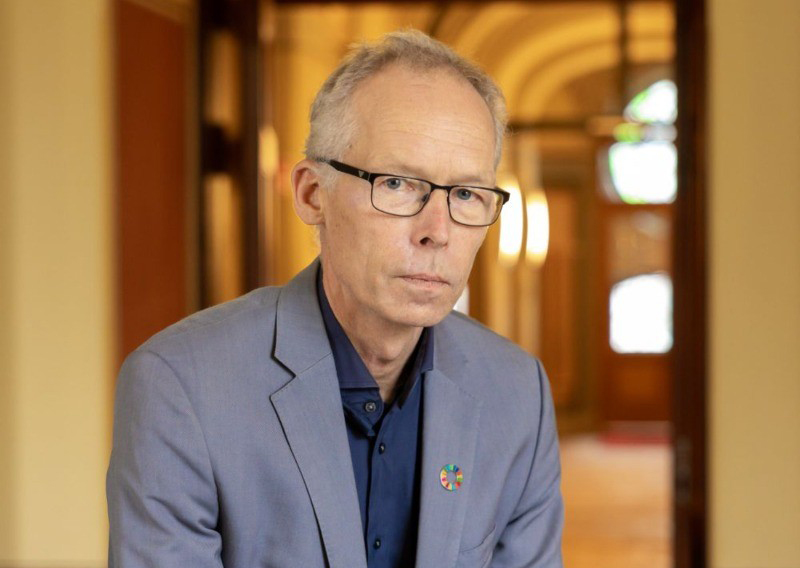
The decision was confirmed by both Johan Rockström, Director of the Potsdam Institute for Climate Impact Research and Co-Chair of the EAT-Lancet Commission, and Gunhild Anker Stordalen, MD/PhD, Co-Founder & Executive Chair of EAT.
“After more than a decade of successfully raising the healthy and sustainable food system transformation at the global policy, business and wider awareness stage, EAT Foundation is now beginning an orderly winding down during 2026,” Rockström wrote.
Stordalen said the move followed extended deliberations by the Board of Trustees.
“After long and thorough consideration, the Board of Trustees of the Norwegian EAT Foundation has decided to begin an orderly wind-down of EAT during 2026,” she wrote.
She described the past decade as a period in which EAT worked “intensively to elevate food systems as a central global issue – not as a side note, but at the very intersection of health, climate, nature and justice.”
Stordalen acknowledged that the decision reflected broader funding realities.
“The world has changed, and the shifts in the international donor landscape are real,” she wrote. “With the organisation’s, and its staff’s, best interests in mind, the Board has concluded that EAT’s current structure and funding model is not sufficiently resilient to support the level of ambition today’s world requires.”
EAT, founded in 2013, became known for convening political leaders, scientists, investors and corporate executives through initiatives such as the Stockholm Food Forum and through its coordination of the EAT-Lancet Commission.

The Commission’s 2019 report introduced the Planetary Health Diet, a quantified dietary framework designed to improve human health while operating within planetary boundaries. In October 2025, the Commission released its second report, published as a peer-reviewed article in The Lancet.
The updated assessment concluded that shifting global diets could prevent approximately 15 million premature deaths per year. It found that food systems account for roughly 30% of global greenhouse gas emissions and are the largest contributor to the transgression of five planetary boundaries. The report also highlighted persistent inequities, noting that fewer than 1% of the world’s population currently lives within what it defined as a “safe and just space.”
Rockström described the 2025 publication as “a sate of the art quantification of the Planetary Health Diet, running the first model inter-comparison on what it will take to return the global food system to within safe Food system boundaries, and addressing justice, and levers for transformation.”
He added that the report is “a key scientific guide for all investments and policy efforts to align diets, health and sustainability with safety and justice,” and said it “would never have been possible to accomplish without the leadership and drive by the EAT Foundation and its excellent staff!”
Despite the wind-down, Stordalen made clear that the mission remains unchanged.
“But let me be very clear: the need for a just transition of our food systems to work for both people and planet has not disappeared – and as long as that remains the case, neither will I,” she wrote.
She said that in parallel with the closure process, EAT is “actively exploring new pathways with aligned partners and donors to enable selected flagship initiatives to continue and, where possible, scale in new constellations.” No concrete arrangements have been agreed, she noted, but discussions are ongoing.
Stordalen said the organization’s immediate priority is internal.
“Our highest priority now is to run a compassionate, responsible and well-governed process: to support our people through this period. They have been the bedrock of EAT’s impact over the past decade.”
She added that the knowledge generated over the years would remain accessible “through partner institutions and established publication channels.”
“What I will carry with me from the past decade is simple: when science is connected to decision-makers and doers, change becomes possible,” she wrote. “The need for evidence-based pathways has not diminished – it has grown.”
The closure of EAT Foundation in 2026 brings to an end one of the most visible institutional efforts to align food systems with planetary and public health science. Whether its flagship initiatives re-emerge under new governance structures remains under discussion, but its influence on global food policy debates is likely to persist.

Join Us At One Of Our Upcoming Events

If you have any questions or would like to get in touch with us, please email info@futureofproteinproduction.com


