


Apoha raises US$36 million to scale AI platform for designing proteins, food ingredients and new materials

Apoha, a London- and San Francisco-based startup developing artificial intelligence models for materials discovery, has emerged from stealth with a total of US$36 million in funding as it seeks to expand a platform that can be used to design proteins, food ingredients, pharmaceuticals and advanced materials.
• Apoha emerged from stealth with a total of US$36 million raised across a 2024 seed round and a more recent unlettered funding round.
• The company developed a platform that generated behavioral data from materials and molecules, which it used to train AI models for materials discovery.
• Apoha reported collaborations spanning pharmaceuticals, biotechnology, food and beverage, and advanced materials applications.
The funding was first reported by Fortune, which disclosed that the latest round was led by European venture capital firm Singular, with participation from Draper Associates and continued support from existing investors Redalpine, Seedcamp, Wilbe and Nucleus. The company has also received grant funding from Innovate UK.
Unlike many AI companies focused on analyzing text, images or molecular structures, Apoha has built its platform around what it describes as a new category of data based on how materials behave when subjected to physical forces in liquids.
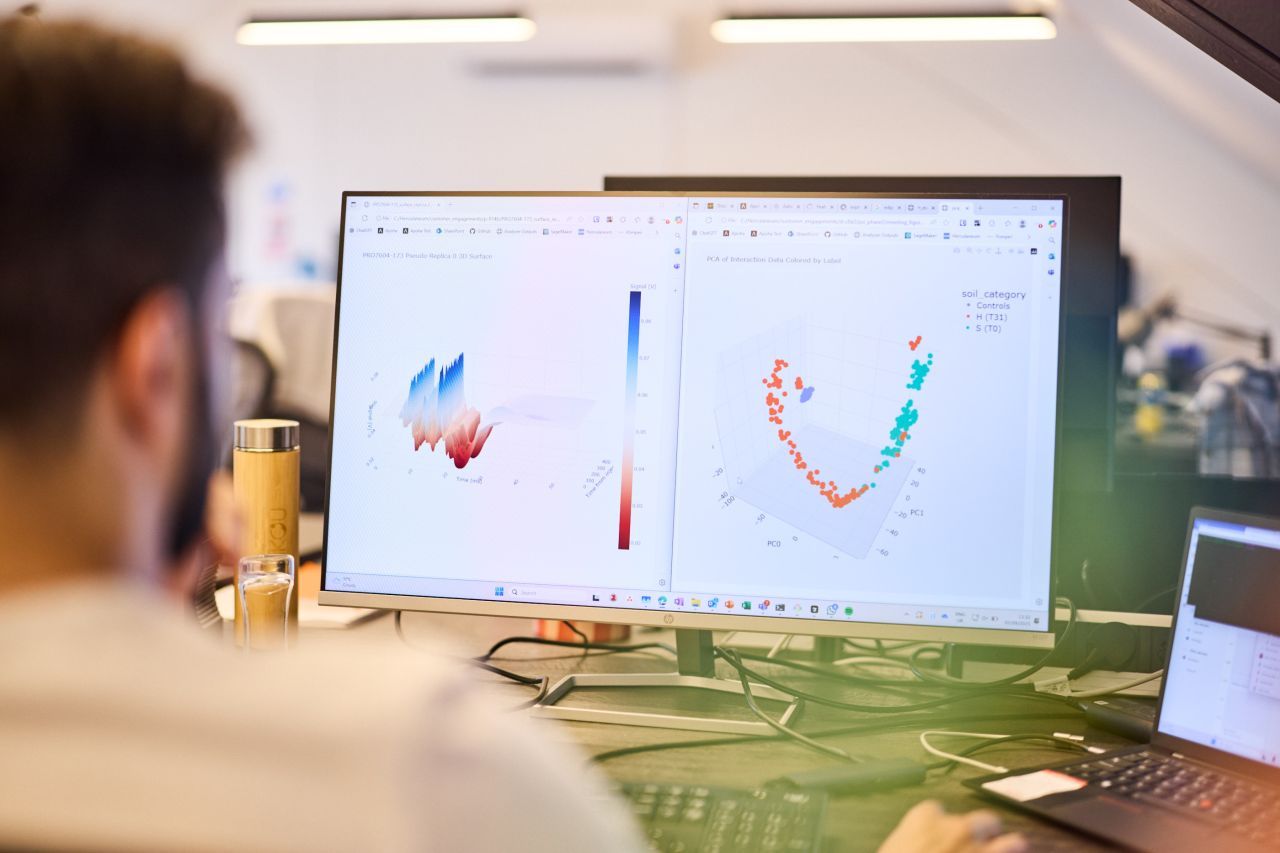
According to Fortune, the company has developed proprietary hardware capable of suspending tiny samples of material in liquid and applying controlled stresses to generate wave patterns. Those patterns are then translated into data that can be used to train AI models.
Founder and CEO Shamit Shrivastava described the approach as 'Liquid State Intelligence' in a LinkedIn post following the funding announcement.
"For years the most important question in drug discovery and materials science has been answered with proxies - sequences, structures, single-point assays, all of them trying to predict the one thing that actually matters: how a molecule will behave," he wrote.
"We built a way to capture the behaviour of materials as a structured data class and learn from it with unprecedented speed and efficiency."
The company's first commercial product is a measurement platform known as VIBE, short for Variations in Inter-facial Behaviour Under Excitation. According to Apoha, the system can generate more than 1,000 numerical descriptors of a material's behavior during a single test.
Those measurements are converted into what the company describes as "behavioral embeddings" that can be used by machine learning models to compare, predict and design material characteristics.
The technology has potential applications across multiple sectors, including pharmaceuticals, biotechnology, food and beverage, and industrial materials.
For food companies, the platform could be used to identify ingredients with specific functional properties or help replicate the texture and sensory characteristics of animal-derived products. Fortune reported that one of Apoha's early projects involved helping a food company identify a replacement ingredient for a plant-based chicken product after a supplier became unavailable.
Shrivastava argued that the approach represented a shift in how materials could be designed.
"Instead of starting from composition and hoping for the right behaviour, you start from the behaviour you want and work backwards to the composition that produces it," he wrote.
Beyond food applications, Apoha has highlighted pharmaceutical discovery as a major focus area.
According to Fortune, the company has collaborated with German pharmaceutical company Boehringer Ingelheim and reported that its platform was able to identify high-risk antibody candidates with more than 90% precision using very small material samples. The company also reported work with German biotech firm Ethris on predicting the behavior of lipid nanoparticles used in mRNA delivery systems.
Apoha reported that it had completed around 40 customer projects to date and employed approximately 25 people.
The company was founded in 2021 by Shrivastava and chief operating officer Anshika Srivastava. Prior to launching Apoha, Shrivastava conducted postdoctoral research at the University of Oxford after completing a PhD at Boston University. According to Fortune, he developed the underlying methods behind the company's behavioral analysis technology and holds patents covering both the measurement approach and associated hardware systems.
Lead software engineer Feliks Borzik said in a LinkedIn post that the company's mission had attracted him to the startup despite not initially planning to work in deep tech.
"I was just curious about the mission - teaching machines to feel and understand matter," he wrote.
The newly announced funding will be used to scale Apoha's platform, expand the range of materials that can be analyzed and support a growing customer base, according to Fortune.
Raffi Kamber, co-founder and general partner at Singular, said in comments reported by Fortune that Apoha represented "a new generation of European scientific companies where AI is not a future promise, but a practical tool already transforming how biology is done."
While Apoha's technology remains relatively early-stage, the company's emergence reflects growing investor interest in AI systems designed to accelerate scientific discovery and materials development. For sectors such as alternative proteins, where texture, functionality and ingredient performance remain critical challenges, behavioral data may offer a new route to identifying and designing materials with specific characteristics.
Source: Fortune exclusive reporting by Jeremy Kahn, June 3, 2026, supplemented by public LinkedIn posts from Apoha executives.

Join Us At One Of Our Upcoming Events

If you have any questions or would like to get in touch with us, please email info@futureofproteinproduction.com


