


Ones to Watch: Seeds of change
26 FOOD TECHS TO WATCH IN 2026
Selam Yihun, Co-founder & CEO of Plafko, explains how Ethiopia’s first plant-based milk producer is reshaping nutrition, livelihoods, and food security through a homegrown model built for African realities, not Western imports
Eating habits in Ethiopia are shaped by centuries of tradition. Meanwhile, nutritional gaps persist and dairy shortages stretch into the billions of liters. Into this landscape steps the Addis Ababa-based Plafko Trading PLC, known locally as The Plant Food Company, with a mission to rethink how essential nutrition can be delivered.
“We are an innovative agro-processing startup producing locally made, nutritious, and affordable plant-based food alternatives,” reveals the charismatic Selam Yihun, CEO & Co-founder. “Our flagship product, Plafko Oat Milk, offers dairy-free options designed for the Ethiopian market, catering to health-conscious consumers, lactose-intolerant individuals, and those observing religious fasting.”
For Plafko, though, the goal is not simply to introduce an alternative beverage but to shift nutritional value away from constrained dairy supply chains and toward resilient, plant-based systems designed for local realities.
Ethiopia’s food puzzle
That’s easier said than done. The challenges Plafko faces are deeply structural. “More than 50 million Ethiopians observe fasting for 180 days each year, avoiding all animal products, while one in 10 children are lactose intolerant,” Yihun says. Compounding this is an annual shortage exceeding 18 billion liters of milk. Affordable dairy-free options remain scarce, and the burden falls heavily on children and low-income households.
Imported plant-based products exist, but high costs and unfamiliar positioning limit their reach. Plafko instead uses domestic ingredients and culturally aligned formulations to create accessible oat milk tailored to Ethiopian needs.
The environmental logic also reinforces the mission. “Our plant-based milks reduce carbon footprint by 60-70% compared to traditional dairy,” Yihun notes. Plafko’s broader aim, therefore, is to reshape the local dairy landscape in a way that supports both ecological realities and community priorities.
Local innovation, not imported ideas
“Our core innovation lies in producing locally made, nutrient-rich plant-based milks that are culturally meaningful and sustainable, while embedding social impact into our operations,” Yihun continues.
This philosophy also shapes its business model. Rather than relying on imported inputs or Western packaging formats, Plafko uses a hybrid B2B and B2C strategy that reduces packaging costs and expands distribution through cafés, restaurants and bulk retail. Sustainability is also embedded operationally. “We operate a circular economy model, turning production waste into animal feed and energy sources for baked goods,” Yihun explains. The system lowers emissions, reduces costs and creates new income streams for partners.
By centering Ethiopian diets, supply chains and price points, Plafko stands out from imported brands that struggle to align with the country’s culinary and economic landscape.
Plafko empowers local farmers and women-led enterprises, fostering sustainable supply chains, economic inclusion, food security, and climate-positive practices
A year of validation
For Plafko, 2025 marked the transition from concept to evidence. “We successfully produced and tested our oat milk prototype with pilot clients,” Yihun reveals. Early demand followed quickly: 370 liters ordered by cafés and restaurants, plus 1,000 liters from pre-order customers. This traction mattered not only for revenue, but for cultural validation in a market new to plant-based milks. Throughout the year, the company finalized production-line design, refined its cost structure and strengthened its supply chain ahead of scale-up. The team expanded as well, adding specialists in production, R&D and operations.

Funding accelerated the work. “We secured US$10,000 in seed funding from the Jasiri Talent Investor Program, receiving strategic guidance and mentorship to strengthen our business model,” Yihun says. The company also deepened its partnerships with women-led suppliers and smallholder farmers – relationships central to Plafko’s social-impact thesis.
Scaling toward 2026
The next phase blends ambition with discipline. “In 2026, Plafko aims to increase daily production capacity to 1,000 liters,” Yihun states. Achieving this milestone would move plant-based milk from a niche urban product to an accessible household staple. Distribution will expand across cafés, restaurants, retail outlets and e-commerce platforms. Higher throughput will reduce per-unit costs – a prerequisite for nationwide adoption. Strengthening agricultural networks is equally important. “We plan to partner with 150 smallholder farmers and women-led suppliers, providing training, quality inputs and technical support,” she says. A traceable, reliable supply system improves farmer incomes and reduces reliance on imports.
Product development will continue in parallel. Plafko will launch its Barista Oat Milk and begin developing two additional products addressing common nutritional deficiencies. Job creation across production, logistics and distribution is expected as the company scales. Meanwhile, the Plafko Foundation will launch its one-for-10 donation model, extending fortified plant-based nutrition to schools and communities. Education campaigns in schools, hospitals and community organizations will accompany this work, helping to raise awareness around plant-based nutrition.
Mission-driven partnerships
Plafko’s momentum is supported by a broad network blending technical guidance, mentorship and practical validation. Programs such as Jasiri, One Young World, the FAST Program, Tumbuctoo and BIC Africa have expanded the company’s visibility and strengthened operational capacity.
Direct partnerships with cafés and corporate clients provide real-world testing grounds for taste, texture and cultural compatibility. Collaborations with women-led suppliers and smallholder farmers embed social inclusion directly into Plafko’s growth model. Together, these alliances create the ecosystem that enables Plafko to scale without compromising its values.
A uniquely Ethiopian challenge
Developing plant-based milk for Ethiopia required far more than standard formulation. “The hardest challenge has been creating a nutritious oat milk that is both affordable and culturally relevant,” Yihun says. Imported options are too expensive for most households, and many do not align with local taste preferences.
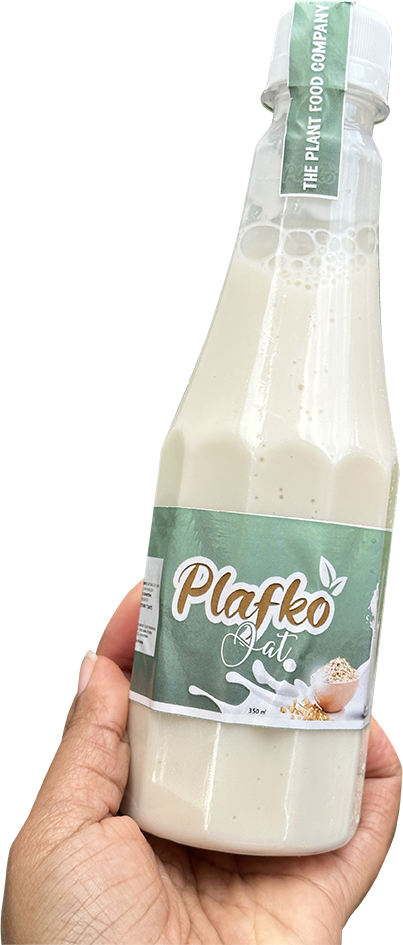
Plafko’s iterative development – from pilot testing to ingredient selection – has helped fine-tune a product suited to Ethiopian consumers and the realities of local diets. These cycles of testing, feedback and reformulation have been essential in shaping flavor, texture and affordability. Commercially, however, awareness remains a barrier. “Many people assume plant-based alternatives are expensive, inaccessible or nutritionally inferior,” she says. Countering these misconceptions is essential to reaching mainstream adoption.
Plafko assesses its impact across environment, nutrition and livelihoods. Fortified formulations address calcium, vitamin D and iron deficiencies; circular production reduces waste; and partnerships with farmers and women-led enterprises support income generation and inclusion. Through the Plafko Foundation, the company tracks donations, customers reached and liters served, ensuring that growth is tied to measurable social benefit.
Looking ahead, the vision extends beyond Ethiopia. “In five years, Plafko will be a household name across Ethiopia and beyond, providing nutritious, plant-based foods to millions,” Yihun predicts confidently.
The 2030 pipeline
Plafko’s long-term roadmap blends ambition with practical operational design. “Plafko is building on its green and inclusive mission by expanding our oat-based product line, including Plafko Barista Oat Milk,” Yihun says. Teff and almond milks fortified with essential nutrients are also in development.
The company will continue converting production waste into animal feed and energy sources while automating parts of production to support scalable circular systems. Strengthening local supply chains – particularly partnerships with women-led enterprises and farmers – remains a priority.
As volumes grow, the Plafko Foundation will increase donations to schools and vulnerable communities. By 2030, Plafko aims to offer plant-based products that are nutritious, affordable and environmentally responsible, helping build a green, inclusive food economy in Ethiopia.
If you have any questions or would like to get in touch with us, please email info@futureofproteinproduction.com

More Features

Protein Pioneer: Justin Kolbeck

Deep Dive: Breakout bets

Feeding change

Protein Pioneer: Kesha Stickland


