


Ones to Watch: Rethinking dairy
From upcycled yeast and lentil-based cream to liquid caseins and precision-fermented proteins, a new wave of innovation is reshaping dairy. With functionality, scale, and sustainability at stake, Emma Clarkson finds the race to define the next chapter is under way
Last year, the once-dominant dairy alternatives market began to show signs of slowdown, with some sources even suggesting that conventional dairy was regaining ground.
The reasons are varied: mainstream media’s hyperbole around ultra-processed foods and anti-plant-based messaging; the cost-of-living crisis hitting both industry and consumers; conflicting narratives around the health benefits of plant-based versus cow’s milk; and shifting consumer priorities.
And the truth is, plant-based milks and cheeses have not always delivered on taste, texture, or nutrition. For some omnivorous households, that meant reverting to what they knew best – products that could be relied upon to perform on melt, texture, and flavor.
That is why innovation is critical. An NIQ BASES study found that when innovation sales grow, a company is 1.8 times more likely to grow overall sales. In alternative dairy, consumer acceptance of precision fermentation-derived dairy is strong, as it promises animal-free, dairy-identical proteins for high-performance cheeses. Concerns over genetic modification remain, however, and the technology is still at an early stage. Hybrid milks are also gaining traction, offering a near-term solution to some of these challenges.
Industry hurdles remain in nutrition, labeling, and price parity – and, of course, in organoleptic performance. But change is already under way. According to the report The 2040 EU Sustainable Dairy Landscape: Corporate Transition in Traditional and Animal-Free Dairy by Bright Green Partners, a shift is happening. Animal-free leaders are emerging, reshaping the sector, while differing retail prices by 2040 are expected to drive major shifts in consumer purchasing.
“There is huge potential for those companies who choose to innovate and invest now,” the authors state. “The dairy sector as we know it is set to be transformed over the coming years, and plant-based milk and precision fermentation have a crucial role to play in complementing more sustainable dairy farming. There is huge potential for those companies who choose to innovate and invest now – while those who fail to act risk being left behind.”
The carbon cost of dairy
The environmental case is stark and increasingly urgent. In the EU, a quarter of all food emissions come from dairy. Dairy milk carries almost three times the carbon footprint of rice milk, the next highest emitter, according to Ethical Consumer. Meanwhile, milk yield has surged 16.7-fold in 80 years, from 53 million tons in 1944 to 887 million tons in 2021, and is forecast to hit 1,060 million tons by 2031. The case for action, innovation, investment, and improved communication could not be clearer…
Yeap
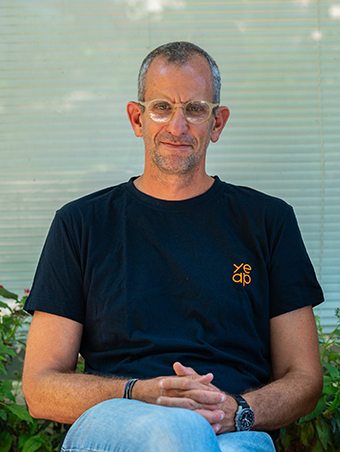
Jonathan Goshen is the Co-founder & CEO of Israel’s Yeap, which applies an upcycled, circular process to make sustainable, scalable, affordable protein from spent yeast. “At Yeap, we take yeast waste from several industrial processes that otherwise would have been discarded, upcycle it, and turn it into high-quality, highly functional proteins,” he explains.
Both the circular approach and the functional aspects are compelling. In terms of functionality, Goshen says this protein delivers multiple capabilities, including emulsification and texture enhancement without the need for gums or stabilizers. “It’s all about letting the protein do the work, delivering a creamy, smooth, high-protein result while keeping the formulation clean and simple.”
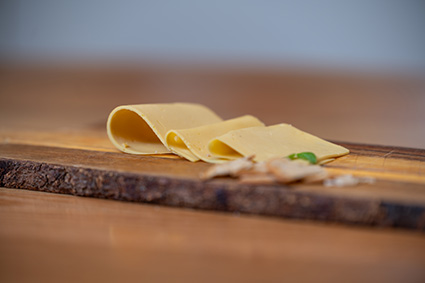
Beyond sustainability and functionality, Yeap claims to have overcome one of the biggest hurdles in high-protein dairy alternatives: the chalky or gritty mouthfeel. The company has demonstrated success in several prototypes, including a cream cheese with ~8% protein that maintains a rich, spreadable texture; a feta-style cheese with 5% protein and no crumble issues; and a Cheddar-style slice with ~10% protein that is said to be smooth and stretchable.
“Most high-protein alternative dairy products struggle with taste and texture, and on top of that, their protein content is often extremely low, almost zero,” Goshen says. “The difference with Yeap comes down to our secret sauce – our proprietary process. In simple terms, we know exactly how to break down and open the yeast cell, allowing it to combine seamlessly with other ingredients. The result is a super smooth, creamy texture that holds up even at high protein inclusion rates, so there’s no compromise on taste or mouthfeel. In other words, no chalkiness and no grit!”
The food industry should pay close attention
When sustainability is discussed, the focus often falls on carbon footprint. Goshen stresses that this is only part of the picture. “The food industry should also be paying close attention to water use, biodiversity, and waste. At Yeap, we look at it as a whole: wherever we can re-use whatever waste we have, we try to use it and exploit it to its fullest value.”
Upcycled proteins aren’t just a sustainability story, they’re a real opportunity to innovate
Upcycling fermentation sidestreams such as yeast not only reduces food waste but also limits the demand for new farmland, helping to safeguard biodiversity. It also supports resilience. “This approach creates a rigid and stable supply chain that isn’t vulnerable to geopolitical tensions or climate disruptions,” he says. “Because our raw materials come from existing, year-round fermentation industries, we can keep production consistent no matter what’s happening in the world – making sustainability not just an environmental choice, but also a strategic one. In short, a sustainable food system isn’t just low-carbon – it’s circular, resource-efficient, biodiversity-positive, and supply-secure.”
So, isn’t this exactly the type of ingredient the industry should be embracing if it wants a future in balance with the planet? Goshen believes the urgency is undeniable. “If I could send one message to the wider food industry about upcycled proteins, it would be this: we have the tools, wisdom, and creativity to turn what’s already available into something valuable, delicious, and healthy. By fully exploiting existing resources, we can prolong Earth’s resources, reduce waste, and deliver products that are better for people and the planet. It’s also a lesson in modesty – respecting what we already have instead of endlessly consuming more resources. Upcycled proteins aren’t just a sustainability story, they’re a real opportunity to innovate, delight consumers, and rethink how we feed the world.”

NewMoo
Daphna Miller, Co-founder & CEO of plant molecular farming startup NewMoo, brings 20 years of experience in marketing and executive roles at leading Israeli food companies including Strauss Group, Tnuva, and Nestlé.
NewMoo is “pioneering a new source for dairy” by producing casein proteins inside plants. These replica building blocks of dairy enable the same taste, nutrition, and functionality as cow’s milk – but in a far more sustainable way.
What sets the company apart is its focus on liquid caseins rather than powders, which, Miller says, often fail to fully replicate milk’s behavior in real-world applications. “We’re much closer to the real thing and can integrate seamlessly into traditional cheese-making processes or any other dairy product,” she says.
Another differentiator is NewMoo’s deep collaboration with the dairy industry. “At NewMoo, we don’t want to disrupt dairy; we want to empower it,” Miller says. “Our mission is to offer dairy producers a financially viable, scalable way to expand their product lines and meet evolving consumer demands without having to reinvent their operations.

“By offering real cow dairy proteins made without cows, we open up entirely new markets for dairy producers: flexitarians, the lactose-intolerant, climate-conscious consumers, and the animal-conscious – without asking them to give up what they do best.
“Dairy producers – our primary partners – are deeply tuned in to their customers. They know that today’s consumers want products that are lactose-free, sustainable, and animal-free, but without sacrificing taste, melt, or nutrition. Our job is to help producers deliver on that promise by giving them a drop-in solution that works with their existing equipment, recipes, and processes – and performs like cow dairy.”
By producing all four caseins, we unlock the authentic taste, melt, and creaminess that plant proteins can’t achieve
NewMoo has already signed Letters of Intent with dairy organizations, a signal that collaboration – not conflict – is the way forward. Consumers are already seeking alternatives; the challenge now is equipping producers with the tools to deliver them and keep pace with shifting market demands.
Unlocking authentic dairy properties
And those demands are clearly for more authenticity. “Caseins are essential in replicating dairy because real cheese isn’t just one protein; it’s a symphony of four types of caseins (αS1, αS2, β, and κ),” Miller explains. “Each plays a unique role. Without all four, you don’t get the stretch, melt, or mouthfeel that makes cheese… well, cheese.
“Plant-based proteins lack the structural complexity and bonding behavior of dairy caseins. By producing all four caseins, we replicate the full matrix of dairy, unlocking authentic taste, melt, stretch, and creaminess that plant proteins alone just can’t achieve. Consumers can not only enjoy that same taste and texture, but also get all the nutritional advantages of milk proteins – without lactose, hormones, or cholesterol.”
Miller is candid about where alternative dairy has misfired, pushing some consumers back toward cow’s milk. “There’s been too much compromise, especially on taste and protein content,” she says. “To bring consumers back, the focus needs to shift from ‘substitute’ to ‘equivalent’. That’s where real milk proteins like ours come in.”
For her, it’s about reframing the conversation. “Too often, ‘without cows’ sounds like a loss. But what we’re doing is gaining: sustainability, flexibility, and new ways of feeding the world, with all the dairy goodness still intact.
“If we can help shift the narrative from replacement to evolution,” she concludes, “we’ve done our job.”

Verley
Stéphane Mac Millan, Co-founder & CEO of Paris-based Verley (formerly Bon Vivant), has been at the forefront of bringing precision-fermented proteins into the spotlight. Under his leadership, Verley has defined itself not as a consumer-facing brand, but as an ingredient company helping the wider industry rethink what’s possible.
“Our mission is simple: to produce every dairy protein through precision fermentation; ending the need to crack milk, keeping milk for what it’s meant for, and making 100% of the proteins directly through this technology,” Mac Millan says.
Looking at today’s dairy landscape, he highlights two major challenges that Verley is determined to address. “The first is a structural deficit between supply and demand. Demand is growing rapidly – around 7–8% CAGR every year – because we’re consuming far more dairy products. Trends like high-protein diets, weight management, and supplementation – especially for people taking treatments such as Ozempic or Wegovy – are pushing demand even higher.

“At the same time, production is plateauing. In the USA, it’s stagnant; in Europe, it’s actually declining. And the reality is, you can’t just add more cows for sustainability reasons, and productivity per cow has already reached its maximum. So, we need complementary solutions to bridge that gap.
“The second major issue is sustainability. Cows are incredible animals producing an incredible product – milk is almost magical, since every mammal starts life with it. But they also consume huge amounts of land and water, and they produce significant greenhouse gas emissions – more than the airline industry.
“So these two issues – supply-demand imbalance and sustainability – need to be addressed. Precision fermentation is the right technology to do that. While you can’t produce milk itself, you can produce the proteins. That allows us to meet rising demand in a way that’s far more sustainable and productive. That’s exactly what excites us at Verley.”
Precision fermentation as a strategic asset
Mac Millan argues that precision fermentation is not just another food technology but a vital capability for the future. “The ability to produce protein in this way is truly a strategic asset. You can already see recognition of that at the highest levels. For example, the US Department of Defense and Israel’s Ministry of Defense have both invested in startups like ours. That shows a clear understanding that food is not just food – it’s a critical strategic resource.
“Food sovereignty will only become more important as we face challenges like declining access to water, pressure on cereal production, and other systemic risks. The ability to produce the nutrition we need with just a fraction of the resources – and to do so in stainless steel tanks rather than on farmland – is strategically significant.
“So, we definitely have a role to play – not only for key countries globally, but also, as a French company, for Europe’s food security. This conversation may not yet be visible to end consumers, but it is already being taken very seriously by governments as a strategic asset for the future.”
The cool thing about precision fermentation is it’s not a moonshot. It’s already proven, scaled, and working at an industrial level
Mac Millan is clear about what excites him most about the future of precision-fermented proteins: unlike many breakthrough technologies, this one is not a gamble. “A lot of technologies with the potential to change the world are effectively moonshots. If they work, the impact is huge, but the chances of success are slim.
“The cool thing about precision fermentation is that it’s not a moonshot. It’s already part of our everyday lives. More than 90 different molecules have been produced this way for decades. The technology is proven, it’s been scaled, and it works at an industrial level.
“That’s what excites me the most: we can have a tremendous impact on the food industry – especially dairy – by stopping the need to crack milk, improving sustainability, and bringing new functional ingredients to market with a technology that already exists.”
PlanetDairy
Jakob Skovgaard, Co-founder & CEO of Denmark’s PlanetDairy, has deep knowledge of the dairy sector, having worked with giants such as Arla Foods and Danish Crown, as well as advising animal-free company Remilk. He founded PlanetDairy alongside two other dairy executives who share his passion for cheese.
Given these traditional backgrounds, it is striking that Skovgaard envisions “a future of dairy without cows”. Precision fermentation, he argues, can deliver the taste, functionality, and nutrition of dairy with 80-90% lower CO2 emissions.
Blending a love of cheese with a commitment to reducing dairy’s carbon footprint, PlanetDairy has opted for a hybrid route to market. As Skovgaard explains, “The technology is not freely available, is currently expensive, and is not yet legal in most of the world. Therefore, our first step is hybrid dairy because we and the planet cannot afford to wait.”

Asked whether hybrid is the company’s long-term play, Skovgaard is clear. “We perceive hybrid to be the first step on the journey to full dairy without cows. Nearly every year sees new records broken for negative impact on the planet. Hybrid dairy offers a midway solution that delivers significant CO2 savings now.”
The hybrid model provides a commercial advantage, enabling PlanetDairy’s products to enter the market without regulatory hurdles. “The hybrid products we develop sit within the current framework,” Skovgaard says.
Hybrid dairy is the first step toward a future of dairy without cows, delivering meaningful CO2 savings today
Some question where hybrid dairy fits on shelves, citing discontinued ranges from Arla and Kerry that left consumers confused. Skovgaard acknowledges the challenge. “For shoppers, it’s a new concept. It doesn’t fit neatly into the dairy or plant ‘boxes’ they’re used to. So, we need to establish this as a third alternative. Generating awareness and trial is both a challenge and an opportunity. Hybrid dairy, like hybrid meat, is still very nascent. The consumer will ultimately decide, but it’s our job to lead them on a path that is optimal for all.”
Scaling as climate mitigation
PlanetDairy views hybrid as a climate mitigation strategy that needs rapid scaling. “All the pieces are in place,“ Skovgaard continues. “Now we need customers and consumers to become aware of our products, try them out, and then make the switch from traditional dairy to hybrid.”
The company first launched branded products in Denmark, Sweden, and Finland, while also pursuing private-label deals across Europe – including a recent white-label launch with Albert Heijn in the Netherlands.
“We love our branded business, but in the big picture, it’s more of a proof of concept,” Skovgaard says. “Scale will come from private-label partnerships with big retailers and the application of our technology in food manufacturing. From a supply chain perspective, we’ll work with established players. Most cases require only limited new investments.”
Skovgaard also hints at major partnerships under way. “Within cheese, we are working very closely with some very large food manufacturing players – think the top five pizza manufacturers and lasagne producers – to implement our solutions. This also has significant potential and can take our business to a completely new level. We also have prototypes and recipes for almost every dairy sub-category, and we’re currently working on finding production partners we can scale up with.”
For PlanetDairy, speed and scale are everything. “Success is when our product ends up on a consumer’s plate,” Skovgaard says. “Whether that’s through retail or foodservice doesn’t matter.”

ANDFOODS
Alex Devereux, CEO & Co-founder of New Zealand-based ANDFOODS, is building a new generation of dairy alternatives for foodservice – products that are already taking Asia by storm.
The company’s initial focus has been on whipping cream. And it’s made from lentils. Sound niche? Devereux insists otherwise. “To someone outside the industry, it might sound like a niche, but it’s actually a huge and fast-growing category, with strong margins.”

Asia, he explains, presents the perfect conditions for this solution. “Right now, dairy is under massive supply constraints, so there’s a widening gap between supply and demand. That alone is enough to justify what we’re doing – to help meet that gap. On top of that, you’ve got pricing pressures and growing customer awareness that non-dairy doesn’t have to mean inferior. In Asia, that shift is only just beginning, whereas in the USA, Europe, and especially Australia, it’s been happening for a while.”
Price volatility and supply chain pressures are central to ANDFOODS’ traction. “It comes down to how much dairy prices fluctuate,” Devereux says. “You can see a 20% uplift in quarterly cream, mozzarella, or butter pricing, and that puts massive strain on a foodservice operator. Dairy is often one of the largest input costs for bakeries, beverage houses, pizzerias, or pasta places. When those prices spike, operators can’t immediately pass the cost onto customers – they have to absorb it, at least for that quarter.
“Dairy is structurally higher now and not coming back down in the same way, so there’s interest in continuing with oil-based and plant-based products. But the bigger driver is that the products themselves are getting much better. That’s why ours have been so well received.”
Fingers on the pulse
Pulses have been part of Asian diets for millennia, with deep cultural knowledge of their qualities. Today, food scientists are harnessing those same functionalities for new categories such as whipping cream, ice cream, and cream cheese. “Our lentil variety, for example, has a lot of mucilage – so it’s rich in polysaccharides. That gives us unique whipping functionality, which is the crux of a good whipping cream. It lets the product whip, hold its shape and structure over time, and strike the balance between being light and fluffy without losing the density you expect in dairy whipping cream, cream cheese, or ice cream,” says Devereux.
People won’t sacrifice on taste and texture, but if there’s a like-for-like option, they’re excited
The functionality comes from ANDFOODS’ patented fermentation process, which first drew investor interest. “Fermentation is critical for us. It removes the off-notes – the beany taste you get from our lentil raw material. We haven’t run extensive trials with other raw materials yet, but our hypothesis is that the right culture, combined with the right substrate and our unique fermentation approach, could yield similar results: the same, if not improved, nutritional profile and a much milder taste.
“Our lentil material has six core flavor components – three that are strongly beany and three that are naturally creamy and dairy-like. Fermentation reduces those beany notes and elevates the creamy ones. The result is a very clean, white material that doesn’t need additional whitening ingredients. That combination alone makes it incredibly well-suited for dairy alternatives.”
This efficiency also supports sustainability. “Our lentil is incredibly efficient – it’s grown in rotation with crops like rice, and the nitrogen-fixing makes it much more sustainable,” Devereux says. Investors have recognized both the climate and commercial potential.
For Devereux, the equation is simple. “If it works, it works, and consumers will opt for it. People are demanding plant-based if the product is good enough. They won’t sacrifice on taste and texture, but if there’s a like-for-like option – whether ice cream, cream, or cheese – they’re genuinely excited.”

AAK
As Global Customer Innovation Team Lead, Plant-based Dairy & Dairy, at AAK in the Netherlands, Francisco Arévalo brings deep expertise in both consumer preferences and production methods in dairy alternatives.
He argues that taste and the “overall eating experience” are simultaneously the biggest opportunity and the toughest challenge for the category. A large part of the solution, he says, lies in the fat matrix, which can address issues such as a lack of creaminess, a lack of characteristic dairy flavor, or even defects such as grittiness or products that aren’t smooth enough.
“In the example of cream cheese, a product that doesn’t spread well on bread or toast won’t work for consumers,” he says. “Or in ice cream, if there isn’t sufficient overrun – enough air incorporation – the result is a product that’s too dense, too heavy, more expensive for companies to produce, and one that melts too quickly. These
are the types of challenges we often see, and they’re ones that can be addressed with the right fat solution.”
Coconut remains one of the most important tools in plant-based dairy, Arévalo says. “Producers have relied on it for structuring and mouthfeel properties since the market first started to develop, and that continues today.

“But coconut can be even more powerful when used as part of a multi-oil solution. For example, combining it with other sources from our strong supply base can create a synergistic effect – where one plus one doesn’t equal two, but something much greater. That’s the real value of fats: working together with coconut to unlock the full potential of multi-oil solutions.
“We also can’t ignore that coconut prices are soaring in the global market, pushing producers to look at alternatives. There’s no single fat source that’s one size fits all, so it’s important to consider price, functionality, and how different oils and technologies can be combined into a tailored multi-oil solution that meets customer needs at the right cost.”
Performance, awareness, and demand
With no universal fat solution – and with consumer preferences becoming more complex – brands are diversifying their fat profiles. “The first aspect is functional needs. On the producer side, they’re looking for fats that can replicate the texture and mouthfeel of animal products. Some are even exploring innovations like precision fermentation or tailored blends of fats and oils.
Fat is often overlooked in plant-based dairy, but it has a huge impact – as we like to say at AAK: fat makes food fabulous
“The second aspect is health reformulation. Consumers are becoming more educated and increasingly concerned about what’s in their plant-based products – what’s on the label, and the nutritional and health properties of what they’re eating. As a result, brands are reformulating to use healthier fat sources.
“Finally, there’s clean label. Consumers are also becoming more cautious about ultra-processed foods, E-numbers, and additives in general. This is pushing brands to adapt by using more recognizable, non-GMO, and sustainable fat sources.
“So, to sum up, it comes down to three things: functional performance, more awareness and demand for healthier products, and cleaner labels that consumers can trust.”
Arévalo’s advice to brands is to prioritize fat from the very start of product development. “My recommendation is always to bring fat into the design stage as early as possible. It’s important to remember that fat is one piece of a complex food system, where all components interact with each other. So, choosing the right fat from the very beginning is just as critical as any other ingredient.
“A common misconception – especially in the plant-based dairy industry – is that fat is almost overlooked, treated as if it’s an inert component that’s just there. But that’s not true. The choice of fat can have a huge impact on the final product. And as we like to say at AAK: fat makes food fabulous. That’s why it’s so important to pick the right fat from the start.”

Aspyre Foods
Thomas Bartleman, Co-founder & CEO of Cape Town’s Aspyre Foods, is producing the ‘future of planet-friendly dairy proteins’ via the duckweed plant, otherwise known as Lemna.
He says Aspyre is on a mission to produce healthy and functionally identical proteins that enable high-performance food products. “We do this by harnessing duckweed’s dual advantages – as a biofactory for dairy (casein) proteins and as a source of high-value native (Rubisco) proteins.”
Bartleman has much to say on the topics of supply chains, resource efficiency, and climate resilience, which isn’t surprising given that Aspyre is harnessing the most abundant protein on the planet.
“The global protein supply chain is fragile. It is vulnerable to increasing resource scarcity, geopolitical instability and fragmentation, and climate volatility, and it is optimized for cost and efficiency, not resilience,” he says. “If you think about it from first principles, most other challenges stem from these four. Therefore, the fragility, price volatility and other disruptions tend to be amplified with increasing dependencies.”

Current approaches often treat these risks separately, but they are interconnected and systemic, Bartleman explains, and considering the system as a whole is essential to building resilience.
“So, how do you create protein supply chains that are simultaneously resilient, scalable and highly resource-efficient, all while ensuring you provide high-quality ingredients to producers and healthy food products consumers? Our solution to this is the combination of plant molecular farming and duckweed, one of nature’s most powerful plants.”
Such a marriage addresses all four fundamental challenges at once. “It creates flexible, responsive production systems with rapid growth rates and year-round harvesting; it requires minimal water and (non-arable) land; it’s less vulnerable to geopolitical trade disruptions because production can be established regionally; and duckweed’s inherent resilience, combined with a contained, low-cost cultivation environment, makes it resilient to climate volatility. Duckweed is also excellent at carbon sequestration, which is great for our planet.”
Digging for gold without discarding the silver
Molecular farming opens the door to producing multiple value streams from the same biomass, in this case, both Rubisco and casein from the same plant resource. Such a shift away from single-ingredient thinking offers a robust solution to economic fragility, says Bartleman. “If we only extract casein from a biomass that’s naturally rich in multiple valuable ingredients, we’re leaving 70-80% of the potential value on the table.
“Using mining as an analogy, you wouldn’t dig for gold and throw away the silver and copper if they’re also present.
“The shift to multi-stream extraction means we’re not betting everything on one market. If casein demand softens, we still have Rubisco revenue. If Rubisco pricing becomes competitive, casein can help buffer against that. And plant biomass holds value beyond proteins – every plant leaf, or duckweed frond in our case, contains other valuable compounds.”
We want to show that resilience isn’t just a nice-to-have, it’s a competitive advantage
Let’s talk about the functionality of the casein and Rubisco proteins. As we know, casein provides the properties that make dairy products taste and feel like dairy: the stretch and melt, the coagulation behavior, the texture and mouthfeel. But what about Rubisco?
“Rubisco brings a different but complementary set of benefits – excellent emulsification, foaming stability, and gelling properties,” continues Bartleman. “It also offers low allergenicity, high digestibility, and a complete amino acid profile, which is great for all consumers.
“Together, they cover a broad spectrum of protein functionality that food manufacturers need and want. Instead of combining multiple plant proteins with various additives to get close to a specific performance or functionality, they can create high-performance products with two complementary proteins. It’s functional completeness with supply chain simplicity.
“In terms of functionality, Rubisco outperforms most ‘mainstream’ plant-based proteins, like soy and pea on numerous fronts, not just limited to functionality. Rubisco’s foaming capacity and stability is particularly compelling compared to both egg white and whey, and it has different gelation properties that will be better suited for specific products, and it also has better solubility compared to egg white proteins.
Bartleman concludes, putting forward that Aspyre isn’t just talking the talk when it comes to true sustainability, it is seriously walking the walk. “It’s one thing to talk about building more resilient food systems; it’s another to show that you can produce multiple valuable proteins from the same sustainable platform. We want to show that resilience isn’t just a nice-to-have, it’s a competitive advantage.”

University of Guelph
Alejandro Marangoni’s work at the University of Guelph in Canada is helping shape how the industry understands the role of fats and proteins in food systems.
His journey began with fats and oils during a time when public health concerns were high. “People were talking about cholesterol and moving away from animal fats toward plant-based fats,” he recalls. Partially hydrogenated oils initially promised a solution but soon proved harmful. So, from the outset, his work set out to explore substitutes that replicate traditional ingredient functionality while improving nutrition.
The early commercial plant-based cheeses contained almost no protein and lacked melt or stretch properties. So, Marangoni and his team went on to develop high-protein plant-based cheeses with 18-20% protein, carefully balancing starches, fats, and water to replicate dairy functionality.

“No protein, no functionality – that’s why we got into this space. We saw a big gap. When we surveyed commercial products, looking at the nutritional labels across all the big brands, we kept seeing the same thing: zero protein per serving.
“From there, we developed functional tests. We had to be very scientific about it, measuring meltability, stretchability, hardness, all the characteristics you associate with cheese. Yet when you put a plant-based pizza in the oven at 450°F, you’d still end up with unmelted chunks of ‘cheese’ on top. Functionality was basically zero, protein content was zero, the texture was strange, and the price was sky high. It just didn’t make sense.”
Through those tests, he and his team learned how to minimize starch while still achieving stretching and melting properties, discovering that the key is a balance of protein, some starch, and appropriate fats. With that, they managed to make a fully functional, high-protein cheese.
“The industry response, though, was, ‘That’s fantastic, but it’s too expensive’. Which brings us right back to the cost bottleneck of alternative proteins. Without affordable large-scale sources of plant protein, you simply can’t make plant-based cheese at scale.”
Presently, the university team is exploring various compromises as a solution, including lowering protein content by using less refined protein fractions to reduce costs, and combining protein-containing cheeses with fermentation, introducing fungi or bacteria to improve flavor and nutrition. “That pushes plant-based cheese closer to what we expect cheese to be.”
Raising the bar for the category
On the topic of where we expect cheese to be, there are standards of identity adhered to by many food products, and equally there ought to exist benchmarks for plant cheese. And here is where regulators or standard setters should step in, believes Marangoni.
“If you want to call something cheese, even plant-based cheese, there should be a minimum nutritional standard: a certain amount of protein, maybe calcium, or other benchmarks that nutritionists could agree on. Right now, there’s pushback. The dairy industry doesn’t want plant-based milks to be called ‘milk’ – they prefer ‘drinks’ or ‘beverages’. Similarly, they don’t want plant-based cheeses to be called cheese. They’d like those names reserved for animal-derived products.
No protein, no functionality – that’s why we got into this space. The products that succeed will be those that deliver on both fronts
“But I think a reasonable compromise would be: allow the term ‘plant-based cheese’, but make sure it meets a defined standard of identity. That would not only help consumers, it would also weed out companies just chasing quick profits in small niche markets. It would level the playing field with dairy and raise the overall bar for the category.”
Fermentation, as per many other opinions in the space, could redefine the category, states the professor, as yeast- or bacteria-derived proteins grown on upcycled agricultural byproducts can replicate cheese flavors and textures while providing high-quality nutrition.
“Imagine starting with a protein-rich base cheese and then fermenting it, like Camembert or Brie, to add flavor and texture complexity,” Marangoni suggests. Combining high-protein bases with fermentation improves nutrition, flavor, structure, and overall eating quality, for more satisfying and functional dairy products that please the palate.
For Marangoni, plant-based dairy cannot sacrifice nutrition for cost or functionality. “Make your plant-based product as nutritionally complete as possible, even if it costs more,” he says. “Nothing will damage trust faster than people discovering your cheese has no protein and no functionality. The products that succeed will be those that deliver on both fronts.”

C. Gerhardt Analytical Systems
Dr Lukas Brieger is Area Sales Manager for the Asia-Pacific region at C.Gerhardt Analytical Systems and helps manufacturers tailor testing solutions across sectors, including meat and dairy alternatives.
Brieger explains how the rapid uptake of plant-based dairy has reshaped analytical testing. “The growth has had a major impact,“ he feels. “Traditional dairy is relatively uniform, so testing has long been standardized. Plant-based dairy, on the other hand, brings a wide spectrum of raw materials – soy, oats, almonds, pea protein, and often complex blends. Each behaves differently in the lab, so the diversity of formulations has driven demand for more specialized and adaptable testing.

“Manufacturers are not just asking for routine nitrogen or fat analyses anymore,“ he adds. “They increasingly need advanced amino acid profiling to substantiate protein quality, adapted fat extraction methods for challenging matrices, and validation that their data holds up across multiple regulatory frameworks. At the same time, the sheer pace of product launches has pushed labs to scale up capacity while improving turnaround times. In short, the rise of plant-based dairy has turned analytical testing into a much more dynamic field – one that now requires both higher throughput and greater sophistication to keep up with innovation.”
Ingredient-specific challenges
With said growth of plant-based dairy, raw materials expanded from soy to nuts, oats, legumes, and blends, each influencing testing choices. “Each ingredient brings its own challenges,” continues Brieger. “Soy- or pea-based products usually need protein factors specific to legumes (5.71) and, in the USA, amino acid profiles to calculate the Protein Digestibility-Corrected Amino Acid Score (PDCAAS) for labeling. Oat-based drinks are rich in fiber and beta-glucans, which slow down digestion during testing; here, faster Dumas methods can help, but you still need to apply the right conversion factor.
“Nut beverages like almond milk are relatively low in protein but high in fat, so protein tests are straightforward, while fat extraction requires adapted methods. And when blends are involved, manufacturers often default to a single factor, but that demands careful documentation and sometimes confirmatory amino acid analysis.”
With regards to fat content, Brieger adds, “Dairy methods such as Röse-Gottlieb or Gerber were developed for milk’s unique emulsion of fat and protein. Plant-based drinks contain fibers, stabilizers, and emulsifiers that prevent clean separation of fat. This makes direct application of dairy methods unreliable. Instead, acid hydrolysis followed by solvent extraction – methods like Weibull-Stoldt – are better suited for these matrices and are increasingly automated for reproducibility.”
In terms of protein quality and labeling compliance, Brieger notes, “Plant proteins often have lower digestibility or missing essential amino acids, so the percent daily value can be significantly lower than the protein grams would suggest. In the EU, those quality differences don’t translate to labeling in the same way, but they still matter when consumers compare products. That’s why transparency and robust substantiation are key for trust.”
The rise of plant-based dairy has turned analytical testing into a much more dynamic field
Regional differences are also problematic and must be considered during early stages. “A product that qualifies as ‘high protein’ in Europe based on energy contribution might not support a strong protein claim in the USA once PDCAAS is applied. Some countries also reference dairy-specific analytical methods, which aren’t always transferable to plant beverages. Global brands must therefore validate their chosen methods for each matrix and market, and in many cases prepare different labels for different regions.”
His advice to manufacturers is clear. “First, choose your nitrogen-to-protein conversion factors wisely and document the rationale; regulators will want to see that. In the USA, invest early in PDCAAS data for every protein blend you use. Second, validate your fat methods for plant matrices; don’t assume dairy methods will work. Third, implement a dual-track protein workflow: use fast methods like Dumas for release testing, but back them up with periodic amino acid analysis. And finally, maintain a clear claims matrix mapping out requirements across your target markets. That way, your scientific data is not only accurate but also defensible in every regulatory environment, while building the trust that consumers increasingly demand.”
If you have any questions or would like to get in touch with us, please email info@futureofproteinproduction.com

More Features

Protein Pioneer: Justin Kolbeck

Deep Dive: Breakout bets

Feeding change

Protein Pioneer: Kesha Stickland


