

Ones to Watch: Fast by nature
26 FOOD TECHS TO WATCH IN 2026
Typcal’s 24-hour mycelium fermentation is turning side streams into high-value nutrition at industrial scale. Paulo Ibri explains how a process born inside Brazil’s beer ecosystem is now helping Europe rethink what speed, efficiency and circularity can look like in food tech
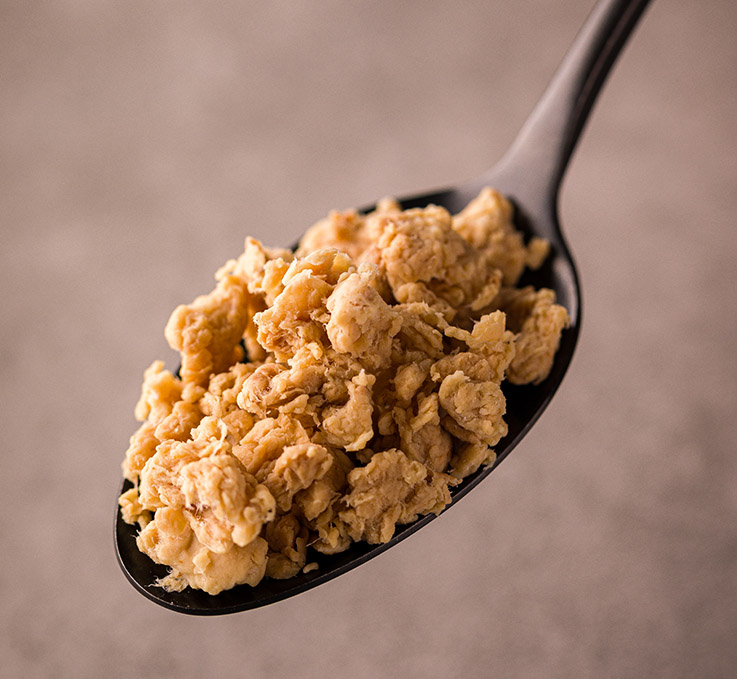
In an industry where fermentation cycles often stretch across days, Typcal has built its identity around a timeline that still seems almost implausible. Paulo Ibri, CEO & Co-founder, says he and his team have developed what he feels is “the world’s fastest mycelium fermentation process”, capable of converting food-industry side streams into high-value mycelial biomass in roughly 24 hours. What begins as leftover substrates from breweries, mills or beverage plants becomes the base for a new class of functional ingredients used across plant-based meat, bakery, snacks, beverages and dairy alternatives.
That speed is more than a technical curiosity though. Typcal’s premise is that compressing fermentation cycles this dramatically reshapes unit economics, CapEx requirements and scalability. If fermentation is going to shift from niche promise to global protein engine, it must run far faster, on affordable inputs and at a scale that can meet everyday demand. “We turn mycelium into a highly nutritious, neutral-tasting ingredient rich in protein and fiber,” Ibri adds. “And by using circular economy principles and side streams from the food industry, we create a versatile B2B ingredient platform for a wide range of applications.”
What Typcal is selling, in other words, is not just speed for its own sake. It is a fermentation model that reduces cost barriers, simplifies formulation for customers and unlocks new product categories that depend on consistency and clean taste. Speed becomes the mechanism for access.
Beyond protein
Typcal is adamant that viewing mycelium purely through the lens of protein misses the broader opportunity. Ibri argues that focusing only on grams per 100 grams ignores mycelium’s nutritional and functional depth. “One of the biggest misconceptions is to look at mycelium and food-tech more broadly as just another protein source to be compared only on grams of protein versus whey, soy or pea,” he notes.
This reductionist view cuts against what Typcal sees in practice. Companies working in bakery, dairy alternatives, snacks or beverage formulations often prioritize neutral flavor, stabilizing properties, fiber content or creaminess even more than raw protein numbers. In those categories, a single ingredient that can improve mouthfeel, support cleaner labels and add valuable nutrition can outperform traditional protein isolates that require complex formulation workarounds.
Even with attractive unit economics and a relatively fast payback, fermentation capacity still requires significant upfront capital. We need investors who understand industrial scale and infrastructure-like returns
Typcal is building toward that reality with an expanding set of formats beyond fresh biomass and powders. Concentrated protein variants, fiber-rich ingredients and hydrogels designed to enhance texture broaden the ways mycelium can fit into industrial processes. The idea is not to replace every existing protein source, but to give manufacturers a flexible toolkit. As Ibri puts it, Typcal’s purpose is to “upgrade everyday products with more protein and fiber, a better label and a lower environmental footprint”.
Scaling the circular model
The Curitiba-based company’s shift from pilot operation to commercial-scale production in 2025 marked a significant inflection point. Moving from a 200-liter pilot setup to a commercial fermentation facility gave the company the ability to produce consistently for industrial partners. That expansion coincided with a seed round aimed
at accelerating scale-up, advancing regulatory work and supporting early commercial deployments.

Europe became an important focal point, too. Typcal opened a regional branch to work more closely with food and ingredient companies, support co-development projects and prepare for future production. Its participation in accelerator programs such as MassChallenge Switzerland and Biotope in Belgium also opened doors to new markets, technical expertise and strategic partnerships.
The young company has now completed more than 10 paid Proof of Concepts with major players in food and ingredients. “These collaborations have been key to de-risking our technology, refining our products and building a credible pipeline of future commercial launches,” Ibri says. Each POC provides direct insight into how Typcal’s ingredients perform under real manufacturing conditions, giving the company data to refine functionality and guide the next stages of its platform development.
But of course the road to scale is not without its realities. Fermentation infrastructure is capital intensive, even when economics improve with shorter cycle times. Investors comfortable with industrial biotechnology remain a subset of the broader tech investment landscape. Ibri believes success depends on investors who understand CapEx, equipment lifecycles and industrial-scale returns. With that alignment, stepwise expansion becomes more predictable.
Market education at scale
Beyond infrastructure, the next barrier, according to Ibri, is cultural. Mycelium remains a relatively new concept for many consumers and even for established food companies. The founder sees this as a transitional moment rather than a structural limitation. “We must not only prove functionality and cost, but also help build awareness and trust around mycelium as a food ingredient,” he says.
Typcal’s co-development model is designed to address this. Instead of introducing standalone consumer products, the company works with trusted brands to incorporate mycelium into formats consumers already recognize. The goal is for people to encounter it through improved taste, better texture or more balanced nutrition, not through unfamiliar messaging.
This approach sets the stage for what Ibri believes will be a steep adoption curve once initial market understanding is established. Early growth may be measured, but once manufacturers experience the formulation benefits and consumers respond positively, he expects adoption to accelerate across multiple categories. Typcal’s priority is to ensure its supply, ingredient formats and technical support are ready as that curve begins to rise.
The next five years
Typcal’s five-year roadmap envisions a food system where mycelium becomes a foundational ingredient rather than a specialty component. Ibri expects Typcal to operate multiple industrial fermentation lines across Europe and Latin America, supplying a broad range of categories, from bakery and snacks to beverages and ready meals. The long-term goal is cost competitiveness with key animal and plant proteins, enabling mainstream adoption in high-volume products.

“If we get it right, five years from now, mycelium-based ingredients will no longer be a niche,” Ibri says. “They will be one of the default building blocks of the global food system.” In that future, mycelium’s value is not limited to protein enrichment. Its ability to improve texture, increase fiber content, simplify labels and reduce environmental impact allows it to act as a quiet enabler for better everyday food.
Typcal’s origins reinforce this vision. The company did not emerge from the typical biotech centers in the USA or Europe, but from Brazil’s beer ecosystem, where brewery side streams became the foundation for a new fermentation method. “We started by literally plugging into the country’s beer ecosystem,” Ibri says, reflecting on the company’s early days and the resourcefulness that shaped its approach. Typcal is now the first company running mycelium fermentation at industrial scale in Latin America, offering a counter-narrative to the assumption that advanced food-tech innovation must come from traditional hubs.
The logic that guides Typcal’s trajectory feels almost fungal in its structure: grow rapidly, thrive on underutilized resources and build networks that become more resilient the more they spread.
If you have any questions or would like to get in touch with us, please email info@futureofproteinproduction.com

More Features

Protein Pioneer: Justin Kolbeck

Deep Dive: Breakout bets

Feeding change

Protein Pioneer: Kesha Stickland


