
Deep Dive: Microbial Earth
As climate pressures rise and farmland vanishes, biotech pioneers are building food systems without soil, sun, or even fresh water. From CO2-fed algae to sugar-fueled fermentation, Benjamin Reygate explores how microbes could reshape what – and where – we eat
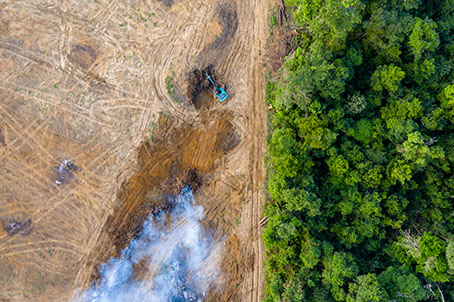
“Every minute, the world loses a forest area equivalent to 18 football fields,” warns Kaly Chatakondu, Global Commercial Director at Arborea, who was one of six expert panelists on Protein Production Technology International’s 30 July 2025 webinar, Beyond the Farm: Biomass Food Systems for a Resource-Scarce Future. “By 2050, we’ll need additional fertile land the size of Africa just to meet food demand – unless we change course.”

That course, he argues, runs through microbes rather than fields. “At Arborea, we have a technology that converts carbon dioxide into food – without the need for fertile land – using industrial photosynthesis of microalgae.”
Essentially, the company’s BioSolar Leaf is modeled after a lung in reverse. “While we breathe in oxygen and release carbon dioxide, the BioSolar Leaf breathes in CO₂ and releases pure oxygen,” he explains. In enclosed tubes, the system cultivates photosynthetic microalgae, then extracts proteins, colorants, and bioactive nutrients. “It’s a simple equation,” Chatakondu poses. “We can capture carbon for ~US$100 per ton – or capture carbon and convert it into ingredients worth over US$5,000 per ton.”
That calculus effectively reframes land, water, and carbon constraints as valuable inputs for food. “For every two tons of CO₂ captured, we can produce one ton of food,” Chatakondu emphasizes. “A 100 hectare patch of non-fertile land could yield 10,000 tons of pure, nutritious ingredients annually – at low cost.”
Arborea starts with spirulina because evolution has already done the formulation heavy lifting. “Three billion years ago, our atmosphere was mostly CO₂. Microalgae emerged to consume that CO₂ and release the oxygen we breathe today,” Chatakondu adds. That lineage translates into dense functionality. “They contain complete proteins with all essential amino acids, bioavailable vitamins and minerals, essential lipids, fibers, and unique carbohydrates.”
The ingredient brief is disarmingly practical. “Our spirulina-derived protein is neutral in taste and color, water soluble, heat stable, and highly nutritious,” he says. “It’s multifunctional, offering foaming, gelling, and emulsifying properties – all in a natural product.” The company branded the ingredient ‘NOvo’ protein and it demonstrates clarity at high inclusion levels. “You can see its solubility – even at 8% – as a clear, nutritious protein in water,” Chatakondu notes. “It’s suitable for plant-based milk or to reduce sugar in milk chocolate.” And from that same biomass, Arborea also isolates a heat-stable natural blue and bioactive concentrates for human, animal, and even soil health.
The vision is broad. “This is an enabling technology for applications in nutrition, cosmetics, agriculture, pharmaceuticals, sports health, women’s health, weight management, and more,” he says. The point is less about novelty than predictability. “We can now create real products anywhere in the world,” he adds. “That plant-based milk I mentioned? It’s made with a protein that didn’t require a hectare of fertile land. It has a clean label, tastes great, and doesn’t curdle in coffee.”
Crisis-proof fermentation
If photosynthetic biomass turns air into nutrition, submerged microbial fermentation turns time into resilience. “We can convert grams of sugar into tons of mycoprotein in just 48-72 hours, without relying on soil, seasons, or large water inputs,” says Charles Pontvianne, CFO of Planetary. The premise is industrial pragmatism.
“I’m not aware of many other systems that can turn small inputs into tons of product in such a short time,” he says.

Planetary builds where feedstock already flows. “Rather than building a brownfield or greenfield fermentation plant from scratch, we co located within an existing sugar mill in Switzerland – working with our local partner, Schweizer Zucker,” Pontvianne says. The constraint sharpened the model. “Scarcity is often the source of innovation,” he adds. The payoff is portability. “We’re now in a position to license that know how to sugar producers globally. In fact, we’re currently the only company in the world producing mycoprotein using sucrose at scale.”
For Pontvianne, the adoption equation is as simple as a shopping list. “We need to live up to the task at hand,” he says. “That means developing products that are functional, tasty, and hit price parity – or even come in below it.”
Whole biomass – not just isolates
Céline Schiff Deb, Chief Scientific Officer at MISTA, has watched dozens of ingredient platforms seek a foothold in mainstream food. Whole biomass, she suggests, enters the kitchen with more of the cooking already done. “They’ve evolved to sustain themselves and multiply under extreme conditions, so they naturally carry everything a cell needs,” she says of microalgae, bacteria, and fungi. “Most of them are true nutritional powerhouses.”
Functionality is not an afterthought. “Some of these whole biomass ingredients are highly functional,” she says. “For example, certain strains might offer excellent foaming or gelling properties.” There are trade offs – color and flavor can limit certain applications – but the unit economics often shine.
That matters to big portfolios under margin pressure. Roland Gouzy, Research & Innovation Manager for Alternative Protein at Danone, is bullish on performance but blunt about bottlenecks. “Some novel biomass or plant-based proteins are getting close – and in some cases even matching that quality,” he says of dairy analog goals. “But one of the main challenges is scale.” Danone is responding by investing in capacity. “Right now, we’re building a scaleup facility in Clermont Ferrand, France,” Gouzy says. “Initially, the focus will be on precision fermentation technologies – but not exclusively. The goal is to create an environment that supports the broader development of next-gen ingredients, including biomass.”

Use nature – not abuse it
That focus on scaling ties into a broader conversation running through the alternative protein sector: how to deliver innovation without losing sight of natural integrity. As debates over ultra-processed food heat up, Arborea’s development philosophy is direct. “We absolutely can’t compromise on taste, texture, or shelf life,” Chatakondu continues. “The key is to use nature, not abuse it.” He argues that conventional processing strips nutrients and then tries to rebuild them synthetically. “The body often doesn’t recognize these synthetic versions,” he says. “In contrast, bioactive vitamins and minerals that are naturally present in microalgae – or other
natural sources – are recognized by our cells.”
That principle extends to process. “No, we didn’t need to do any hydrolysis or apply special chemical treatments – it’s inherently soluble,” Chatakondu says of the protein fraction. “There is some very mild downstream processing involved after extracting the protein from the microalgae, but it’s minimal.” Tweaks can shift properties, but the philosophy holds. “Overall, it’s a natural, gentle process with no intensive treatments required.”
That emphasis on minimal intervention aligns with another hard truth in food innovation: no matter how elegant the process, success depends on performance where it matters most – on the plate. “Consumers buy food, not ingredients,” says Karim Kurmaly, Director of Single Cell Protein at dsm-firmenich. He is crisp about the hurdles. “Take taste, especially the aftertaste – that’s often where things fall apart,” he says. “Texture is equally important. That first bite matters – how it feels, how it breaks down in the mouth, how it moves across the palate.”
And then there is price. “Single-cell protein producers, in particular, need to keep pushing on affordability,” Kurmaly says. He believes the addressable audience is much larger than sales suggest. “If we can get those three things right – taste, texture, and cost – and deliver a meat-eating experience that feels familiar, we can definitely move beyond the current ~1% share of total meat sales in the USA.” Retail experiments hint at routes through the middle. “Retailers such as Lidl and Albert Heijn are launching hybrid products that combine alternative proteins with meat,” he says. “These offer the taste and texture consumers expect, plus a lower carbon footprint and improved life-cycle performance.”
Schiff-Deb also sees a health-driven tailwind reshaping what shoppers reach for. “There’s the obesity epidemic – and with it, the rapid rise of GLP-1 drugs,” she says. “I saw a staggering statistic recently: over 10% of Americans have already tried a GLP-1.” The implication is behavioral. “If you’re eating less, every bite has to count,” she adds. Interest is shifting toward nutrient density, clean labels, and minimal processing – a frame where whole biomass proteins feel native rather than novel.
From policy to production hurdles
But even with consumer demand moving in the right direction, turning potential into market share still comes down to the nuts and bolts – and the rules – of production. Policy and infrastructure ultimately decide who scales. John-Felipe Murphy, Alternative Protein Regulation & Scale-Up Manager at the Bezos Centre for Sustainable Protein at Imperial College London, maps the three hardest knots to untie. “The first is regulation,” he says. “Approaches like using strains that have already been approved and are familiar to both consumers and regulators can really help ease the path to market.” The second is metal. “Producing biomass at scale typically requires significant investment in stainless steel infrastructure – big fermenters – which can be prohibitively expensive,” he says. Renting capacity or co-locating with existing assets can keep burn rates down. The third choke point is commercial reality. “Startups need a way to put their products in front of potential partners and customers early on,” he says. “Understanding what the market – and especially large food producers – actually wants is essential.”

That systems view pushes teams to involve retailers earlier. “Unless the retailer is engaged from the start, you’re unlikely to reach the consumer’s plate,” Murphy says. Kurmaly agrees and gives it a name. “Value chain marketing,” he calls it. “You have to bring the entire value chain into the conversation from the very start.”
Sugar – the white gold of biomanufacturing
That chain does not stop at the supermarket shelf. It begins with the raw inputs that determine where and how biomanufacturing can scale. In Europe, one such input is increasingly scarce: sugar. “Several sugar processing plants across Europe have recently shut down,” Pontvianne notes. The risk is strategic. “Sugar – specifically sucrose, in our case – is what I often call the white gold of carbon sources for fermentation,” he says. “If countries – and ideally the EU as a whole – don’t recognize that access to feedstock is the number one factor in building out biomanufacturing capacity, we could miss an opportunity.”
That reality also points east. “I don’t think we’re ignoring India at all,” Pontvianne says. “It has an abundant supply of sugar, sometimes even an oversupply, paired with a real gap in protein availability across the population.” Culture can help adoption rather than hinder it. “It’s arguably the largest flexitarian market in the world,” he notes. “That makes it a very compelling geography for microbial proteins and biomass fermentation.”
Food from barren land
Arborea’s model is agnostic to latitude. “Our technology is specifically designed to convert barren land into productive, food generating land,” Chatakondu says. “It’s deployable virtually anywhere.” Circularity loops the system back to soil. “Some of the byproducts from our process can even be returned to the land to help regenerate soil health,” he adds.
Gouzy, meanwhile, sees near term wins in layered strategies. Danone already sells high protein dairy and plant based products through brands such as Alpro and Silk. The company is also studying how different microbial ingredients might influence human health. “What makes it especially exciting is that this area is not yet fully studied,” he says. “We don’t yet know exactly how different types of fungi or bacteria might influence human health.”
Internally, the company tries to keep its aperture wide. “We follow what I like to call a hybrid model,” Gouzy says. “We actively collaborate with academic institutions, large ingredient suppliers, and a wide range of innovation platforms – especially MISTA.” The statistical logic is simple. “The more present we are across different networks, the higher the probability of finding the right partner,” he says.
Schiff Deb boils the difference down to four words: product, partners, pathway, proof. “Your product has to be consistent, deliver real value, be cost aligned with what it’s offering, and solve an actual problem,” she says. Then, bring everyone to the table. “Engage partners early – all the way to the retailer,” she urges. Secure a regulatory path that matches your host and your claims. And show the thing. “Create compelling, finished products that tick all the boxes: taste, functionality, nutrition, scalability, and regulatory readiness,” she says. “Scaling too early – without the right product or regulatory pathway – can be just as risky as not scaling at all.”
Compared with precision-fermented isolates, Schiff Deb observes that whole biomass can demand less downstream processing, support broader feedstock options, and reach scale with more favorable CapEx.
Six prompts for the next three years
Pressed for one piece of advice, the group answers like operators. “There are far more consumers out there who want to reduce their meat intake but still crave the meat-eating experience – and that segment is largely untouched,” Kurmaly says. “Right now, we’ve reached maybe 1% of the market. But there’s another 30-35% sitting there, ready and waiting.”
Schiff Deb pushes for internal alignment. “Make sure R&D, marketing, and brand teams are talking to each other early.” Pontvianne returns to arithmetic. “Make sure you can compete on price,” he says. Gouzy agrees. “Even with all the innovation and effort, you can have a fantastic protein, but if the price parity isn’t there, it’s incredibly difficult to move forward,” he says. Murphy invites industry to knock on academia’s door. “Engage with the research hubs and academic institutions that are actively exploring novel food technologies,” he says. And Chatakondu brings it back to food you can hold. “It starts with having excellent food prototypes – something people can see, touch, and taste,” he says. “But just as important is making sure that every part of the supply chain benefits – from the farmer to the consumer, and everyone in between.”
In other words, the biology is ready. Now the system has to be. “If any link in that chain is missing or overlooked, it simply won’t scale,” Chatakondu says. “The whole system has to work together for mass production to become a reality.” And ultimately, it comes down to people. “Real change comes when those individuals – what I’d call change champions – work from within their respective institutions to drive progress,” he says. “It starts with human connection. It doesn’t happen through organizational mandates alone.”
If you have any questions or would like to get in touch with us, please email info@futureofproteinproduction.com

More Features

Protein Pioneer: Justin Kolbeck

Deep Dive: Breakout bets

Feeding change

Protein Pioneer: Kesha Stickland


