


Deep Dive: Fermentation forecast
Innovators are harnessing the power of microorganisms to deliver the next wave of high-quality, sustainable protein, finds Lloyd Fuller – with the sector poised for breakthroughs that could redefine the future of food
Feeding the planet has always been about managing the balance between resources and demand. For centuries, that meant cultivating plants and raising animals. Today, more and more of that equation is shifting to stainless steel fermenters, where microorganisms convert feedstocks into high-quality protein.
Fermentation is hardly a new technology – human cultures have relied on it for thousands of years to make beer, bread, cheese, soy sauce, and countless other staples. What is new is how deliberately and precisely it is now being applied to address one of the most urgent challenges in global nutrition: how to provide sustainable, affordable, and appealing protein for a rapidly growing population.

“The global population is on track to reach 9.7 billion by 2050, and the protein demand gap could climb to 250 million tons,” says Adam Leman, Principal Scientist for Fermentation at The Good Food Institute. “That’s both a massive challenge and an unprecedented opportunity for sustainable innovation.”
The timing is significant. Advances in microbial strain development, process optimization, and downstream handling are arriving alongside rising consumer awareness of alternative proteins. The category now includes not only plant-based and cultivated meat but also microbial proteins – whether produced via biomass fermentation, precision fermentation, or hybrids of the two. In each case, the challenge is the same: producing at scale, cost parity, and delivering the taste and functionality that consumers expect.
Bloomberg Intelligence projects alternative proteins to grow at a compound annual rate of 36%, reaching US$150-160 billion by 2030 – a trajectory echoed by multiple industry forecasts as consumer demand, technological readiness, and investor appetite converge.
For Robyn Eijlander, Program Manager for Cellular Agriculture at NIZO Food Research and the Biotechnology Fermentation Factory, the challenge is as much economic as it is technical. “These innovations need to match or outperform conventional proteins on functionality, taste, nutrition, and – crucially – cost,” she says. “Reaching cost parity with commodities is extremely difficult at this stage.”
Consumer willingness to experiment is rising, but market adoption still depends on delivering a product experience that feels familiar. “It’s one thing to have a sustainable protein source,” Leman notes. “It’s another to have one that consumers will repeatedly buy because it meets their expectations for taste and texture – and at a price they can justify.”
Yeast protein’s positioning
Among microbial protein sources, yeast protein is emerging as one of the most versatile and nutritionally complete. Angel Yeast, a global leader in yeast-based solutions, has developed Angeo Pro from Saccharomyces cerevisiae, a strain with decades of safe use in food. The production process removes nucleic acids, breaks down the cell wall, and produces a clean, highly concentrated protein ingredient.
“Angeo Pro contains over 80% protein – and in some formulations, up to 90% – and delivers all nine essential amino acids,” says Winston Sun, Product Manager at Angel Yeast Europe. “It’s rich in branched-chain amino acids, scores a perfect 1.0 on the PDCAAS scale, and is highly digestible. It’s comparable to whey in nutrition but without the allergen concerns that can limit dairy proteins.”

The neutral flavor is another asset. “Many plant proteins, such as pea or soy, require masking agents to cover earthy or beany notes,” Sun continues. “Angeo Pro integrates easily into formulations without that hurdle, giving manufacturers more flexibility.”
Its functionality is broad: nutritional supplements, protein-fortified drinks, dairy and non-dairy products, sports nutrition, healthy snacks, baked goods, and meat alternatives. “We already see it in protein powders, high-protein chips, bars, and bakery products,” Sun says. “And ongoing research is exploring benefits in areas such as gut microbiome modulation, post-exercise recovery, calcium absorption, and prevention of sarcopenia and osteoporosis.”
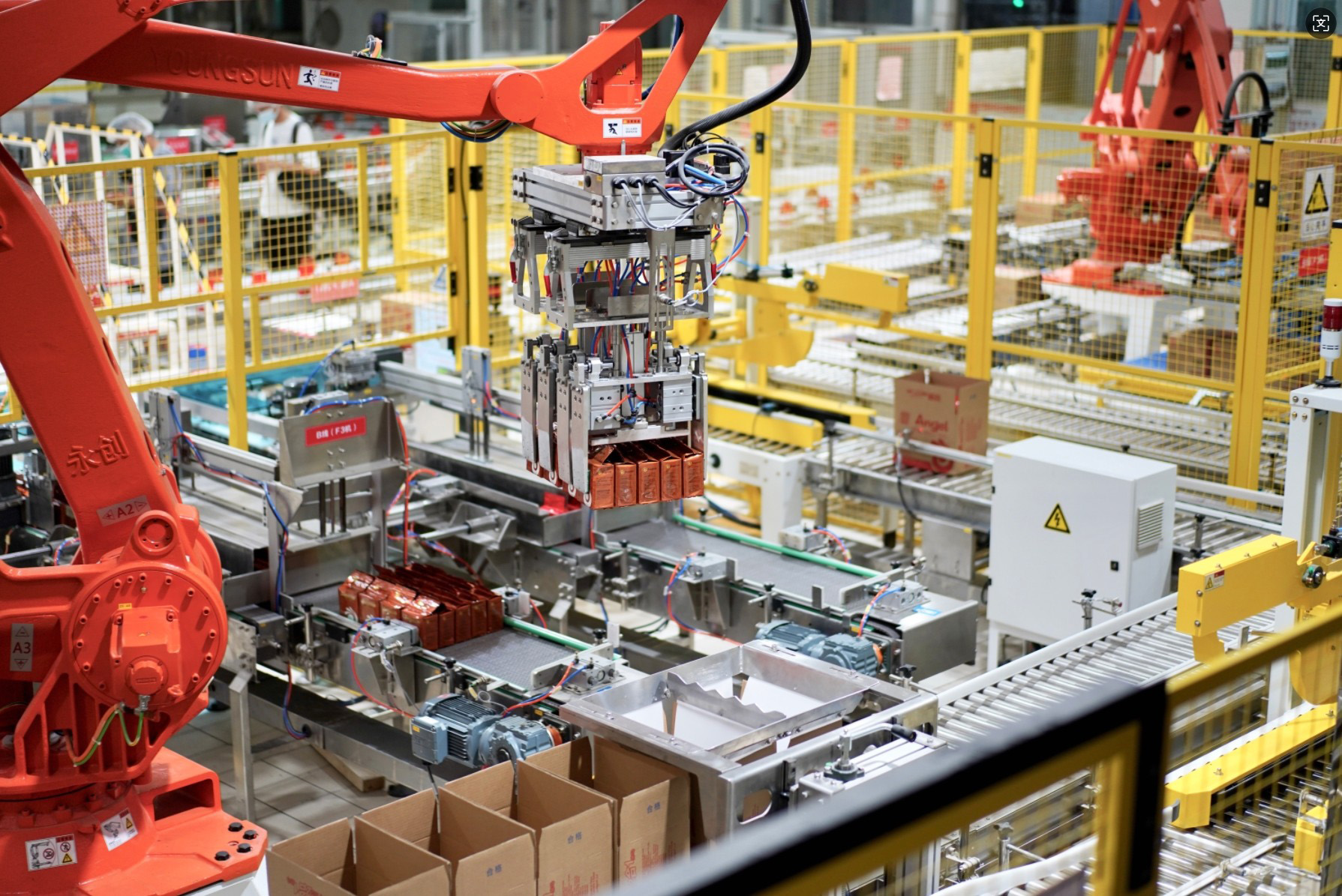
On sustainability metrics, yeast protein is impressive. One kilogram of Angeo Pro emits just 10.63kg of CO₂ – much lower than animal-derived proteins and even many plant-based alternatives. The process uses byproducts such as molasses as fermentation substrates, and leftover biomass is recycled as organic fertilizer or animal feed. Angel Yeast produces 10,000 tons annually, with an additional 11,000 tons per year set to come online from a new facility. “It’s the only microbial protein that is both cost-effective and scalable for large-volume production,” continues Sun. “It can also be blended with other microbial proteins to reduce the overall cost of the final product.”
The scaling bottleneck
Despite these advances, scaling remains the defining challenge for many in the fermentation space. “The technology is there,” Eijlander says. “But moving from a promising lab process to industrial production requires anticipating a very different set of conditions. Microbial behavior can shift in large vessels. Downstream processing may not scale smoothly. And factors such as oxygen transfer behave very differently in a 10,000-liter fermenter compared to a small shake flask.”
The journey from lab to commercial production also passes through a costly and risky ‘middle ground’. Infrastructure for pilot-scale production is expensive, but often doesn’t yet generate much revenue. “That’s why we are building the Biotechnology Fermentation Factory (BFF),” Eijlander says. “It has both a pre-pilot stage, for cost-effective optimization, and a pilot facility up to 10,000 liters for full process validation. If problems arise, we can scale back down to troubleshoot – avoiding expensive trial-and-error loops.”

At Perfect Day, Chief Technology Officer, Sunil Sukumaran, stresses the importance of long-term thinking in choosing production hosts. “Once you choose a host, regulators expect you to stick with it,” he says. “We started with Pichia pastoris, which got us moving quickly, but later realized it wouldn’t meet our cost-of-goods targets. Because we had parallel R&D underway with filamentous fungi, we could pivot after five years without losing momentum. That was only possible because we’d set realistic expectations with our investors early.”
Sometimes the obstacles are practical rather than strategic. “Pipeline cleaning at industrial scale is much more complex than in the lab,” notes Angel Yeast’s Spencer Nie
(see The overlooked art of industrial cleaning sidebar). “Incomplete cleaning can lead to contamination, and residues from cleaning agents can affect product quality. These are critical but often underestimated issues when scaling.”
Functionality as a differentiator
While cost and scalability dominate strategic planning, functionality is what determines whether a protein source can compete on the plate. “Nutrition is vital, but consumers also expect performance,” says Leman. “That means good binding, juiciness, and fats that behave like animal fats.”
Binding is a persistent weakness in many plant-based meats. “Single-cell proteins can improve binding and texture, potentially replacing methylcellulose with cleaner alternatives,” Leman adds. Water-holding capacity is another area for improvement. “Alternative meats can dry out quickly. Microbial proteins and mycoprotein can help retain moisture during cooking.” Fats also present their own challenges. “Palm and coconut oils have sustainability drawbacks and don’t fully replicate the sensory experience of animal fats,” the GFI man notes. “Microbial oils are tunable – we can adjust their composition to perform more like animal fats during cooking and in mouthfeel.”
Sun also points to yeast protein’s versatility in formulation. “It has a smooth mouthfeel, neutral taste, and works well with other proteins and functional ingredients,” he says. “That opens up a wider range of applications without compromising product quality.”
For Florian Viton, who until recently was CJ CheilJedang’s Senior Vice President of Strategic Innovation (now Unilever’s Vice President, Global Head of Science & Technology and The Hive Center Head), the industry is rethinking its approach to ingredient processing. “Historically, we purified ingredients to make them as predictable as possible. Now, there’s value in working with more complex, less refined biomass ingredients that can offer cost benefits, sustainability advantages, and even secondary functional properties,” he says.
Feedstocks and the cost equation
Even the best process will struggle if feedstock costs are too high. “Feedstocks are often the largest contributor to variable costs,” Leman states. “With first-generation sources like glucose or sucrose, local sourcing is key to reducing transport costs. And you have to optimize not just titer, but yield – how much of that feedstock you convert into your valuable product.”
Second-generation sources – such as agricultural sidestreams or even gaseous substrates – could reduce costs and improve sustainability, but they bring new challenges. “Consistency is the biggest hurdle,” Leman says. “Once solved, these feedstocks could be game changers.”
According to GFI’s latest techno-economic analysis, biomass fermentation is already approaching competitiveness with traditional proteins. “Even using conservative assumptions, we saw costs of US$4-6 per kilo,” Leman says. “Some private datasets show US$2.50-US$5.50. That’s a strong signal we can get to parity with beef, pork, or poultry.”
Partnerships, AI, and the next horizon
Scaling often depends on partnerships, but only if expectations are aligned. “What a startup considers large scale might be a pilot run for a multinational,” says Viton. “Both sides need to define what scale means for them. CPGs should be willing to work with smaller-scale products early, and startups shouldn’t expect to immediately supply the largest brands.”
Technology convergence is also reshaping the sector. At Angel Yeast, Nie sees synthetic biology as a future growth driver. “We’ve built a synthetic biology pilot research platform to help universities and research groups move from lab-scale proof of concept to industrial-scale production,” he reveals. “The aim is to make cutting-edge biotechnology commercially viable.”
Artificial intelligence, too, could accelerate progress. “AI is a game changer,” says Sukumaran. “If we had an open-source repository integrating data from multiple industries – fermentation, biotech, cosmetics – we could avoid reinventing the wheel and accelerate the creation of a sustainable food ecosystem.”
Microorganisms ready to feed the world
Looking ahead, NIZO’s Eijlander expects multiple breakthroughs. “Strain improvement, process innovation, and – hopefully – something we haven’t imagined yet,” she says. “AI could accelerate strain development and process optimization. Advances in bioreactor design, aeration, and energy efficiency will be vital. And I want to be surprised – by something truly revolutionary.”
Microbial fermentation is no longer fringe – it is becoming a cornerstone of sustainable protein. Companies tackling cost, scale, and functionality prove microorganisms can do far more than brew beer or bake bread. They can feed the world.
“Yeast protein checks both boxes – nutrition and sustainability,” concludes Sun. “It’s a smart choice for anyone who wants a healthier, more sustainable diet, now and in the future.”
If you have any questions or would like to get in touch with us, please email info@futureofproteinproduction.com

More Features

Protein Pioneer: Justin Kolbeck

Deep Dive: Breakout bets

Feeding change

Protein Pioneer: Kesha Stickland


