


Deep Dive: Critical crossing
Navigating the ‘valley of death’ in alternative proteins requires more than investment – it takes infrastructure, expertise and the right partners to make the leap from lab to commercial scale, writes Louise Davis
One of the best things about covering the alternative proteins industry is the seemingly never-ending supply of new players to profile. The flip side is that so many of these bright stars burn out disappointingly quickly. LinkedIn is littered with posts from founders thanking their recently eliminated teams as they bow out of a venture that hasn’t spectacularly imploded (though there are a few of those) but has simply run out of steam – and for ‘steam’, read ‘money’.
Hendrik Waegeman at Bio Base Europe Pilot Plant – one of nine people profiled over the next 12 pages – refers to this scenario with the increasingly popular descriptor, ‘valley of death’. The role of investors and funding in driving this hype-then-crash cycle is a whole other article, but as Waegeman and our eight other interviewees explain here, their focus is not on finance but on overhauling the production commercialization process.
Built to scale
Industrial-scale manufacturing is an obvious bottleneck within the alternative proteins sector. Indeed, much of this magazine’s coverage explores how to – cost effectively – transform a great concept into a great product. And scaling up is hard. Few startups manage the transition from lab to commercial-scale success without learning some tough lessons along the way. Of course, that’s true for many new enterprises, but alternative proteins face tougher challenges than most. Situated in a strange, undefined space between biotech and traditional food production, companies here often need to tackle questions such as, how can I scale my product when the equipment to do so doesn’t even exist?
The scaling transition certainly comes with many challenges, but it also offers opportunities. These include chances to develop best-in-class technology from the ground up and to build partnerships with others navigating the same path. Many founders we speak with across the sector emphasize the advantages of teaming up, rather than trying to scale every element of their processes alone.
The overall message from the scale-focused innovators showcased in this article is that a diverse range of approaches to bioprocess build-up and industrialization – including some completely left-field-sounding options (shoutout to PoLoPo’s intriguing ‘pivot to potato chips’) – already exist and are being embraced. Together, they are helping to build an alternative proteins industry designed not only to scale, but also to last.

FERMENTING IDEAS
Having just published a landscape analysis of technoeconomics for fermentation-derived protein, it’s an ideal moment to discuss scaling with Adam Leman, Principal Scientist, Fermentation at The Good Food Institute (GFI). The report draws on more than 50 models and shows a clear trend: the most efficient setups are those built for the highest volumes – and therefore the most expensive. “Once you build to a certain scale, economies of scale kick in,“ he says. “Labor becomes more efficient, and essential equipment – whether for 100 kiloliters or 1 million liters – is a smaller share of the investment. Other processes also become more efficient at large scales.”
The challenge, Leman notes, is that most stakeholders don’t build the largest facility right away. “Partly because it hasn’t been done before, but also because you want to demonstrate demand and sales before maximizing production,” he explains. “It’s difficult to seize that opportunity without major investment, and while models exist, few real-world examples have been built. So we sit on the cusp of that very large facility, waiting for the first movers.”

Who does Leman predict will be among this initial cohort? “I think the first substantial green light from new facilities is going to come from novel food contract development and manufacturing organizations (CDMOs), such as Liberation Bioindustries,” he answers. “However, we can also spotlight facilities that have been operational and successful for a long time, such as Marlow Foods’ Quorn plant, large-scale brewers’ and bakers’ yeast manufacturing facilities, and MycoTechnology’s plant in Colorado, which have all been productive.”
Leman reports there’s strong evidence from other fermentation industries and current models that large-scale protein production is possible. “Technologies that can make precision proteins at competitive costs already exist,” he says. “These include low-inclusion molecules such as lactoferrin, but also nutraceuticals, dyes, and high-value fats and oils. We’ll likely see a focus on these in the short term. For commodity production, investors and policymakers see risk until someone builds a first-of-a-kind facility and derisks the concept. At that point, the floodgates will open.”
To produce large volumes of these types of protein products at economical prices, Leman believes there likely needs to be new funding models. He is advocating for “grants, zero- or low-interest loans, and long payback periods combined with government incentives to boost local bioeconomies”.
Frontiers of fermentation
On the technical side, Leman calls solid-state fermentation (SSF) another frontier. “We don’t have many SSF systems in commercial production, despite the interest and cost-reduction potential. Once monitoring and control mature, I think that will spark investment in large-scale facilities.” He adds, “Strain engineering is also fascinating and mainly applies to precision fermentation. We haven’t seen engineered microbes on the biomass side yet, but much work has gone into raising titers. Higher productivity shortens fermentation, lowering energy and operating costs, while higher yield reduces feedstock costs.”
Investors and policymakers perceive a risk until someone develops a first-of-a-kind facility, and derisks the concept at a large scale
Leman also highlights systems integration as a big opportunity, noting that ‘begin with the end in mind’ is a mantra in biomanufacturing. “Ultimately,“ he suggests, “producers aim to create a food protein ingredient. That means making manufacturing and biotechnology decisions that reflect this goal. Can we make strains that allow easier protein purification? Can we formulate media that reduces filtration requirements? Can purification steps maintain protein folding and solubility for easy formulation or better shelf life?
“These questions cross team and manufacturing steps, so integrating the whole process and thinking holistically drives good decision-making,” he emphasizes.

CONSULTATION CUTS COMPLICATION
Brian Chau, who runs an R&D and operations consulting firm for alternative protein startups, often encounters scale-up challenges – especially the tension that the most efficient setups are also the largest. “Efficiency is not the first metric for success, as the industry is still in its nascent stage of finding the best path for scalability,” he cautions. “The best way to evaluate it is to understand infrastructure needs and deploy public-private partnerships to access pilot equipment for testing feasibility at scale.”

Chau believes that gradual, focused approaches – coupled with adequate fundraising support – will deliver greater success, a point worth emphasizing given the frantic ‘shoot-for-the-stars’ attitude often found at alternative protein startups.
Asked about scalability potential, Chau says, “I’d like to see solid-state fermentation (SSF) evaluated as a lower barrier of entry for alternative proteins. SSF can be limiting in converting or removing mycelium-enriched substrate, but the opportunity lies in valorizing that substrate as a product, while the mushroom offers a different form factor.”
He adds that leveraging existing systems to be leaner would support the development of more manageable alternative proteins. And his comments aren’t just theory: Chau and his team have worked on several projects investigating infrastructure and supply chain build-out. “We have evaluated technologies of both solid-state and liquid-state fermentation to determine the best route to create mycelium-based meat analogs to turn into chicharrónes or ‘chichashrooms’.”
Chau’s company has also been involved in projects spanning the entire production spectrum, from concept to commercialization. “My team and I developed a plant-based shrimp with a two-tone coloration system using natural colors to get the white and orange look. We sourced raw materials, developed a process, created nutrition labels, and generated Cost of Goods Sold (COGS) data to get the product from concept to commercialization. My team has also worked on food safety implementation and GRAS certification for proteins made through chemical engineering processes. And we have run a market consumer test around cellular agriculture of animal fat cells to determine market entrance into the USA.”
What those diverse products have in common is that scaling any of them will require tackling bottlenecks. In Chau’s experience, what are the main biological hurdles? “Fermentation tanks that allow for microbes to grow are a lacking infrastructure to accelerate the production of bioprocesses,” he believes. “If looking into cellular agriculture around whole-meat replication, a key bottleneck here is the development of scaffolding systems to allow for the production of alternative proteins. There is still a lot of strain development of the feeding systems to optimize growth, and the conditions/medium for growth.”
I would like to see an evaluation of solid-state fermentation as a lower barrier of entry in the fermentation segment
Cutting costs and validating scale
And how do strain engineering and media optimization intersect with manufacturing cost? “Current manufacturing costs are not optimized for volume of production to reach price parity,” Chau confirms. “Strain engineering and media optimization is an ongoing and developing process within the supply chain that helps cut manufacturing costs in the protein output from the strain and from the medium that grows the strain.”
When it comes to tech transfer and pilot-scale validation, startups often ask Chau how they can smooth the transfer from lab to commercial scale. His advice is simple and clear. “We need to build more infrastructure or incentivize the ability for contract manufacturing organizations (CMOs) to validate pilot-scale operations. Scaling requires equipment to support validation.”

SEEDS OF CHANGE
As CEO of lupin-ingredient specialist Wide Open Agriculture, Matthew Skinner has overseen development from PhD research to lab, pilot, and commercial scale. The journey was not without bottlenecks. “From PhD to lab scale, we were fortunate to work closely with CSIRO, Australia’s government research organization, which provided invaluable early support. After collaborating with CSIRO to design an end-to-end process for lupin protein, we then faced the challenge of building
a pilot plant from scratch,” he recalls.

“The procurement of suitable equipment, particularly during the Covid-19 pandemic, was a significant bottleneck, as sourcing equipment from places such as China and Europe was delayed. In the meantime, we had to seek alternatives from local food manufacturers in Australia, which caused compromises and delays in production capabilities (one of our early tanks used to be an ice cream mixing tank!). Even with these issues, we were able to use our pilot plant to refine our process, define the specification of the end product, and work on technologies to scale production,” Skinner says proudly.
One huge enabler for Wide Open Agriculture was the acquisition of a German manufacturing facility, which Skinner says helped the firm overcome many equipment and production challenges. “This facility was purpose-built for lupin protein extraction and allowed us to scale our process more efficiently, including automation to control key elements of the production process and experiment with different settings at larger scale,” he confirms.
However, scaling up brought its own challenges, including managing larger co-product streams needing valorization and the cost of running an underutilized facility. Skinner explains, “When seeking to speed co-product valorization, we’ve faced bottlenecks with plant protein service providers in lab testing, equipment, and process trials, making small-scale R&D costly and time-consuming. Even with research partners, the unique properties of lupin protein often required additional learning time.”
Growing lupins
Developing the company’s manufacturing process was also challenging work for potential suppliers, as Skinner reveals. “Our manufacturing process begins with the lupin seed, which is dehulled and split before we proceed with a wet extraction process. A critical step in our process, licensed from Curtin University in 2020, increases the functionality of the protein, significantly improving its gelation qualities. We’ve recently tested a new equipment supplier with this ‘functionality’ step, and results show that it can be scaled with much greater energy efficiency and time savings than previously experienced.
“This finding is significant for scalability, as we aim to eventually produce initially 10,000 metric tons per year, but ultimately see lupin protein as having even greater production volumes in the future.”
The unique properties of lupin protein have often resulted in additional learning time being required for companies we work with
Price, Skinner reveals, will be the determining factor in achieving that production goal. “At the moment, lupin protein commands a premium in the market due to its unique properties and the higher cost of production at lower volumes. To be more price competitive with soy and pea, which will happen at larger-scale production, we need to extract value from all other elements of the lupin seed – including lupin fiber, lupin oil, and gamma conglutin – all of which have attractive properties. Once this ‘whole of seed’ model is proven out, then the price point of each fraction can be reduced to make them more attractive.”
Reflecting on Wide Open Agriculture’s journey so far, Skinner observes, “Although we have made good progress in overcoming the challenge of introducing a novel allergenic ingredient, we continue to face hurdles in convincing food companies to adopt new ingredients. However, we are seeing success with some forward-thinking companies that are looking to innovate and push boundaries in the food industry.”
.jpeg.jpg)
STRATEGIC SNACKING
In the past, when we’ve interviewed PoLoPo, it’s to discuss the company’s efforts to apply molecular farming to produce egg proteins from potatoes. However, a recent pivot – which it is calling a ‘strategic shift’ – means the firm is now focusing on selling high-protein potatoes to chip producers in a bid to tap into the huge global snacking market.

Changing your entire business model as part of your scaling journey is certainly an unusual approach, but Ido Eliashar, PoLoPo’s VP of Business Development, says there is sound logic behind the move. “The pivot helps accelerate our broader vision,” he explains. “By applying our technology to a product with immediate market fit and high scalability, we can validate our platform, build operational infrastructure, and gain commercial experience and relations. The momentum we create with our high-protein potatoes sets the stage for our protein product with stronger market positioning, proven scalability, and real-world use cases. It also enables us to build partnerships and generate revenue that will fuel future R&D.” Eliashar continues, “Providing functional protein ingredients remains an important mission and a key part of our long-term strategy.”
Drop-in solutions – such as the high-protein potatoes – form a fundamental part of the company’s approach to growth. “Our technology can be integrated into any potato variety, allowing the industry and consumers to continue using the same potatoes they know and love,” Eliashar says. “By integrating into existing supply chains, we eliminate friction and shorten time to market. For chips, this means no changes to cultivation, processing or even storage and formulation. In the future, we plan to extend this concept to other potato-based products such as mashed potatoes or prepared meals. The easier it is for manufacturers to adopt our potatoes, the faster we scale.”
Potato pilot
PoLoPo recently completed a successful pilot project in Israel, its home country. Eliashar reveals that the pilot confirmed several key aspects: consistent expression levels, stable inheritance across generations, and compatibility with conventional agricultural methods. “We also validated that our potatoes deliver the targeted protein increase without trade-offs in yield or quality,” he adds. “These results gave us the confidence to move forward. To ensure a smooth transition, we’re now working with US-based partners to integrate our genetics into chip-specific varieties and prepare for US trials and cultivation.”
We believe this model, where protein is grown in the field, can unlock a new generation of sustainable, scalable food solutions
When asked to describe PoLoPo’s manufacturing scale-up approach – whether for potatoes or for other products such as its egg proteins – Eliashar says, “Our goal is to build a distributed production model that leverages existing farming and processing infrastructure. By embedding value at the crop level, we simplify everything downstream. We believe this model, where protein is grown in the field, can unlock a new generation of sustainable, scalable food solutions.”
How things evolve for PoLoPo in the coming years remains to be seen, but Eliashar emphasizes that this ‘pivot to potatoes’ is “just the beginning” of the company’s scaling vision. “We’re inviting partners across the value chain, from growers and processors to food manufacturers and brands, to join us in scaling our breakthrough technology.”
DIGITAL-FIRST APPROACH
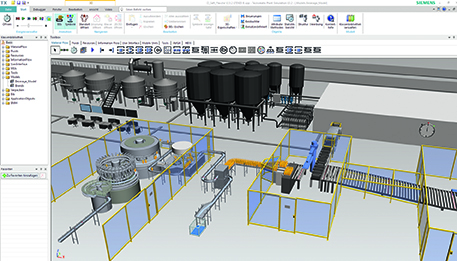
“Scaling alternative protein production from lab to industrial scale is fraught with obstacles,” begins Stefania Stoccuto, Global Future Food Business Developer at Siemens. “High capital costs, inefficient resource use, and complex infrastructure are ongoing concerns. However, the biggest barriers are operational complexity, lack of standardization, and data integration issues.”
Stoccuto notes that many facilities still rely on fragmented systems and manual workflows, making it hard to harmonize processes. “Machines and software from different vendors often can’t communicate, creating disconnected data that hinders real-time decisions and optimization. Moving recipes from R&D to large-scale production is rarely smooth – downtime and inefficient operations make each batch unpredictable and hard to optimize,” she says.

“Overcoming these challenges is crucial for unlocking reliable, flexible, and efficient industrial production that will allow alternative proteins to meet growing market demand for sustainable food solutions,” she adds.
When tackling these bottlenecks, Siemens promotes a holistic, digital-first approach. “Central to this is digital twin simulation. By virtually modeling production before physical investment, companies can spot risks, improve plant design, and cut CapEx. For example, modeling bioreactor dynamics refines fermentation strategies and addresses bottlenecks in advance. This approach prevents costly mistakes and ensures expansions are efficient and aligned with market demands,” Stoccuto explains.
Setting standards
Stoccuto also points out that the adoption of standards early on is extremely important for successful scaling. “Standardization not only enables automated recipe control, reduces engineering work, and simplifies maintenance – delivering significant operational expenditure (OpEx) reductions – but also facilitates the seamless integration of new technologies such as advanced sensors, machinery, and other inputs. This compatibility minimizes the need for costly plant redesigns and limits additional capital requirements when incorporating emerging innovations, making future upgrades smoother and more economical,” she says.
Siemens is already working with alternative protein companies worldwide, and Stoccuto cites several interesting recent projects. “We worked with Vaxa Technologies on scalable algae cultivation in Iceland. Using our standardized automation and machine learning, Vaxa built a sustainable indoor system that achieved CO2-negative production powered by geothermal energy. The modular setup also allows flexible expansion without redesign.
“Another project saw The Cultivated B, through N!Biomachines, create a scalable bioreactor platform using our Simatic controllers and WinCC Unified System, scaling seamlessly from lab to 25,000 liters.”
Siemens also collaborated with Enough, supporting scalability through open communication protocols and an open-interface SCADA system.
Each case study shows the tangible benefits of Siemens’ interoperable solutions. “Seamless IT/OT integration accelerates scaling; predictive maintenance and remote services lower downtime and support multi-site growth; and advanced simulation tools, such as gPROMS, enhance recipe and process management. And integrated MOM/MES platforms such as Opcenter further elevate operational visibility and control,” Stoccuto explains.
The biggest scalability barriers are operational complexity, lack of standardization, and data integration issues
Ultimately, she adds, adopting this modular ecosystem not only addresses specific technical hurdles but also empowers alternative proteins players to standardize operations from the initial set-up. “This foundation is pivotal for startups, scale-ups, and SMEs transforming into major industry players – enabling them to expand efficiently, respond rapidly to market demands, and maintain operational excellence at every stage of growth.”

BRIDGE BUILDING IN BELGIUM
In Ghent, Belgium, a facility has been created to bridge the gap between lab and industrial production, offering hands-on support during process development, scale-up, and tech transfer. “Bio Base Europe Pilot Plant (BBEPP) is an independent, open-access facility specializing in scaling and optimizing bioprocesses from lab to pilot and demo scale,“ explains Hendrik Waegeman, Head of Business Operations. “We provide flexible infrastructure and expertise in fermentation, biocatalysis, feedstock pretreatment, downstream processing, and green chemistry. A growing share of our projects is in alternative proteins, including precision and biomass fermentation.
“We worked with Vivici to scale its beta-lactoglobulin (BLG) process from lab to 75,000 L,” Waegeman reveals. “We also helped MicroHarvest scale from 150 L to 1,500 L using alternative feedstocks and a fast-growing microbe. The team produced 150kg of dried product in just 24 hours, a proof of concept that helped secure €8.5 million in Series A funding and launch a pilot plant in Lisbon.”
Another project saw BBEPP assist Enough with its Abunda mycoprotein, scaling the process to 15,000 L, optimizing downstream steps, and demonstrating continuous operation at that scale. “This large-scale validation led to the construction of a commercial biorefinery in Sas van Gent, supported by €17 million in EU funding under the PLENITUDE project,” Waegeman says.
Through this work, Waegeman and the team at BBEPP have observed a number of biological bottlenecks on the path to scale. “These include strain robustness (microorganisms that perform well under lab conditions may not maintain productivity or stability under industrial conditions); yield and productivity limitations (even well-characterized strains may require further optimization to reach commercially viable titers and yields); contamination risk (some host organisms are more prone to contamination than others); and downstream processing compatibility (some strains produce intracellular products or biomass with high viscosity, complicating harvest and purification at scale).”
Waegeman advises startups to get to grips with these potential issues from the outset. “Bottlenecks must be addressed early and iteratively, often requiring combined efforts – for example in media development and process design,” he says. “And scaling up is not a linear process. Biological, engineering, and economic factors all interact in complex ways. Companies that invest in iterative, data-driven development are typically better positioned for long-term success.”
Careful cost cutting
Any startup looking to scale wants to operate as leanly as possible. In that regard, Waegeman says that strain engineering and media optimization are key levers for cost reduction in biotech-based protein production. “Strain engineering can improve yield, reduce by-products, enhance tolerance to process conditions, or allow simplified downstream processing. Media optimization can reduce raw material costs and cost of goods – for example, by switching to industrial side streams – improve productivity, and reduce downstream burdens,” he says. “Together, they impact both CapEx and OpEx. If a strain can double productivity in a cheaper medium, it may reduce fermenter volume or batch time by half, significantly improving economic viability.”
Companies that invest in iterative, data-driven development are better positioned for long-term success
Whatever the technology being transferred to industrial scale, Waegeman can’t emphasize enough the benefits of collaboration with other players and service providers. “Facilities such as ours play a central role in de-risking this transition from lab to commercial scale and crossing the famous ‘valley of death,’ where many innovations get stuck,” he says. “Instead of doing it yourself and spending a lot of money and time to reach larger scale, go to service providers with existing infrastructure and the know-how to scale up.”

LEVELING UP
Given the company motto, ‘We take cultivated meat production to the next level’, it would be remiss not to include Ever After Foods here. How is CEO Eyal Rosenthal and his team pursuing this aim? “We rebuilt the production architecture for meat – not pharma,” he says. The firm's Edible Packed-Bed (EPB) platform uses a proprietary plant-based, edible scaffold with vertical packed-bed bioreactors that keep shear forces low, allowing cells to attach, mature, and form structured tissue efficiently. Rosenthal contrasts this with stirred-tank systems, “never designed to support tissue formation and forcing cells to ‘swim’ in turbulence, limiting productivity and structure”.

With beef herds shrinking and prices at record highs, meat companies need new production routes now. Rosenthal notes that in cultivated meat, “The fastest path to scale isn’t the largest tank – it’s higher productivity per liter and modular replication. Large mega-vessels are slow to build, hard to validate, and tie up huge capital before demand is proven. Our approach is compact, food-grade modules optimized for high-yield tissue maturation. Once proven, they can be copied anywhere, like high-throughput food lines. This ‘copy-exact’ model enables phased expansion, lowers CapEx risk, and gets products to market faster.”
Ever After Foods operates as B2B infrastructure, which Rosenthal describes as “enabling food companies and cultivated meat brands to use their own cell lines and media to produce high-quality meat at much smaller volumes – cutting media cost, CapEx, and scale-up timelines”. He adds, “To industrialize globally, we partner with Bühler so customers can move from pilot to commercial scale with trusted, food-grade processes.”
For companies on that journey, Rosenthal says the challenge with cultivated meat isn’t producing a prototype. “It’s producing it consistently, at scale, and at viable unit economics. Many can make an impressive sample in a 1-5 L bioreactor. The gap appears when you try to scale from those small runs to commercial volumes without losing product quality, consistency, or cost control.”
Intelligent infrastructure
In terms of the infrastructure required to bridge this gap, Rosenthal says that it must be food-native. “It should be designed for edible tissue formation from the start, not adapted from pharma. It must also enable attachment-led growth – letting cells attach and mature inside edible scaffolds under gentle flow, maintaining health and boosting yields per liter.”
He highlights that infrastructure must be modular and copy-exact, with smaller, food-grade units validated quickly and replicated globally without re-engineering. “Infrastructure should integrate upstream and downstream to simplify harvest. In many cases our systems remove the need for ATF or TFF filtration, cutting cost and complexity significantly,” he adds.
Cultivated meat infrastructure should be designed for edible tissue formation from the start, not adapted from pharma
Finally, Rosenthal advises that infrastructure should be partnership-ready. “This means being built to slot into a broader ecosystem of cell line providers, media innovators, and food majors, so each player can focus on their strength.”
Rosenthal is convinced cultivated meat will play a key role in future food security, but he warns players not to run before they can walk. “Building massive, one-off facilities too early risks stranded assets and slow payback. That’s why our model is modular and staged. In the scale-up phase, our compact, food-grade EPB systems let partners refine and validate their processes at a scale that’s low risk, cost-efficient, and fast to deploy. Once the product and economics are proven, our collaboration with Bühler enables a copy-exact transition to industrial lines – the same core technology, just replicated for higher throughput.”
Overall, Rosenthal says, “This approach lets companies respond to today’s supply pressures quickly, expand in phases, and future-proof their protein supply without taking outsized bets. By focusing on modularity, productivity, and process simplification, we can bring cultivated meat to commercial scale without repeating the overbuild-and-wait mistakes seen in other industries.”

PRECISION ENGINEERING
Dr Johannes Busch, who works in new market and business development within Evonik’s food and agriculture business, believes a critical part of scale-up is real-time precision analytics to support plant-based protein production on-site. He stresses that maintaining quality is as important as increasing quantity. “Our analytical toolbox covers a wide range of parameters addressing protein quality, as well as other factors with great relevance for food quality,” he explains.
The analytics toolset Busch refers to is Evonik’s AMINONIR rapid analysis solutions. “They are suitable for plant-based raw materials processed for human nutrition. A wide range of nutritionally relevant ingredients can be analyzed for batch-specific decisions within minutes. Protein content is only one of many parameters identified in real time with validated precision through amino acid profiling,” Busch explains.

Describing the technology and its evolution, Busch adds, “We’ve used near-infrared (NIR) spectroscopy to deliver real-time, precise analytics to animal feed producers for 30 years. The NIR spectra are correlated with reference values in the database using multivariate models to generate calibrations. Cross-validation and independent validation then assess prediction accuracy. The standard error of calibration (SEC) shows how closely NIR results match the reference method, while the coefficient of determination (RSQ) indicates how much variation the calibration model explains.”
Building on that long track record, Busch adds, “We recently began offering this rapid analysis system to the food industry. Depending on the intended use case, proximate analysis, essential amino acids, fatty acids, or dietary fiber fractions and resistant starch may be relevant for assessing food raw materials. Accurate sample analysis can now be done at a fraction of the cost compared to classic lab analysis.”
For plant-based protein players, one additional element of the toolbox, AMINONIR Advanced, generates value where incoming materials are processed on-site. “Customers using a high-end Fourier Transform NIR (FT-NIR) spectroscopy machine on-site can generate the spectra themselves and obtain the requested analytical data profile within minutes. This enables batch-by-batch decisions about the best possible use of the material, including whether it can be used for the intended purpose or should be rejected,” says Busch.
He adds that such process-critical decisions can be made continuously, not only for major parameters such as raw protein, but also for any target parameter. “A prime example is the heat treatment of soybeans, where our processing condition indicator, AMINONIR RED (originally developed for ‘rapid evaluation of digestibility’), immediately helps to determine optimal heat treatment. Another example is the development of a quality management (QM) database, which allows tracking of qualities over time or by source/origin.”
A wide range of nutritionally relevant plant ingredients can be analyzed for batch-specific decision-making within minutes
Evonik’s solutions are being used by several European plant-based protein food producers on their scaling journey. Busch comments, “They use the AMINONIR and AMINOLab analytics toolbox to optimize their use of major food legumes to strengthen their market leadership position as they grow.”
Busch reports positive feedback from these customers regarding how the real-time analytics are enabling better – and faster – decision-making. “Our services offer reliable nutritional analysis within minutes – even for unground raw materials,” he says. “The easy-to-perform, fast-to-implement service is also ideally suited for process and quality control, enabling the successful scale-up of plant-based protein manufacturing processes.”
%20copy.jpg)
COST-EFFECTIVE CONTRACTING
Acording to Nico Hutton, CDMOs – such as Extracellular, where he is Chief Commercial Officer – offer a more cost-effective path to development and scale-up than startups going it alone. “We provide the infrastructure and capabilities to enable their journey,” Hutton reveals. “Just like data centers let developers build software more efficiently, we help the cell-based industry commercialize products by utilizing existing infrastructure.”

Hutton says the core benefit of a CDMO is enabling companies to demonstrate and scale technologies without investing millions in CapEx that may soon be obsolete. “We accelerate development at lab scale and let companies rapidly trial new technologies to see what best fits their product strategy,” he explains. “Only when a strategy is concrete, market proven, and the technology works at scale does it make sense to build manufacturing sites. Even then, CDMOs can support with global distribution and development of second-generation products.”
He reveals Extracellular’s model allows greater investment in diverse technologies such as 2,000-liter bioreactors, high-throughput media systems, or perfusion setups. “By selling access to these assets and targeting 80% utilization, we generate quick returns and justify the investment. A producer may only achieve 15-20% utilization over a lifetime, which is why it makes economic sense to use a CDMO,” he notes.
Confidentiality restrictions limit Hutton from revealing too many examples of customers whose scaling journey has been accelerated by Extracellular, but there is one notable case he can mention. “We have successfully developed a perfusion and continuous process with Roslin Technologies, as well as scaled them to 10 liters,” Hutton confirms. “Roslin has great expertise in cell development, however the team wanted to leverage our engineering expertise and pilot-scale facilities, so this partnership was synergistic for both parties.”
It is also public knowledge that Extracellular helped scale Merck’s media formulation to 200 liters. “This helped validate Merck’s media at pilot scale, an experiment that leveraged our existing 200-liter system and large-scale processing expertise,” Hutton reports.
Balancing the scales
In Extracellular’s experience, Hutton sees two indicators of effective scaling. “The companies with the most success moving between scales have both a robust, reliable cell line and a well-refined lab process,” he says. “We work with many that have the first attribute and help them develop the second.”
CDMOs can be a partner to not only develop and demonstrate technologies, but also to support with commercial manufacturing once a technology is proven
On that second part, Hutton elaborates, “The process development includes determining optimal processing parameters, such as pH, oxygen and impeller speed, as well as the optimal feeding strategy. It is critical to do runs a number of times at lab scale to be confident in the reproducibility of this strategy before scaling, as ideally we do not want to be adjusting strategies once we’re above 10 liters. Developing a robust process also requires selection of the right technologies that we are more confident will scale to the commercial level – for instance, we prefer tangential flow filtration (TFF) as a perfusion method over alternating tangential flow (ATF) due to its more obvious use case at commercial scale.”
In general, Hutton feels that the development of shared infrastructure is one of the critical next steps in furthering cell-cultivated food production. “In this capital-constrained economy, we need to find alternative models for new innovations to get to market without needing to raise huge investment rounds. CDMOs such as Extracellular can be a partner to not only develop and demonstrate technologies, but also to support with commercial manufacturing once the technology is proven.”
If you have any questions or would like to get in touch with us, please email info@futureofproteinproduction.com

More Features

Protein Pioneer: Justin Kolbeck

Deep Dive: Breakout bets

Feeding change

Protein Pioneer: Kesha Stickland


